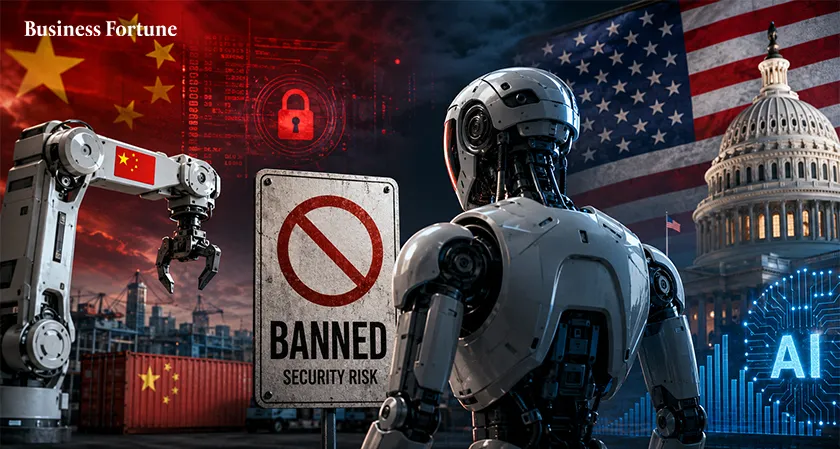
The US bans Chinese robots over cybersecurity concerns, but the impact could go far beyond robotics. Find out how China reacted and what could happen next?
The US bans Chinese robots making it hard for the ongoing technology battle between the United States and China. Imagine buying a robot to help at home or in a factory, only to find that governments worry it could also be used to spy. That is the main concern that Trump administration bans Chinese robots and other advanced foreign-made robotic devices from entering the country.
The US Federal Communications Commission (FCC) has announced new restrictions on the import of humanoid robots, robot dogs, and power inverters, saying these internet-connected devices could pose a risk to national security. Officials believe that if such products are controlled or influenced by foreign governments, they could be used for surveillance, cyberattacks, or even remote access to critical systems.
It's Not Just About Robots. It's About Trust.
The new rule applies to newly imported foreign-made devices and does not affect products that were already approved by the FCC. While the restrictions cover foreign-made technology in general, experts say Chinese manufacturers are expected to feel the biggest impact because they lead the global market for humanoid robots.
FCC Chairman Brendan Carr defended the decision, saying, "We are doing our part to secure America's critical supply chains and reduce national security risks."
The FCC also added power inverters, which are widely used in solar panels and data centers, to its list of restricted products. US officials argue these devices could be vulnerable to remote control or cyberattacks if left unprotected.
Will This Make the US-China Tech Battle Even Bigger?
China has strongly opposed the decision, calling it an unfair attempt to block Chinese companies under the banner of national security. Beijing has urged the US to withdraw the restrictions and warned that it could respond with countermeasures if the policy remains in place. Industry analysts believe the move could slow the global expansion plans of several Chinese robotics companies, especially those preparing to go public. At the same time, it may encourage US companies to invest more heavily in developing homegrown robotics technology.
The latest restrictions come as the world's two largest economies continue to compete in AI, robotics, semiconductors, and advanced manufacturing. With both countries racing to lead the next generation of technology, every new policy now has global consequences.
As Business Fortune observes, AI-powered robots become increasingly important in factories, logistics, healthcare, and homes, decisions like these could influence not only global trade but also the future direction of innovation. The coming months will reveal whether the world's two largest economies move toward greater cooperation or deeper technological separation.
FAQs
Why did the US ban new foreign-made humanoid robots?
The US says internet-connected robots could be exploited for surveillance, cyberattacks, or remote control, creating national security risks.
Does the restriction affect all robots currently in the US?
No. The restrictions apply only to new foreign-made products. Previously approved models can still be imported and sold.
Which companies are expected to be most affected?
Chinese robotics companies, including major humanoid robot manufacturers, are expected to face the biggest impact because they hold a significant share of the global market.
Why are power inverters included in the restrictions?
US officials believe connected power inverters used in solar systems and data centers could be vulnerable to remote interference or cyberattacks.
What could happen next in the US-China technology dispute?
China has warned of possible countermeasures, while both countries continue competing in AI, robotics, semiconductors, and other advanced technologies. Future negotiations may determine whether tensions ease or continue to escalate.


.webp)




























Comments