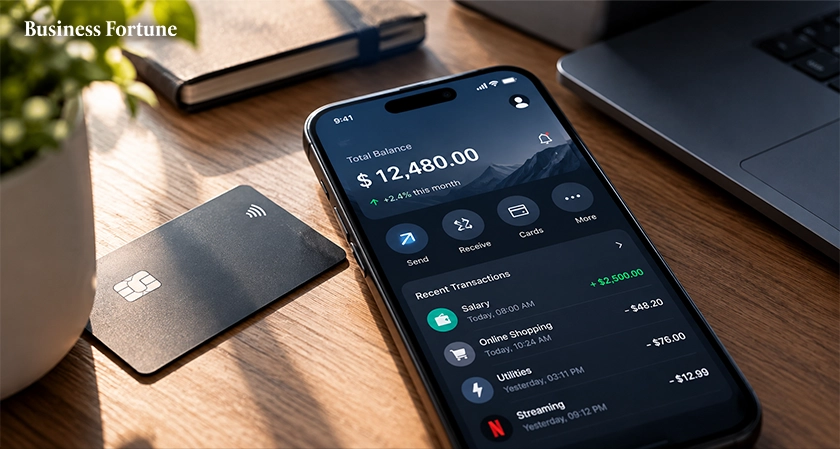
What if your bank could do more than just hold your money? From sending money across borders to tracking every rupee you spend, explore the Top 10 digital banks disrupting traditional banking
How long is it since you walked into a bank just to check on your balance or make a payment? Most likely your mobile did the job. You can even open a bank account online. Digital banks are making it simpler for consumers to manage their money, save money, and even make international transactions. And some Banks are doing much more than that. In this Business Fortune article, we look at the Top 10 digital banks shaking up traditional banking, what makes each one different, and how they are changing the way we use money.
How Digital Banks Are Changing Banking in 2026
A digital bank provides financial services through mobile applications and online, unlike traditional banks. Some are licensed to provide banking services, while the other kind partners with licensed banks to provide financial products and services such as accounts, cards, payments, and others.
Balance check, payments, salary payments, transaction history check are done online. There are several applications which also provide information about expenses made, real-time alerts, money management features and others. People demand clear fees, quick support, simple account opening, and services that fit into their daily lives.
Top 10 Digital Banks Disrupting Traditional Banking in 2026
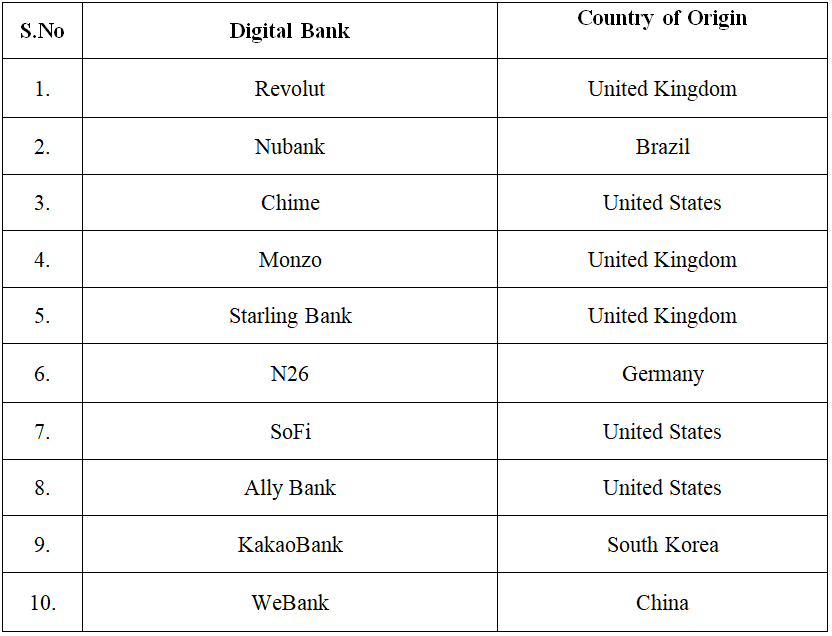
The following list highlights ten well-known digital banks and app-based banking providers with different business models, markets, and services. Their order does not represent a strict ranking because their strengths depend on where customers live and what services they need
- Revolut
Revolut started out as an app that allowed transferring money. Later on, it became a more comprehensive financial platform with a wide range of services such as currency exchange, cross-border transfers, payment cards, budget tracking, savings, and others in certain countries. The service can be convenient for travelers and those who pay money in various currencies. Combining different financial services in one application allows revolutionizing the process of managing finances. However, the list of services depends on the country.
- Nubank
Headquartered in Brazil, Nubank is one of the most popular digital financial companies in Latin America. It provides a wide range of banking services including digital bank accounts, payment cards, loans, and other similar products. The user friendly nature of the mobile application makes it possible for users to handle their everyday banking activities easily without facing the problems of traditional banks.
- Chime
Chime is an American fintech company that offers banking services through partner banks. Products offered by Chime include spending accounts, debit cards, savings, and other money management tools. The main emphasis of the company is on providing easy access to bank accounts and minimizing costs associated with banking products. Qualified users can also get their direct deposit ahead of time, based on certain conditions.
- Monzo
Monzo is an online bank based in the UK that offers solutions to make managing money easier. The company provides various types of services such as current accounts, transaction notifications, budgeting features, and savings. Monzo allows its customers to monitor their payments and know how their money is spent through the app.
- Starling Bank
Starling Bank is a British digital bank that offers accounts to both individual and business customers. The features offered by the bank include credit cards, savings accounts, and facilities for managing the finances of businesses. Freelancers and small businesses can make use of the digital services provided by the bank to manage their transactions and pay their bills.
- N26
N26 is a digital bank headquartered in Germany that operates in many parts of Europe. N26 provides users with access to bank accounts, payments cards, and money management tools using their mobile app. Users are able to check their transactions, monitor their expenses, and manage their account without ever having to go to a physical branch.
- SoFi
SoFi is a company in the US that offers a financial service which combines banking with lending, investing, and personal finance tools. Depending on customer eligibility, SoFi allows customers to access deposit accounts, loans, investments, and financial planning services. Contrary to other providers, who are mostly into payments only, SoFi seeks to solve multiple customer financial issues through one service.
- Ally Bank
Ally Bank is a well-established American online bank which does not have physical branch networks. The bank provides deposit accounts, saving services, CDs, and many other financial services. Users can handle their finances online and receive help virtually. Ally shows that digital banking is not reserved only for fintech firms. Regulated banks can offer good online solutions as well.
- KakaoBank
KakaoBank is a South Korean digital bank based on mobile-first technology. It provides account services, payments, and lending services, depending on the user’s eligibility and regulations of the local market. The development of such services shows how digital services can integrate into people's daily financial activities. Since this is possible through the use of smartphones, there is no need for customers to visit banks.
- WeBank
WeBank is a digitally enabled China-based bank providing various financial services with the use of technology. It provides various financial services such as digital loans and other kinds of products for its eligible customers and businesses. Technology powered by data is utilized by the bank to deliver its services. Privacy protection and responsible lending are some of the key considerations in the business model of the bank. Its services run under the financial laws in China and thus are different from others in other places.
Digital Banks vs Traditional Banks are different because digital banks are better for people looking for faster and mobile solutions. Traditional banks would be more appropriate for those who need personal assistance and professional financial help and also have access to specific features offered by particular branches. It should be kept in mind that all digital banking apps are not banks in fact, some banks rely on licensing from other banks and the protection laws are different too.
Why Are Neobanks Gaining Popularity Worldwide?
People often get confused between neobanks and digital banks. While the two terms are almost similar, they do not mean exactly the same thing. Both offer banking services online but the main difference lies in how they operate and whether they hold their own banking license or work with a licensed banking partner.
Digital bank: A general term referring to a bank that offers its banking services through online methods. This bank may be either a traditional bank offering its services digitally or a fully digital bank.
Neobank: A company offering financial services mainly through digital means without having physical locations. This company may have its own license or it might use a bank’s license.
Leading neobanks worldwide are attracting customers by making common financial tasks easier. Neobanks Gaining Popularity Worldwide because of
-
Convenience
-
Clearer spending information:
-
Faster digital services
-
Lower-cost options
-
Services for different customers
Digital Banking Trends in 2026
Artificial Intelligence: Digital banks are using artificial intelligence to help in fraud prevention, detect any irregularities, offer better customer service, and help with simple tasks. These AI systems require human supervision and security measures.
Greater digital security: Biometric authentication, transaction alerts, identity verification, and fraud detection have become essential elements of digital banking.
Money management tools made for individual needs: The apps now provide greater opportunities to plan budgets, track expenses, and understand one's usual expenses.
Digital bank accounts for small businesses: Digital bank accounts and payment tools are helping freelance workers and smaller companies conduct transactions without depending on branch offices.
Greater connection of financial services: Digital banking is increasingly linking payments, deposits, lending, and many other services. This offers great convenience, however, it makes it necessary to know who exactly is providing those services and how customer data is handled.
What Challenges Do Digital Banks Still Face?
However, despite the progress that has been made, there are numerous challenges facing digital banks. Online fraud and account hijackings might be experienced by customers who lack security procedures. Technical problems might also lead to lack of access to accounts or payment by the customers at the time they need it the most.
Customer care id another challenge to digital banks. While the automated customer care system might answer some questions raised, more complex cases need a trained individual who will understand the problem and respond.
The third challenge posed by regulations, especially for organizations operating across various nations, include customer identity regulations, data privacy rules, lending regulations, money laundering, and deposit guarantees.
The future of banking
In terms of the future of the banking industry, it is highly possible that digital banks, traditional banks, and tech companies will co-exist alongside each other but compete for clients. The traditional institutions are improving their applications and online platforms, whereas the digital banks are growing their product offering and becoming increasingly strengthening regulation.
Consumers will definitely gain from more convenient payments, better fraud prevention, lower fees, and better financial instruments made available by banks. However, banks should make sure that technology does not exclude consumers who feel less comfortable using it.


.webp)



























Comments