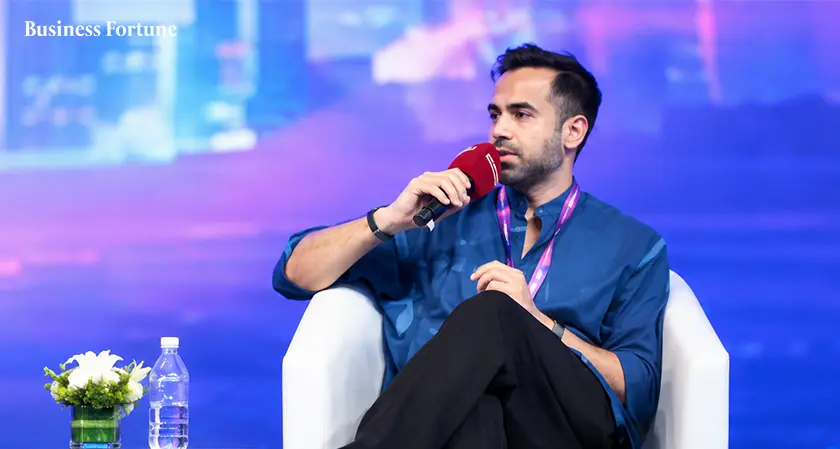
Zerodha co-founder Nikhil Kamath urges India to increase risk capital, embrace entrepreneurial failures, and adopt supportive policies to encourage innovation, ambitious startups, and global competitiveness.
Nikhil Kamath, co-founder of Zerodha and a prominent Indian investor, has urged Indian entrepreneurs to embrace failure, pursue ambitious business ideas and gain access to greater risk capital. Speaking at the NDTV World Summit in Delhi, Kamath noted how American technology millionaires are aided by funding which encourages them to experiment and innovate. Kamath drew on China’s policy towards entrepreneurs who have failed and suggested that India must change culturally and politically in order to encourage risk-taking.
Nikhil Kamath Highlights the Importance of Risk Capital
Kamath believes Indian Indian startups require more financial support for undertaking some bold initiatives and to be able to match up with the firms present in the global hubs of innovation. He says that there is always an availability of significant amount of risk capital among the entrepreneurs present in the Western world.
He noted that companies that do not operate in only a few countries which have substantial amounts of investment money find it difficult to compete at the cutting edge of innovations. The lack of risk capital for Indian firms may hinder their development of breakthrough products.
The entrepreneur pointed out that India needs to create an atmosphere where entrepreneurs can embark on big projects, despite uncertainty about their success.
Why India Needs a More Supportive Startup Culture
Kamath also highlighted the social stigma attached to entrepreneurial failure in India. According to him, people who have failed after trying something big should not be criticized by society and denied future professional opportunities.
He believes that societies that value innovation understand that failed attempts will actually provide great lessons for other businesses in the future. Adopting such a mindset with regards to failure might motivate entrepreneurs in India to pursue ambitious projects rather than restrict themselves to less risky ventures.
The adoption of this mindset, along with better funding networks, would be beneficial for the development of the startup culture in India.
What India Can Learn From China's Entrepreneurial Policies
Based on his visit to China earlier this year, which took place in 2026, Kamath highlighted the way in which China helped its entrepreneurs as an example from which India could learn.
Kamath referred to what he called an amnesty program related to China’s economic boom of the 1990s. Under this program, Kamath said, those entrepreneurs that had failed would be fined and then allowed to try again.
Kamath suggested that India might consider some similar policies that could be useful for helping business owners bounce back from failed ventures and join the entrepreneurial community once again. Yet he stressed that although he does not agree with all of China’s ideas, some practices might be worth following.
Drop-out from school, Kamath has made his mark in India as the founder of Zerodha, which happens to be one of the biggest stock broking companies in the country. He owns companies like Licious, Nourish You, Pee Safe, Subko and Ather, an e-scooter company. His views show how the combination of investment opportunities, conducive policies and right attitude can boost India’s innovation efforts internationally.
Thus, Business Fortune believes that India’s entrepreneurial future depends on fostering risk-taking, expanding access to capital, and building a culture that embraces failure.
FAQs
Who is Nikhil Kamath?
Nikhil Kamath is an Indian entrepreneur, investor and co-founder of Zerodha.
What did Nikhil Kamath say about Indian entrepreneurs?
He urged founders to pursue ambitious ventures, take calculated risks and view failure as part of innovation.
Why is risk capital important for startups?
Risk capital helps businesses fund experimentation, develop new technologies and pursue high-growth opportunities.
What can India learn from China's startup ecosystem?
Kamath believes India can learn from policies that help failed entrepreneurs return to business and try again.
Which companies has Nikhil Kamath invested in?
His investments include Licious, Nourish You, Pee Safe, Subko and Ather.

.webp)


























Comments