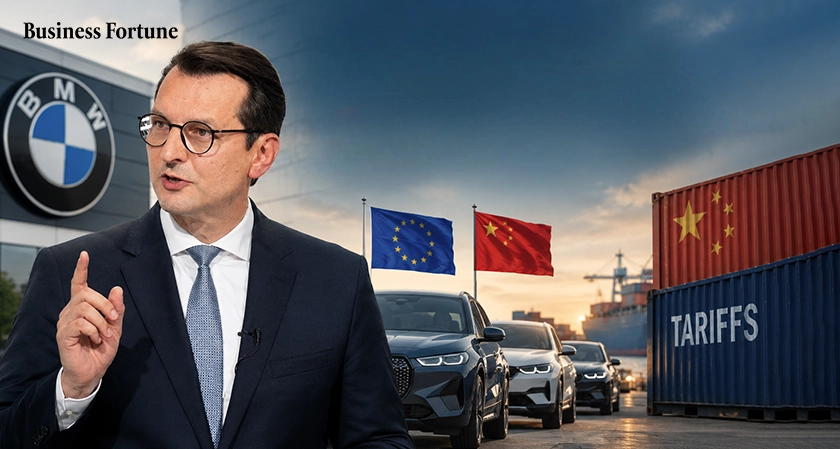
BMW backs negotiation over new tariffs, raising fresh questions about EV prices, fair competition, supply chains, and Europe’s automotive future.
The debate over Chinese cars in Europe is gaining fresh attention as BMW CEO Milan Nedeljković warns that unusually low prices could distort competition, according to Yahoo Finance while opposing a wider tariff battle. Instead, BMW is backing political talks and voluntary pricing agreements with China to create fairer market conditions without making electric vehicles more expensive for European consumers.
BMW questions unusually low Chinese car prices
Nedeljković raised the issue in an interview with Frankfurter Allgemeine Zeitung, saying some Chinese vehicles are being sold in Europe at prices that are difficult to explain from a business perspective. He warned that such pricing could encourage protectionist measures while stressing that BMW supports free trade and competition.
His comments come as Chinese brands such as BYD, SAIC and Geely continue expanding their presence across European markets. BMW itself has a global production network and builds some vehicles in China for European sales, including electric MINI models.
EU tariffs add pressure to the EV market
The European Union already applies additional duties on battery electric vehicles imported from China following its anti-subsidy investigation. The rates vary by manufacturer, including 17% for BYD, 18.8% for Geely and 35.3% for SAIC, while other companies face different rates depending on their status.
The European Commission has also continued exploring price-based agreements as an alternative framework. In February 2026, it accepted a price undertaking for Volkswagen Anhui's CUPRA Tavascan, allowing the model to avoid the countervailing duties if agreed conditions are met.
For consumers, the debate matters because higher trade costs can influence vehicle prices. Affordable EVs are important to Europe's wider shift toward lower-emission transportation, making the balance between industrial protection and consumer access increasingly significant.
BMW prefers negotiation over higher tariffs
Nedeljković has called for political negotiations rather than additional tariffs. He has also warned that stronger trade restrictions could create risks for Europe's automotive supply chain, particularly because European manufacturers depend on China for parts and battery-related supplies.
BMW’s stance is made amidst a tough competitive atmosphere in the Chinese market. Approximately 626,000 cars have been sold by BMW Group in the country in 2025, although group sales have been good since there was a good increase in Europe and other markets.
The bigger issue for Europe is how to protect automotive investments and employment whilst keeping the electric vehicles affordable. As Yahoo Finance reported the expansion of Chinese automakers and European automakers rushing towards electrification, there will be a strong connection between prices, logistics and trade issues.
Thus, Business Fortune believes that fair competition and smart trade policies can keep EVs affordable while supporting Europe's automotive industry and investment.


.webp)































Comments