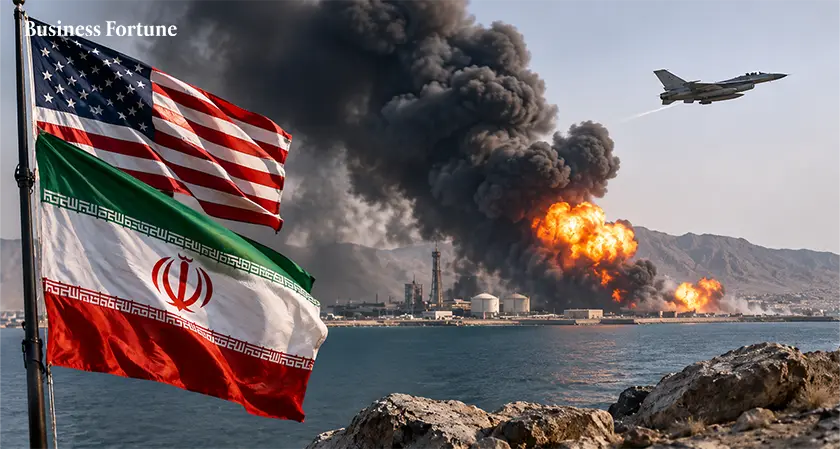
US forces target Iranian military assets as Tehran reports explosions, while Washington weighs diplomatic negotiations and the reopening of the Strait of Hormuz.
The US strikes Iran on Qeshm Island have raised fresh concerns over a possible escalation in the Middle East, even as Washington and Tehran continue diplomatic negotiations. The alleged attacks were on Iranian military hardware deployed in close proximity to the Strait of Hormuz, an important international waterway for the transportation of crude oil.
These events follow just before the US midterm elections and allegations that Israel’s Prime Minister, Benjamin Netanyahu, is pressuring President Donald Trump to launch fresh military strikes on Tehran.
Why Did the US Attack Iran’s Qeshm Island?
The US forces are reported to have conducted some strikes on the Qeshm Island to limit the capability of Iran to pose any threat to commercial ships passing through the Strait of Hormuz. A spokesman from the US military referred to the operations as defensive.
According to the state media of Iran, five explosions occurred successively on Monday, with the sighting of two aircraft above the island. There were also reports of explosions occurring close to Bandar Lengeh, apparently from the sea.
The Iran Qeshm Island attack reportedly followed incidents involving Iranian missiles targeting US assets and commercial shipping. Earlier, Iran’s Islamic Revolutionary Guard Corps (IRGC) announced that they managed to capture two US reconnaissance drones using electronic warfare technology and shoot down an MQ-9 drone.
The Qeshm Island is situated adjacent to the entrance to the Strait of Hormuz, where there is a significant underground missile complex, naval base and desalination plant.
Trump Iran Deal Hopes Continue Despite Military Tensions
However, despite the claims of strikes, Trump has expressed confidence in striking a deal with Tehran. The prospect of the Trump-Iran deal has been gaining traction as the U.S. and Iran are holding negotiations amid rising military tension. Trump said that low oil prices were due to the expectation of resolution of the conflict.
Moreover, he also mentioned to the press that reaching an agreement with Iran was possible and that he did not think about attacking again after the US mid-term elections. This sentiment was shared by US vice-president JD Vance, who said that they had some productive discussions with Iranian authorities.
The spokesman for the foreign ministry of Iran, Esmaiel Baghaei, claimed that all their demands had been conveyed and it was now up to America to take the next step. Iran wants to reopen the Strait of Hormuz if America removes its naval blockade from Iran.
Netanyahu Pushes for Fresh Military Action
These recent movements by the US military coincide with reports that Netanyahu is urging Trump to look into conducting further strikes on Iran after the mid-term elections.
However, Washington continues to indicate that it prefers negotiations. Indeed, it is alleged that the chief of US Central Command briefed Trump on the conflict last week, as American forces have boosted regional defenses against missiles and supplied ammunition.
The situation still seems ambiguous since negotiations continue along with some military action. An escalation may prove disastrous for regional security and global oil market stability.
Thus, Business Fortune believes that diplomatic negotiations remain crucial to preventing renewed conflict and protecting regional stability and global energy supplies.
Sources: NDTV
FAQs
Why did the US launch strikes on Iran?
The reported strikes aimed to prevent Iran from threatening commercial shipping in the Strait of Hormuz.
Where did the US attack Iran?
The reported attacks targeted Qeshm Island, located near the Strait of Hormuz.
Is Trump considering a deal with Iran?
Yes. Trump has expressed optimism about a negotiated settlement and said an agreement with Tehran could happen.
Why is Qeshm Island strategically important?
The island hosts military facilities and lies near a major international oil shipping corridor.
Is the US planning a full-scale war with Iran?
US officials described the reported strikes as defensive and limited, not a resumption of major combat operations.


.webp)






























Comments