
A data-driven assessment of the pharma companies leading in R&D investment, research spending in 2025, drug discovery and key technologies driving the pharmaceutical industry in 2026.
Pharma Companies Leading in R&D Investment: Who Is Spending Big and Why It Matters?
Billion-dollar biotech R&D battles are being fought in the realm of scientific priorities: pharma companies leading in R&D investment are allocating hundreds of millions of dollars in discovering biology, clinical research, complex modalities, data science and manufacturing technologies. However, the amount of money spent is not the sole indicator of a company’s R&D success.
Big pharmas are, on average, spending between $10 billion to more than $15 billion USD for research and development for 2025, according to how R&D is defined in each company. Thus, AstraZeneca spent $14.2 billion of R&D investment, Merck & Co. reported $15.8 billion USD on R&D, Johnson & Johnson – $14.7 billion company-wide, Eli Lilly reported $13.3 billion USD, Novartis – $11.2 billion on R&D for continuing operations in 2025 and Roche – CHF 12.2 billion investment in group research and development.
These figures highlight the general tendency in the pharmaceutical industry, which is not necessarily reflective of the actual value of the companies’ scientific exploration. A more relevant question is which areas of study the companies are investing heavily in.
Why R&D Matters in the Pharmaceutical Industry?
What does any of this have to do with the pharmaceutical industry? Why should any of this matter to the readers?
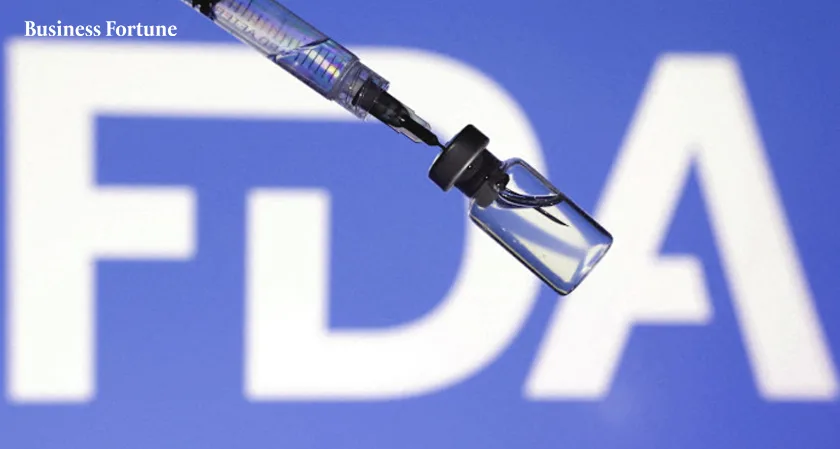
The reason is that drug discovery is a non-linear process, where throwing more money at the problem doesn’t necessarily result in faster outputs of novel therapeutic products. Any drug candidate needs to go through lengthy discovery, pre-clinical research, clinical development, regulatory reviews and post-market studies before officially entering the market. According to FDA, drug discovery is a multi-stage process during which the majority of investigational drugs fail to receive regulatory approval.
This is the main characteristic of pharmaceutical R&D that differentiates it from the research and development processes in other industries. Simply put, a large R&D investment by a company does not guarantee that any particular drug candidate will make it to the market. Furthermore, the R&D budgets of major innovative pharmaceutical companies are multi-faceted: while a company may have simultaneous research programs exploring small molecules, antibody-based therapeutics, cell therapies, RNA-based medicines, radioisotopes, etc., the rationale behind such an approach is that it takes multiple drugs to make one profitable.
Another crucial nuance is that the companies leading in R&D spending are also focusing on R&D-Productivity strategies.
This is yet another demonstration of the peculiarities of the biotech industry economics: while the absolute value of R&D investment is important, it is more informative to take a closer look at the strategic priorities that shape the companies’ spending.
Which Companies are Leading Drug Discovery?
There is no holistic metric that can reflect the competitive position of a pharmaceutical company. Drug discovery can be evaluated in terms of R&D investment, therapeutic pipelines, innovative approaches, approved compounds, collaboration networks and research infrastructure. A comprehensive data-driven assessment of the pharma companies leading in R&D investment, for example, would include multiple criteria.
Roche
Roche is one of the big pharmas that operate in the space of drug discovery and diagnostics. In particular, the company allocated CHF 12.2 billion to R&D, of which CHF 10.4 billion was allocated to pharmaceutical research in 2025. Roche’s priority research areas include oncology, with a considerable emphasis on cardiovascular, renal and metabolic diseases and immunology.
Importantly, Roche invests in human model systems for advancing basic science research and supporting drug discovery and development. The company’s Institute of Human Biology uses organoid and organ-on-chip technologies to create disease models that help researchers study human pathophysiology and identify therapeutic targets.
Merck & Co.
Merck spent $15.8 billion on R&D, which decreased by 12% compared to 2024 due to lower business development expenses. Concurrently, Merck’s clinical development spending was increased, with the company’s research priorities being oncology with a high focus on metabolic disease, while the company’s overall portfolio is said to be more diverse.
AstraZeneca
AstraZeneca’s R&D spending amounted to $14.2 billion, with the company setting the strategic direction towards oncology, biopharmaceuticals and rare diseases in line with its 2030 vision. The company’s R&D strategy also incorporates increased use of genomics and other innovative approaches.
Eli Lilly
Lilly has invested $13.337 billion into R&D, which equals 20.5% of sales, with over 12,700 employees involved in R&D processes. Additionally, Lilly’s R&D process is streamlined, with an average of 10 years from target identification to patients.
Lilly’s R&D portfolio covers a wide range of disease areas reflecting the company’s commitment to innovation in healthcare. In particular, metabolic disease, obesity and associated comorbidities are expected to drive pharmaceutical R&D in the near future, alongside other areas explored by Lilly, including neuroscience, immunology and rare diseases.
Novartis, Pfizer, Johnson & Johnson, Bristol Myers Squibb
Novartis: $11.2 billion in R&D spending from continuing operations in 2025.
Pfizer invested $10.4 billion USD for internal R&D.
Bristol Myers Squibb: $10.0 billion in R&D investment, while Johnson & Johnson reported $14.7 billion USD for R&D, with the majority originating from the Innovative Medicine segment.
These pharmaceutical companies differ from each other in several aspects. Firstly, J&J is a conglomerate that includes medical devices, as well as other healthcare companies, alongside the core pharmaceutical business. Similarly, Roche’s R&D budget also covers the company’s diagnostics division. Secondly, the way in which R&D is measured differs for these companies: for example, Novartis and Roche have different accounting policies, which makes comparative analysis more difficult.
Pharma companies leading in R&D spend millions on research and development projects annually to discover the next blockbuster drug. They tend to allocate the largest portions of their revenue to research and development (R&D), with most going into proving ideas.
Which are the Pharma Companies with Highest R&D Spending?
Whilst the absolute figures for this particular sample seem to indicate Merck as the prize-winner for the biggest dollar R&D expense, with Johnson & Johnson and AstraZeneca not too far behind, it is the amount of R&D spending as a function of the scope and stage of the business and what specific areas of research and development it is allocated into that is more interesting to discuss.
A company embarking on multiple phase III trials will obviously have a much greater imprint than one focused on finding leads, and that is especially relevant when considering the cost of failure.
Who are the Biggest Names in Drug Discovery?
It is perhaps not as simple as it may seem, as the latest pharma innovation trends 2026 report makes clear – there is a definite shift towards external partnering, computational approaches and core lab research and development.
The major trend within drug discovery is that of the combination of AI-assisted discovery with human biology modelling, precision medicine, new modalities and targeted clinical development.
The key pharma innovation trend 2026 is that while AI is beginning to transition from an experiment to an established part of drug discovery, the industry is still grappling with what to do with it.
What is the Future of Pharmaceutical R&D?
The future of pharmaceutical R&D will be more fragmented, data-rich and complex.
Firstly, the biggest pharma companies are likely to continue the trend of balancing internal R&D with external opportunities. For example, business-development transactions by Pfizer totaled $10.4 billion in internal R&D in 2025 while also spending approximately $8.8 billion in 2025.
Secondly, the lines between drug discovery and clinical development will continue to blur as more data and models begin to affect trial designs and molecule and patient selection.
Thirdly, advanced modalities will continue to be a focus, with multispecific drugs in particular offering the possibility to treat two conditions at once or have an effect on two disease pathways simultaneously, providing unique therapeutic opportunities in the areas of otherwise untreatable diseases.
More to Know
The pharma companies leading in R&D are all investing tremendously large sums of money in the race to discover the next medical breakthrough: Merck, Johnson & Johnson, AstraZeneca, Lilly, Roche, Novartis, Pfizer, Bristol Myers Squibb – all of these companies have over $10 billion in R&D investment for 2025, but the figures are not entirely comparable since each company’s organizational and accounting structure differs.
A more interesting conversation concerns the allocation of these huge amounts of money, essentially, what these companies do with the R&D budgets once they enter the discovery space. The industry’s shift towards artificial intelligence in drug discovery, biomarker development, human model systems, multispecific medicines and data-centric clinical trials represents an overarching trend of innovative pharma companies trying to get more out of their existing data rather than simply volume.
Business Fortune believes that is the cutting edge of pharmaceutical R&D, and it defines the future of the industry.
FAQs
Why is R&D important in the pharmaceutical industry?
The research and development process funds the long and costly pipeline of getting any drug to market, so having sufficient R&D is essential to any pharmaceutical company that wishes to secure its future and bring in new therapeutics.
Which companies are leading drug discovery?
There is no official list, but the most prominent names in big R&D have a considerable presence in late-stage discovery. Roche, Merck, AstraZeneca, Lilly, Novartis, big pharma, Johnson & Johnson and Bristol Myers Squibb all make the lists of the top pharmaceutical R&D spenders, while numerous smaller biotech companies are also involved in drug discovery.
How much do pharma companies spend on R&D?
The companies all report over $10 billion, with the sums often reaching the tens of billions.
Which pharma companies spend the most on R&D?
Using the figures for 2025, Merck spends the most at $15.8 billion, Johnson & Johnson $14.7 billion at company level, with AstraZeneca close behind at $14.2 billion and Lilly $13.3 billion. It is important to note that these figures are not directly comparable, as companies report differently at different levels.
What are the biggest pharma innovation trends in 2026?
Key pharma innovation trends 2026 include artificial intelligence (AI), biomarkers, human model systems, multispecific medicines, precision medicine and expanded collaborations between big pharma and biotech companies. In practice, that means more data-centric drug development, with a stronger emphasis on clinical development and trial design.


.webp)


























Comments