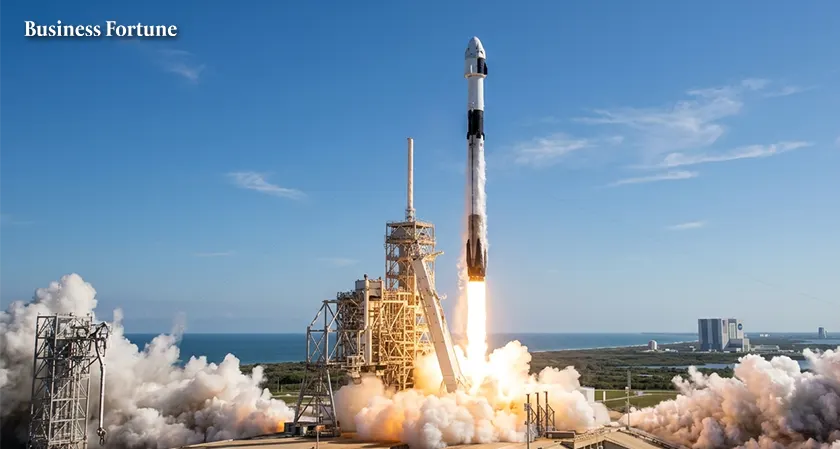
SpaceX delivers thousands of pounds of supplies and advanced solar technology as NASA prepares to complete a crucial International Space Station power upgrade.
SpaceX launches cargo ship missions to the International Space Station (ISS) to deliver essential supplies and scientific equipment and Tuesday’s Falcon 9 launch carried an important addition. An unmanned Dragon capsule was launched from Cape Canaveral in Florida with over 6,300 pounds of cargo consisting of research supplies, spare parts, provisions for the crew, and the last two improved solar array wings to upgrade the power system on board the International Space Station.
Falcon 9 Launches Dragon on Its Journey to the ISS
The SpaceX Falcon 9 rocket took off from Space Launch Complex 40 located at Cape Canaveral Space Force Station at 6:33 am, EDT. The nine engines of the first stage produced thrust to the tune of around 1.7 million pounds.
At around 2.5 minutes after the liftoff, the first stage detached and fell back to Cape Canaveral. It successfully landed back at its launchpad at 6:41 am, after hearing two sonic booms in the region. In the meantime, the second stage headed for the orbit before deploying the Dragon spacecraft.
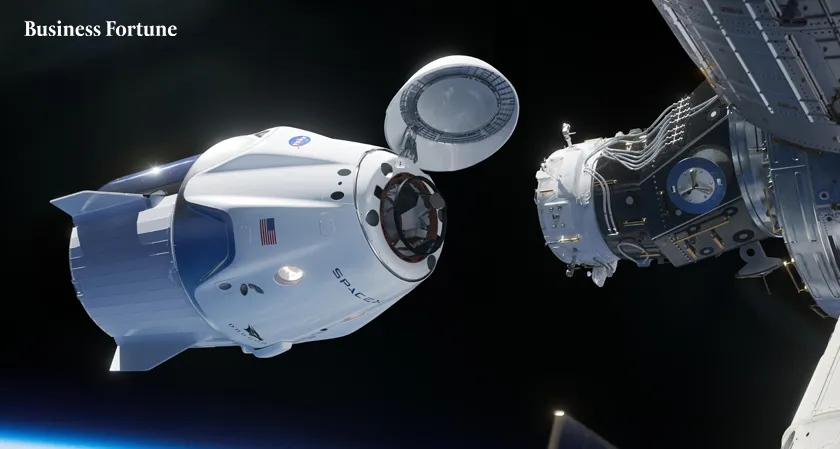
The launch was timed to match the International Space Station’s orbital path. If the mission proceeds as planned, the spacecraft will dock automatically with the station’s forward Harmony module at 11 a.m. Thursday.
The Dragon cargo mission includes 844 pounds of crew supplies, 1,307 pounds of scientific equipment, 417 pounds of spacewalk equipment and 880 pounds of vehicle hardware and computer gear. Fresh foods, pizza ingredients, cookies, candy and special holiday treats are also included to support the astronauts during their stay.
New Solar Arrays Complete a Major ISS Power Upgrade
One of the mission’s most important deliveries is the final pair of International Space Station Roll-Out Solar Arrays, known as IROSA. These lightweight, roll-out solar blankets are designed to restore electrical generation capacity as the station’s original solar arrays experience age-related degradation.
Six IROSA arrays have already been installed during spacewalks that began in June 2021. The seventh and eighth arrays will be installed during planned spacewalks later in October and early November, completing the upgrade.
The two new blankets weigh a combined 2,635 pounds on Earth and will be carried in Dragon’s unpressurized trunk. Each array can generate 20 kilowatts of power, working alongside the existing solar wings rather than replacing them entirely.
According to NASA’s Dana Weigel, the newer arrays use more efficient solar cells with higher energy density. Their combined output will help restore the station’s power generation to levels comparable to when its original arrays were new.
The completed upgrade will strengthen the ISS’s ability to support scientific experiments, onboard systems and future research missions. The delivery also highlights the continuing role of commercial cargo spacecraft in maintaining the station and supporting astronauts in orbit.
Thus, Business Fortune believes that SpaceX’s cargo mission strengthens ISS operations, restores vital power capacity, and supports scientific research through reliable commercial spaceflight.
Source: https://www.cbsnews.com/news/spacex-launches-cargo-ship-international-space-station/
FAQs
What did SpaceX launch on Tuesday?
SpaceX launched an uncrewed Dragon cargo spacecraft aboard a Falcon 9 rocket to resupply the International Space Station.
How much cargo is aboard the Dragon spacecraft?
The spacecraft carries more than 6,300 pounds of supplies, scientific equipment, spare parts, and solar arrays.
When is the Dragon spacecraft expected to dock with the ISS?
The planned automated docking is scheduled for Thursday at 11 a.m.
What are IROSA solar arrays?
IROSA arrays are roll-out solar blankets designed to increase electrical power generation aboard the International Space Station.
Why are the new solar arrays important for the ISS?
They compensate for the aging of the original solar arrays and help maintain sufficient power for station operations and scientific research.


.webp)





























Comments