
A look at the satellite internet companies launching constellations into space, from Starlink to Amazon Leo and the figures they cite.
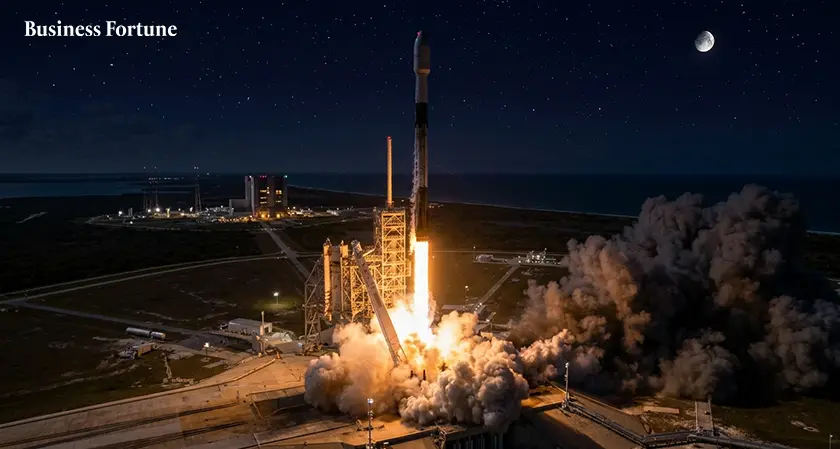
Starlink's 11,821 satellites provided service to 10.3 million customers as of the end of March 2026, placing it well ahead of the pack. Amazon, Eutelsat and Telesat, two Chinese state-owned initiatives and another player are all vying for a share of the market, but none are likely to challenge Starlink's dominance in the near future. The satellite broadband networks they propose to build are fundamentally different, but this is an overview of where things stand as of October 22, 2026 and what the figures of these satellite internet companies actually mean
Why does the altitude of a satellite affect the speed of the connection?
The higher the satellite is, the farther the signal has to travel. A geosynchronous satellite is positioned 35,786 miles above the earth, which means it would take a signal traveling at the speed of light 480 milliseconds to make a round trip. According to Ookla's first-quarter 2025 report, median latency was 45 m/s for Starlink, 683 m/s for HughesNet and 684 m/s for Viasat.
While low Earth orbit satellites do not have this issue, they must be placed closer together in order to provide the same level of coverage. Viasat's annual report for 2025 suggests that a constellation designed to operate exclusively in low Earth orbit would have plenty of capacity over sparsely populated regions, while capacity over heavily populated areas would be severely constrained. Both camps have some valid arguments and as a result, the industry is moving towards heterogeneous networks.
Which satellite internet providers are dominating the market?
While the number of satellites launched and deployed will give one an idea of the progress being made, these figures should be taken with a grain of salt since they do not take into account the differences in altitude.
|
Company |
Satellites (latest figure) |
Where service stands |
|
Starlink (SpaceX) |
More than 11,000 in orbit (Sept. 28, 2026) |
10.3 million subscribers (Mar. 31, 2026) |
|
Amazon Leo |
396 launched (July 2, 2026) |
No commercial service; initial rollout planned for 2026 |
|
Eutelsat OneWeb |
648 in orbit (Sept. 2026) |
Operating for enterprise, government and aviation |
|
Qianfan (Spacesail) |
238 launched (July 5, 2026) |
Brazil start targeted for Q4 2026 |
|
AST SpaceMobile |
13 launched (Aug. 5, 2026) |
Beta planned for late 2026 |
|
Telesat Lightspeed |
0 launched |
First launches end-2026; global service by end of Q1 2028 |
Is Starlink's lead still growing?
Yes and its IPO filing shows why.
Connectivity, the segment driven by Starlink, earned about $11.4 billion in 2025, roughly 61% of SpaceX's $18.7 billion in revenue. Subscribers rose from 2.3 million in 2023 to 8.9 million in 2025, then to 10.3 million by March 31, 2026. Revenue per subscriber slid the other way, from $99 a month to $66.
That slide matters more than it looks. Any rival now has to beat a price that is still falling. That's my reading, not a company claim.
The hardware is changing, too. On Sept. 28, Starship reached orbit for the first time and released 26 Starlink V3 satellites, each weighing roughly 2,000 kg. SpaceX says a full Starship could carry 60, about 20 times the capacity a typical Falcon 9 batch of V2 Minis adds.
Why is Amazon Leo still waiting to launch?
Rockets, not satellites.
Amazon has launched 396 production satellites, none since July 2 and has not started commercial service. It had promised mid-2026. Its FCC licence required half of the 3,236-satellite first-generation network or 1,618 satellites, in orbit by July 30. The FCC waived that deadline in June but demoted the spectrum priority of satellites launched afterward.
The bottleneck is telling.
Atlas V became the workhorse while Vulcan sat grounded over a solid rocket motor issue. New Glenn exploded during a static-fire test on May 28. Amazon says hundreds of flight-ready satellites are waiting at the Cape. Few operators have that problem: a satellite factory running ahead of its launch pads.
Next up is an Ariane 6 flight with 36 satellites, no earlier than Nov. 23. Chris Weber, who leads Leo's business side, told Ars Technica "the plan is to launch the initial service in 2026."
What is Europe building with OneWeb and IRIS²?
Control, mostly.
Eutelsat's OneWeb runs 648 satellites. On Sept. 10 it authorized Airbus to build 229 more, taking Airbus's refresh orders to 669. The deal is worth roughly €1 billion and replaces first-generation satellites nearing the end of their design life.
The larger bet is IRIS², the EU's sovereign multi-orbit network. Its low-orbit segment would have 264 satellites at 1,200 km, the same shell as OneWeb. Eutelsat expects its Ku-band service to be operating by mid-2032 with more than twice OneWeb's current capacity and it plans to invest about €2 billion. The selling point is European sovereignty rather than Starlink-scale reach, in my read.
Who is building space based internet for phones?
AST SpaceMobile and Starlink, with very different approaches. AST builds enormous satellites meant to talk to unmodified handsets. Its Block 1 satellites demonstrated peak downloads of 98.9 Mbps directly to standard smartphones and 13 BlueBirds had launched by Aug. 5. The FCC authorized commercial US service with up to 248 satellites and the company's goal is roughly 45 in orbit during 2026. That leaves a wide gap to close.
Starlink already has more than 600 direct-to-cell satellites. In September 2025 it agreed to buy about $17 billion of EchoStar spectrum, 50 MHz in all, which SpaceX says enables satellites with more than 100 times the capacity of its first-generation direct-to-cell craft. Owning spectrum likely squeezes AST's carrier-partnership model. Again, that's my read.
Where does China stand?
Behind its own schedule.
Qianfan, run by Shanghai Spacesail Technologies, had launched 238 satellites by July 5, according to China's industry ministry. A June state-media feature cited a phase-one target of 324 before July and 1,296 by 2027. Guowang, the state-run China SatNet project, had launched 204 low-orbit satellites as of September, by Wikipedia's tally and is believed to serve civilian and military purposes.
Can Telesat and Viasat survive the shift?
Both are betting on hybrids. Telesat's Lightspeed fleet is now fully funded at 225 satellites, up from 156, with 14 Falcon 9 launches contracted and global service targeted for the end of Q1 2028. A Canadian defence contract worth roughly 2.3 billion Canadian dollars helped fund the expansion, while geostationary revenue fell 26% in the second quarter. Viasat deployed ViaSat-3 F2 to double its broadband capacity, pitching geostationary bulk throughput alongside low-orbit partners.
What do the satellite counts leave out?
Three things.
Altitude
Starlink flies at roughly 480 to 550 km, Amazon Leo at 630 km and OneWeb at about 1,200 km. Higher shells cover more ground per satellite, so a smaller fleet can do comparable coverage work.
Launch access
Telesat, AST and Eutelsat all buy rides on Falcon 9, so SpaceX's rocket business sells to its own competitors. Amazon, which leans mostly on ULA, Blue Origin and Arianespace, is the one that slipped.
Price
Starlink's revenue per user fell from $99 to $66 while subscribers grew. Entrants launch into a market whose price ceiling is already dropping.
Business Fortune believes Starlink leads in satellites, subscribers and revenue and its Starship-launched V3 hardware widens the capacity gap. Everyone else is competing on a different axis: sovereignty for Europe, phones for AST, government contracts for Telesat. Amazon is the one to watch. It could close fastest once its rockets fly.
FAQs
- Which satellite internet company is the largest?
Starlink, with more than 11,000 satellites and 10.3 million subscribers as of March 31, 2026. No other fleet in this guide exceeds 648 satellites. - Is Amazon Leo available yet?
Not commercially as of Oct. 22, 2026. Amazon says initial service will start in 2026 but hasn't announced pricing. - How much faster is low-orbit satellite internet than older geostationary service?
In latency, dramatically: Ookla's Q1 2025 medians were 45 m/s for Starlink and 683–684 m/s for HughesNet and Viasat. - Can I buy Starlink in India?
Not yet. It's licensed, but spectrum assignment and security clearance are pending. - Will satellite internet work directly on my phone?
Partly. AST plans beta service in late 2026 and SpaceX said in 2025 it expected first handset tests on its new spectrum by late 2026.


.webp)






























Comments