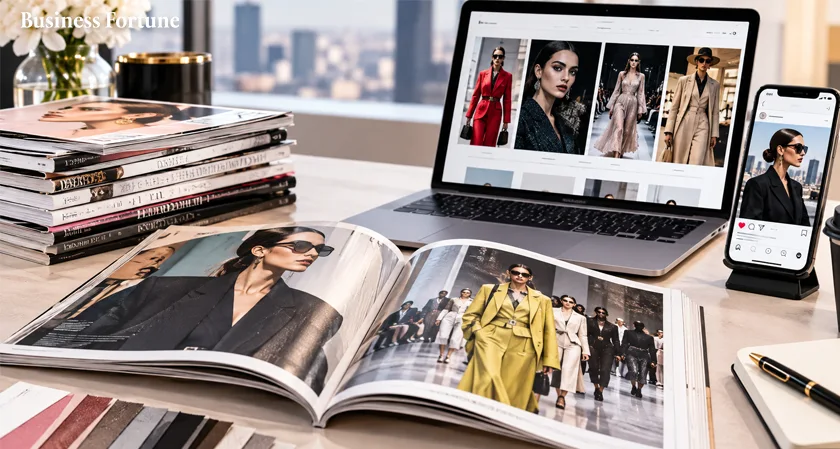
From glossy pages to viral creators, Fashion Magazine Trends 2026 explore the surprising changes redefining fashion, influence, and what readers want next.
Fashion Magazine Trends 2026 are changing the way fashion gets discovered, discussed and remembered. The old image of a fashion magazine as a glossy cover sitting on a coffee table is starting to feel a little dated. Today, the same magazine can live on a printed page, a website, an Instagram feed, a short video, a newsletter, or even in a creator’s styling post.
And that is what makes fashion publishing interesting right now. A runway look can appear in Milan in the morning and be recreated by someone in Mumbai by evening. A new designer can gain attention through a magazine feature, while an Instagram creator can take the same trend to millions of people who may never open a traditional fashion publication. Fashion moves quickly and magazines have had to move with it.
But speed isn’t everything. In a world of endless trends, clothing influences and shopping links competing for attention, people are still looking for someone who can tell them the difference between what’s truly fascinating and what’s just hot at the moment. This is precisely why the importance of magazines persists. They provide context, character, photography, narrative and an opinion within a fashion industry that can otherwise be likened to one massive scroll.
So, what does a fashion magazine look like when the cover is no longer the only thing people see? In 2026, the answer is everywhere: on the runway, on our phones, in creator feeds and sometimes in the pages of a magazine we still love to hold.
Why are fashion magazines still important in 2026?
Fashion magazines retain their importance for more than just showing off clothing, since they select what designers, imagery, ideologies, people and cultural movements will be noticed. Their pages can turn a collection into a story and a designer into a name people remember.
This editorial role also creates value for brands. One good element can lend an attribute credibility while good photography can give the product visual memorability.
Importance of Fashion Magazines is also based on the fact that these magazines can help in documenting fashion history. Fashion trends may change rapidly but archives of fashion magazines are always there to show how people used to dress during any particular time period. W Magazine demonstrates how that heritage can be revamped for young audiences with WYouth, a new magazine that will be launched in September 2026.
Can fashion magazines really drive brand visibility?
Yes, but now more than ever visibility means telling a story worth sharing rather than just putting a logo on a page. Fashion magazines have many opportunities to introduce a brand via editorials, fashion designer interviews, trends analysis, runway shows, beauty sections and cultural articles.
The solution to the question of how fashion magazines drive brand visibility is increasingly linked to how stories spread through various media platforms. A story featured in a magazine may turn into a video clip, newsletter article, or social media discussion.
For brands, this matters because attention is fragmented. A reader might see a collection on Instagram before discovering the full story on a magazine website. The magazine becomes a bridge between immediate attention and lasting recognition.
How are global fashion magazines shaping trends?
Global Fashion Magazines are no longer simply reporting trends from a few traditional fashion capitals. They are watching a much wider cultural map. Seoul, Mumbai, Lagos, São Paulo, Copenhagen, Bangkok, Tokyo and many other cities now contribute ideas to the international fashion conversation.
Social platforms have accelerated that exchange. A styling idea can now travel internationally almost instantly. The role of magazines is increasingly to investigate that movement and explain why it matters.
The impact of fashion magazines on global fashion trends can thus be looked at from a different perspective. They don't dictate every trend, but rather help to magnify, contextualize, connect and record them. Fashion media in 2026 is also focusing on creative minds and people who might not have been given as much exposure before.
The latest figures from Fashion Month indicate the strength of the social layer today. According to Vogue Business, Fall/Winter 2026 Fashion Month delivered an earned media value of $755 million, but this was lower than the previous season.
What is changing inside fashion magazines?
The modern fashion magazine is becoming more flexible. Publishers are building stories that move naturally between print and digital.
Print can offer photography, design, physical texture and collectability. Digital can provide speed, video, updates and interaction.
Some of the most important changes include:
-
More creator-led storytelling alongside traditional editorial voices.
-
Short-form video supporting longer written and visual stories.
-
Digital archives becoming valuable destinations rather than forgotten libraries.
-
Newsletters creating a direct relationship between editors and readers.
-
Social platforms helping magazines discover new communities and cultural signals.
-
Interactive commerce connecting inspiration with product discovery.
This evolution is visible across major publications. Vogue incorporates runways, society, videos and culture. Harper’s Bazaar integrates the history of fashion and style in the contemporary world, while ELLE links fashion to beauty, culture and lifestyle. W Magazine is trying new print media like WYouth, which indicates that traditional print media can still be reinvented.
The Fashion Magazines Defining the Industry in 2026
Vogue
Vogue remains one of the most recognizable names in fashion publishing. Its influence comes from connecting runway coverage with entertainment, culture, technology and personalities.
Harper's Bazaar
Harper's Bazaar brings together fashion, beauty, culture and lifestyle while using editorial storytelling to interpret changing tastes. Its current coverage shows how historical references can sit beside contemporary collaborations and cultural moments.
ELLE
ELLE is the combination of fashion, beauty, culture and lifestyle through a very modern voice. With its fashionable way of presentation, the magazine not only highlights the latest trends but also talks about those personalities and cultural events which form an important part of our lives.
W Magazine
W Magazine occupies an experimental space between fashion, art, photography and culture. Its 2026 launch of WYouth is particularly interesting because it uses the magazine’s heritage while building a new physical product for younger readers.
Why is the fashion industry collaborating with Instagram influencers?
Fashion used to have a familiar routine. The designer came up with the line, the model showcased it on the runway, the magazine featured the line and then people waited for something to hit the stores. Nowadays, things might take an entirely different course. A person could showcase a new line in their morning Reels, feature it in three different looks before lunch time and have people talking about it before it even gets onto the runway review site.
That is one of the main reasons why the fashion industry is collaborating with influencers on Instagram. Their success is not just about how many people they have following them. It is about the connection they create with their followers. People get to see creators experimenting with clothing, making choices based on what trends they want to follow and giving tips on styling, including instances when a certain trend failed.
For brands, this means that they gain what is traditionally hard for advertising to accomplish: conversation. With an influencer, a collection becomes a story, a product becomes a styling challenge and a campaign becomes an event you actually want to participate in.
The smartest collaborations also do not involve the sudden appearance of an individual who is carrying a huge billboard. It seems to be a natural aspect of the world of the creative genius. And that means that fashion receives something far more important than just exposure: attention that travels.
What will the future of fashion magazines look like?
The Future of Fashion Magazines will probably be less about choosing between print and digital and more about knowing when each format works best. Print can become more selective, artistic and collectible, while digital channels handle speed and constant conversation.
A trend might appear online in the morning, become a social discussion by afternoon and later receive a researched feature. The formats can support each other rather than compete.
The role of artificial intelligence will increase in publishing processes as well, covering everything from research to image experiments, personalization and content recommendation. But fashion is an area where taste, human intuition, photography, styling, culture and emotions are important. Fashion industry's recent experiments with artificial intelligence fashion shows prove that technology becomes a tool for creativity.
The next generation of fashion publishing may look more connected, but the idea is simple: make every format feel worth opening.
Fashion Magazines and the Fashion Industry
The relationship between Fashion Magazines and the Fashion Industry is altering as both now function within the same economy of attention. Designers need storytelling. Magazines need compelling stories. Brands need visibility.
That creates stronger editorial ecosystems. The designer can be featured in the printed magazine, talk about the collection on a podcast, present the design process via social videos and interact with the audience through the events. The magazine is no longer just a product but a cultural platform.
The broader lesson for Business Fortune is evident: fashion publishing is transitioning from a magazine-centered model to a multi-format media ecosystem where editorial authority, digital speed, creator culture, and international communities are increasingly coming together.
The future will still have covers, beautiful photography, fashion stories and readers turning pages. It will also have creators, videos, conversations, archives and collaborations. And perhaps that is the most exciting part. Fashion magazines are not simply following the industry into its next chapter. They are helping shape what that chapter will look like.
FAQs
What are the major fashion magazine trends in 2026?
Major trends include creator-led storytelling, short-form video, digital archives, newsletters, social media integration, interactive commerce, and stronger connections between print and digital publishing.
Are fashion magazines still relevant in 2026?
Yes. Fashion magazines remain relevant because they provide editorial context, visual storytelling, cultural insight, trend analysis, and a curated perspective that social media alone may not offer.
How are Instagram influencers changing fashion publishing?
Instagram influencers help fashion brands and magazines reach audiences through relatable styling content, short videos, personal recommendations, and conversations that can spread quickly across social platforms.
Which fashion magazines are influential in 2026?
Vogue, Harper's Bazaar, ELLE, and W Magazine remain notable names in fashion publishing, while also adapting their content and formats for younger and digitally focused audiences.
What is the future of fashion magazines?
The future is likely to combine selective and collectible print editions with digital content, social media, video, creator collaborations, AI-supported publishing, and interactive experiences.


.webp)




























Comments