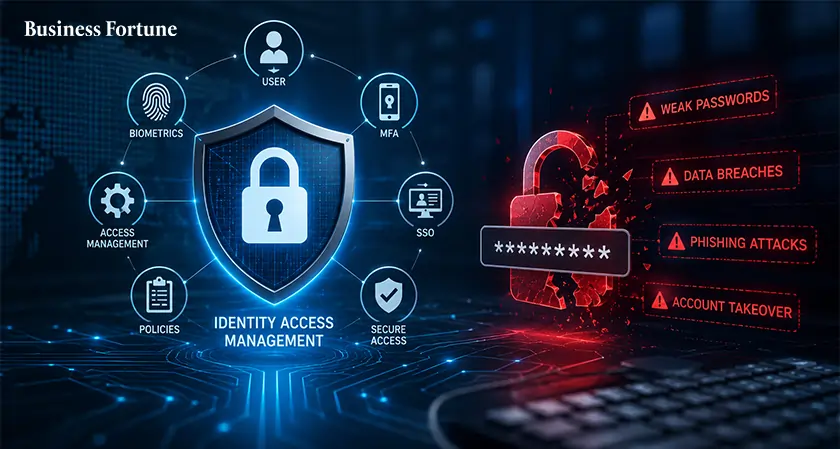
Identity access management is transforming business security as organizations move beyond passwords and adopt stronger authentication, governance, and access controls.
Identity Access Management Gains Momentum as Businesses Move Beyond Password Security
Traditional passwords are no longer enough to protect modern organisations, making identity access management a growing priority as cyber threats become more advanced. Businesses are increasingly adopting stronger identity controls, multi-factor authentication, passwordless technologies, and governance frameworks to reduce the risk of credential-based attacks.
With cybercriminals using automation, artificial intelligence, and large collections of leaked credentials to launch attacks, organisations are recognising that identity has become one of the most important security boundaries.
Password Dependence Creates Growing Security Challenges
Password-based authentication continues to create challenges because users frequently reuse passwords, rely on predictable patterns, or store credentials insecurely. Even strict password policies often lead to behaviours that reduce effectiveness, such as writing passwords down or using minor variations.
At the same time, stolen credentials have become a valuable resource for attackers. Unlike traditional hacking attempts, login-based attacks can appear legitimate because they use valid usernames and passwords, making detection more difficult.
Businesses Shift towards Stronger Identity Controls
Modern security strategies are moving towards layered authentication models. Multi-factor authentication adds additional verification steps, such as authenticator applications, biometric checks, or security keys, reducing dependence on a single password.
Passwordless authentication is also gaining adoption by replacing passwords with biometrics, device-based verification, and cryptographic security methods. These approaches reduce the value of stolen credentials because attackers cannot simply reuse passwords.
Identity Governance Improves Access Security
Effective identity management requires more than authentication. Organisations must also control who has access to systems and how permissions are managed.
Identity governance helps automate access requests, approvals, reviews, and removals. This ensures employees receive the access required for their roles while preventing excessive permissions from remaining active.
MSSPs Support the Transition to Modern IAM
Many organisations face challenges moving away from legacy systems built around passwords. Managed Security Service Providers (MSSPs) are helping businesses assess existing environments, identify security gaps, and implement modern identity solutions without disrupting operations.
The goal is not simply deploying new technology but creating a structured approach where identities are verified, access is controlled, and permissions are continuously reviewed.
The Future of Business Security Is Identity-Centered
“Identity has become the new security perimeter. Organisations must ensure that every user, device, and access request is verified before trust is granted.”
Business Fortune believes that as threats continue evolving, Identity access management will remain a critical security investment. Organisations that establish strong identity controls can reduce account compromise risks, improve compliance, and create safer digital environments.
FAQs
What is Identity Access Management (IAM)?
Identity Access Management is a security framework that manages user identities, authentication, and access permissions across business systems.
Why are passwords no longer enough for security?
Passwords can be stolen, reused, leaked, or compromised through automated attacks, making additional security layers necessary.
How does IAM improve cybersecurity?
IAM reduces risks by verifying identities, enforcing access policies, limiting permissions, and removing unnecessary accounts.
What is passwordless authentication?
Passwordless authentication replaces passwords with methods such as biometrics, security keys, or device-based verification.
How can MSSPs help implement IAM solutions?
MSSPs provide assessment, planning, implementation support, and ongoing management to help organisations adopt effective identity security controls.


.webp)






























Comments