Building a modern digital brand is no longer simply about running ads or launching a product online. Many companies now operate in an environment where growth requires coordinated systems spanning acquisition, customer experience, financial discipline, and long-term retention.
Founders who begin on marketplaces often face another challenge: moving beyond third-party platforms to build independent businesses that control their own customer relationships.
Global e-commerce sales are projected to surpass $6 trillion in the next few years, according to eMarketer estimates. Amazon alone accounts for roughly 37 percent of all
U.S. e-commerce transactions, giving sellers access to enormous audiences while also limiting access to first-party customer data.
At the same time, sectors such as health and wellness are experiencing rapid growth. Research firm Grand View Research estimates the global telehealth market could exceed $455 billion by 2030 as more patients seek remote consultations and digital treatment programs. For companies navigating both trends- marketplace dependency and regulated digital healthcare- growth strategies must combine technical marketing expertise with operational discipline.
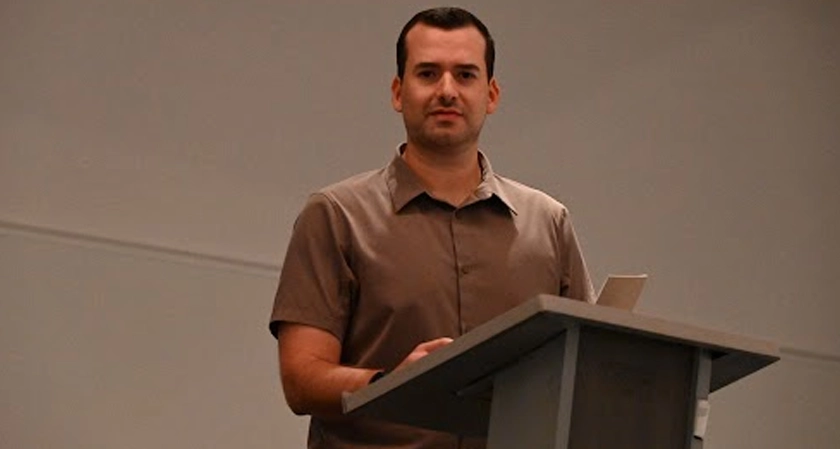
Alex Padilla, a Director of Growth Marketing based in Austin, Texas, has built a reputation among founders and leadership teams as a highly regarded operator who designs full-funnel growth systems across industries. His work spans direct-to-consumer brands, SaaS companies, wellness platforms, and marketplace businesses seeking to expand beyond.
Padilla currently leads digital growth initiatives for Brello Health, a Houston-based telehealth company focused on weight management programs involving GLP-1 medications such as semaglutide.
“My work usually begins when a company has momentum but lacks structure. The goal is to build systems that convert that momentum into profitable, repeatable growth,” Padilla says.
He also shares that growth becomes sustainable when every part of the business works together: “When acquisition, conversion, retention, and financial metrics align, the company stops reacting and starts operating strategically.” Padilla explains.
Turning Marketplace Sellers Into Independent Brands
Many of the companies Padilla works with begin their journeys on large online marketplaces. These platforms offer immediate distribution but can limit how brands communicate with customers or build long-term loyalty: “Marketplaces are powerful for discovery, but if a company never builds direct relationships with its customers, the brand remains dependent on the platform.” Padilla shares.
His work frequently involves helping businesses build independent direct-to-consumer ecosystems alongside their marketplace presence. That transition requires more than simply launching a new website.
“You need infrastructure. A storefront alone doesn’t create a business. You need acquisition channels, conversion systems, retention programs, and analytics that connect everything,” Padilla says.
One consumer electronics company selling dash cameras experienced exactly that challenge. The brand had achieved strong sales in the marketplace but lacked direct access to its customers. Padilla helped design a Shopify-based storefront supported by performance marketing campaigns and conversion-optimized landing pages.
“We approached it as a full customer journey. From the moment someone discovers the product to the moment they return for accessories or upgrades.” Padilla emphasizes.
Lifecycle marketing became central to the strategy. Automated email and SMS sequences helped engage customers after their initial purchase, offering educational content, accessories, and loyalty incentives.
“Retention changes the economics of a business. When customers return, marketing becomes far more efficient.” Padilla explains.
The transformation helped the company develop an independent revenue channel while strengthening its overall brand presence.
Projects like this illustrate how Padilla’s work has impacted broader changes. Direct-to-consumer infrastructure has become a priority for many marketplace brands seeking greater control over customer relationships. And building full-funnel growth systems, something which he has pioneered, is increasingly essential for companies operating in digital commerce.
Scaling Garage Startups Into Structured Businesses
Padilla has also worked with early-stage startups seeking to scale beyond their initial launch phase. One ride-on toy brand began with a single product and a garage-based operation before expanding into a national direct-to-consumer business.
“The founders had strong product ideas and strong demand. What they needed was a system that could support growth,” Padilla says.
Padilla helped build the brand’s digital infrastructure, including paid media frameworks, conversion-optimized product pages, and retention marketing systems designed to encourage repeat purchases and referrals.
“Startups often grow quickly but without clear structure. My role is to introduce frameworks that support sustainable expansion.” He shares.
Creative testing also played an important role in these campaigns. Advertising teams produced multiple variations of each campaign to identify which messages resonated with customers: “Testing is where the real insights appear. Even small details can influence performance.” Padilla says.
He points to one common example from performance marketing: “A small change, something as simple as adjusting the color of a call-to-action button, can change conversion rates significantly,” Padilla explains.
These projects demonstrate how operational frameworks can transform early momentum into structured growth strategies.
Building Growth Systems Instead of Isolated Campaigns
Padilla’s approach to marketing focuses on systems rather than individual tactics. He describes growth as an interconnected framework that includes acquisition, conversion optimization, retention, and financial analytics.
“Companies often run marketing channels in isolation. But customers experience the entire journey.” Padilla says.
Acquisition strategies may involve a mix of advertising platforms, including Meta, Google, YouTube, streaming television, and influencer partnerships. Each channel contributes to different stages of the customer journey.
Conversion optimization focuses on improving how visitors interact with a company’s website or product pages: “You want to reduce friction. If someone is interested in the product, the path to purchase should be clear.” Padilla emphasizes.
Retention strategies help companies maintain relationships with existing customers. Email and SMS communications provide reminders, educational content, and personalized recommendations: “Retention creates stability. A business becomes healthier when revenue isn’t dependent on constantly finding new customers.” He says.
Financial transparency also plays a role in Padilla’s frameworks. He encourages companies to evaluate marketing performance through blended metrics rather than relying on individual platform reports.
“A campaign might show a strong return on ad spend. But if you don’t account for fulfillment costs, payment processing, and overhead, the numbers can be misleading,” Padilla shares.
His unique methodology? By combining marketing analytics with operational financial data, Padilla’s frameworks encourage companies to evaluate growth through a more comprehensive lens.
Expanding Into Regulated Wellness and Telehealth
Padilla’s experience with direct-to-consumer brands eventually expanded into regulated sectors such as health and wellness. Telehealth companies operate within strict regulatory frameworks involving patient privacy, medical claims, and prescription guidelines: “Healthcare marketing requires a different level of responsibility. Every message must remain accurate and compliant.” Padilla says.
One wellness platform began with a basic website and a limited advertising strategy focused primarily on social media.
“We started by improving the fundamentals. “Website structure, user experience, and conversion pathways.” Padilla shares.
He helped expand the company’s acquisition strategy across several channels, including search advertising, educational video content, community discussions, and influencer partnerships.
“Different channels serve different purposes. Search captures intent, while educational content helps people understand the treatment process.” He says.
Retention programs also played a central role in improving long-term engagement: “In wellness businesses, lifetime value is often the most important metric,” Padilla says.
Automated communication sequences helped patients stay engaged with treatment programs while receiving educational guidance.
These systems of Padilla’s have had a wide impact. As telehealth platforms expand, integrated growth frameworks are becoming increasingly important for balancing marketing effectiveness with regulatory compliance.
Data Integrity and Attribution Systems
Another challenge facing many digital companies involves data accuracy. Marketing platforms often attribute conversions differently, creating confusion about which channels actually generate revenue.
Padilla addresses this challenge by implementing centralized analytics infrastructure that integrates data from multiple sources: “Companies often rely on platform dashboards that don’t show the entire picture,” Padilla says.
Using tools such as Google Analytics 4 and integrated reporting systems, Padilla helps companies track how customers interact with multiple channels before making a purchase: “When leadership teams understand the full journey, decision-making becomes clearer,” he explains.
These analytics frameworks also help teams align marketing strategies with operational goals: “Growth decisions become easier when everyone is working from the same data,” Padilla says.
Mentorship and Industry Involvement
Padilla's work extends beyond the companies he helps scale. He regularly contributes to professional communities where founders and growth leaders exchange ideas on digital commerce, performance marketing, and entrepreneurship.
As a member of the Entrepreneur Leadership Network and the Forbes Business Development Council, Padilla also mentors early-stage founders through an e-commerce accelerator program, where he has worked with more than twenty entrepreneurs.
"Mentoring founders is one of the most rewarding parts of the work," Padilla says. "It allows entrepreneurs to move faster by learning from shared experiences."
During these mentorship programs, he advises founders on topics including email marketing, landing page optimization, creative testing frameworks, and influencer strategy. But the conversations often extend beyond individual tactics.
"Founders often have strong product ideas but need guidance on growth systems," he says. "The biggest shift happens when they stop thinking about isolated marketing channels and start building an integrated business."
Padilla’s advisory work highlights another example of how his work has had a wider impact within the industry. By sharing operational frameworks with early-stage founders, Padilla helps raise the overall standard of growth strategy within the entrepreneurial ecosystem.
Leadership and Operational Philosophy
Teams working with Padilla often describe his approach as structured and collaborative. His projects typically begin with a diagnostic process designed to understand how marketing, operations, and financial metrics interact.
“I approach each business as a system. You identify the bottlenecks and then design solutions around them.” Padilla says.
Padilla describes his leadership philosophy as grounded in measurable outcomes and continuous improvement: “Growth strategies should always be tested. You refine the system through experimentation.” Padilla emphasizes.
Clients frequently describe moments of clarity once the underlying growth framework becomes visible: “When the systems are clear, leadership teams can make decisions with confidence,” Padilla says.
Caulen Foster is the CEO and Co-Founder of Brello Health, one of the fastest-growing telehealth companies in the country, where Padilla’s work has made huge positive changes to profit and workflow.
He says of Padilla’s work: “It is his ability to take businesses that have just a shred of a spark and turn them into raging fires of growth.”
Foster recalls of the aforementioned toy car company: “The owner of the company could not profitably make a million dollars a year. When we took on the account, I brought it to Alex, and he eventually helped the company get acquired for $7 million just two years later. He is the reason that profitability became a viable option for that business. The amount of work he did on that account is immeasurable.”
More recently, Foster’s company was without a director of performance marketing and was having significant trouble securing content to advertise.
Padilla came to the rescue: “Alex built an entire content output engine in the span of two weeks, which quadrupled our content at a very high level until we were able to bring in a senior director of performance marketing,” Foster recalls.
He adds: “Alex has also been responsible for maintaining oversight on our website while our tech team has been preparing for a very large initiative when it comes to building a headless platform for our company. When something goes wrong, the first person I call is Alex, and the first thing he tells me every single time is, "Give me some time. I will get it fixed." There is never any complaining. There is never him freaking out. It is just him letting me know that it is going to get handled.”
Padilla’s hard work and dedication have also impressed other colleagues: “Alex brings a very high standard to the organization,” says Camilo Parra, the CEO of the Enterprise Services Division at Alaya Health Group.
Padilla currently leads e-commerce growth across multiple companies in Parra’s company portfolio, driving tens of millions of dollars in monthly revenue. They have known each other for five years.
Parra adds: “I’ve seen Alex’s skills firsthand. We worked together at the agency, helping multiple e-commerce brands scale from their first million to five and ten million dollars in revenue. He has a deep understanding of what it takes to run and grow a business, particularly on the marketing side. He’s a true marketing expert because he’s successfully done it repeatedly. That’s why the company where he currently serves as VP of E-commerce is performing at a very high level — Alex has been a major driver of that growth.”
Building Systems That Endure
As digital commerce continues expanding, companies entering competitive markets face increasing pressure to build sustainable growth models. Marketplace distribution, regulatory requirements, and rising advertising costs have made operational discipline more important than ever.
Padilla believes the most effective companies focus on systems that support long-term stability rather than short-term momentum.
“Growth should create lasting value. When the systems are built correctly, companies can adapt as markets evolve.” Padilla says.
Across marketplace brands, consumer products, and telehealth platforms, Padilla’s work reflects a consistent theme: designing growth infrastructures that connect strategy, execution, and measurable outcomes.
For founders seeking to move beyond early-stage traction and build resilient businesses, that systems-based approach continues to gain recognition as a defining capability in modern digital commerce.
About The Author

.webp)


























Comments