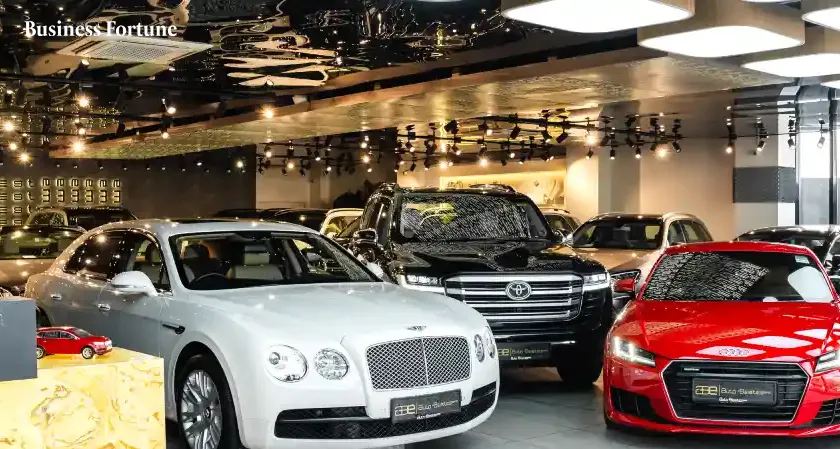
Luxury auto demand is splitting as ultra wealthy buyers keep spending while affluent customers hesitate amid economic and geopolitical uncertainty.
The K-shaped economy is becoming more apparent in the luxury auto market, where rich buyers still spend lavishly whereas wealthy customers who fall just below them in the hierarchy are holding back. According to the executives at Monterey Car Week, there is an even deeper divide that is being masked by the high demand for unique hypercars and custom-built cars.
Luxury Demand Splits at the Top
Hagerty CEO McKeel Hagerty said that the collector-car market looks like an upper arm of the letter K. This is because of the rapid creation of collections worth $100 million, which has been fueled by some major liquidity events, while tariffs, high-interest rates, and geo-political tensions have made others hesitant to buy.
Bentley CEO Frank-Steffen Walliser described the same pattern. Bentley's wealthiest customers remain active, but regular customers are delaying purchases because luxury vehicles are discretionary rather than essential. Aston Martin CEO Adrian Hallmark similarly said the middle market is most sensitive to confidence about future wealth, while buyers at both extremes are less affected.
Key Takeaways
-
Ultra-wealthy buyers continue driving luxury auto demand
-
Middle-market customers increasingly hesitate over discretionary purchases
-
Liquidity events accelerate high-end collector car spending
-
AI wealth is creating younger luxury-car buyers
-
Scarcity remains crucial for exotic-car demand
Young Wealth Reshapes Exotic-Car Buying
The luxury car market is benefiting from more ultra-high-net-worth individuals. Bugatti CEO Mate Rimac said demand vastly exceeds the company's limited annual supply, leaving the brand insulated from a broader slowdown. McLaren CEO Nick Collins pointed to newly wealthy AI entrepreneurs across the United States, Europe, Middle East and China as an emerging customer base.
That wealth is changing the luxury auto market's age profile. Hallmark said top-end buyers are becoming younger and growing rapidly, reinforcing demand for limited-production supercars, bespoke specifications and collector vehicles.
Luxury Brands Stay Cautious Despite Record Spending
However, not all executives are optimistic about the situation in its entirety. The CEO of Lamborghini, Stephan Winkelmann, pointed out the problems associated with the Middle East unrest, weakness of the US dollar, and a sharp decrease in demand in China. Even though Lamborghini showed record revenues due to the spending of rich clients, it is still hesitant about producing and pricing.
The strategy is clear: scarcity must be protected. Limited editions, one-off models and manual transmissions are being used to give wealthy customers reasons to spend. The result is a luxury auto market where headline sales look strong while the broader customer base remains hesitant.
Business Fortune believes that the luxury auto market will remain resilient, driven by ultra-wealthy buyers while middle-market demand stays cautious.
FAQs
What is a K-shaped economy in the luxury auto market?
A K-shaped economy means the wealthiest luxury-car buyers continue spending heavily, while affluent middle-market customers become more cautious about discretionary purchases.
Why are ultra-wealthy buyers still spending on luxury cars?
Major liquidity events and newly created wealth, including among AI entrepreneurs, are giving ultra-high-net-worth individuals greater capacity to purchase hypercars, collector vehicles and bespoke models.
How is younger wealth affecting exotic-car demand?
Newly wealthy entrepreneurs are creating a younger customer base for exotic cars, increasing demand for limited-production models, custom specifications and collector vehicles.
Why are luxury automakers maintaining scarcity?
Brands are using limited editions, one-off models and other exclusive features to preserve desirability and encourage wealthy customers to spend despite broader economic uncertainty.
What challenges could affect the luxury auto market?
Geopolitical tensions, high interest rates, tariffs, currency weakness and weaker demand in markets such as China could pressure luxury automakers even as top-end sales remain strong.


.webp)































Comments