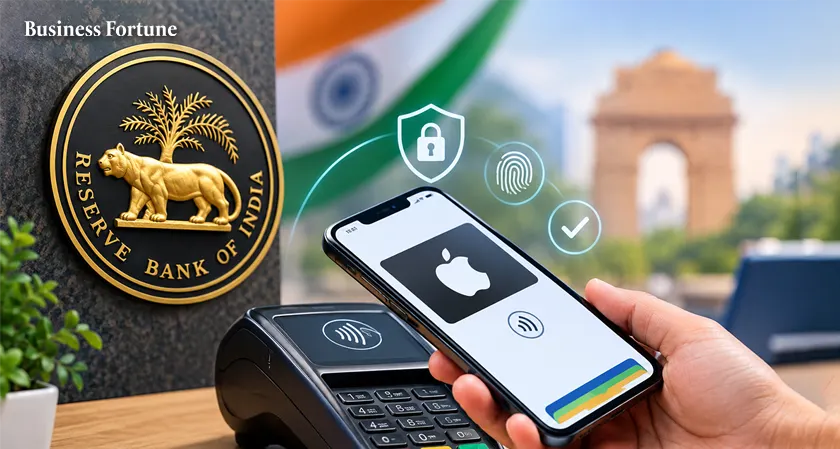
India’s payment landscape is changing as biometric security gains ground, but RuPay restrictions and platform accountability could shape Apple Pay’s future.
Apple Pay arrived in India on September 30, 12 years after its global debut, drawing attention to Apple’s entry into the country’s digital payments market. However, the launch also highlights a significant regulatory shift by the Reserve Bank of India (RBI), which has expanded authentication options for digital transactions. By allowing alternatives such as device-based biometrics while retaining two-factor authentication, RBI is creating room for more convenient and secure payments. The move reflects India’s evolving approach to financial technology, where regulation increasingly focuses on security outcomes rather than prescribing specific technologies.
RBI’s New Authentication Rules Open Doors for Apple Pay
However, one-time passwords have been widely used in India for a long time as a means of securing credit card transactions. One-time password systems have their downsides, including that they can make people vulnerable to phishing, where fraudsters impersonate banks to get private codes.
The Payments Vision 2025 by the RBI considered various options such as behavioral biometrics, digital tokens, in-app messaging and risk-based authentication. This developed into the Authentication Mechanisms for Digital Payment Transactions Directions released by the RBI in September 2025 and became effective in April 2026.
It includes the mandatory two-factor authentication requirement but allows for flexibility on the part of the issuers regarding choosing the best authentication means, which can also include the use of device-based biometrics.
This regulation system through outcomes makes it possible for innovations to occur without jeopardizing any critical measures. Unlike the one-size-fits-all technological regulation, the RBI sets up guidelines on security, consumer protection and accountability.
Apple Pay Highlights India’s Next Digital Payments Challenge
The digital payment system of India is functioning at a large scale. The National Payments Corporation of India in October 2025 launched on-device biometrics as another form of authentication besides the UPI PIN. As many as 611 million transactions amounting to ₹25,416 crore have taken place using the fingerprint or face scanning method of authentication by June 2026.
Apple Pay extends this authentication shift into card payments, allowing customers to authorise transactions on compatible iPhones, iPads and Apple Watches using Face ID, Touch ID or a device passcode, where supported.
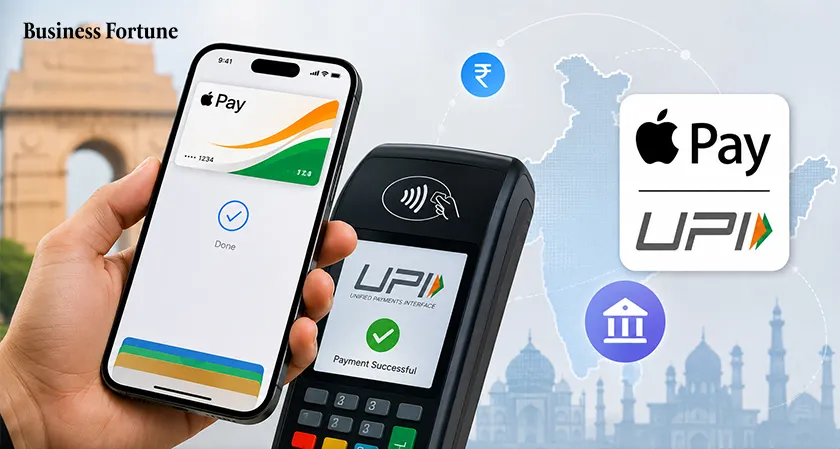
However, the launch has limitations. Apple Pay does not yet support RuPay or Unified Payments Interface (UPI), which accounts for approximately 84% of India’s digital payment volume. Its initial reach is therefore concentrated among customers using supported international card networks.
Device-based authentication also raises questions about the role of technology companies in financial security. While secure hardware can strengthen protection, dependence on a limited number of platforms creates new accountability challenges. RBI must ensure that banks remain responsible to customers and can hold their technology partners to appropriate security standards.
The next stage for India’s digital payment system would hinge on making transactions easier without compromising security measures. Scaling this strategy to other digital public infrastructures like Aadhaar, DigiLocker, Account Aggregator and Open Network for Digital Commerce (ONDC) might go some way towards improving digital services.
Thus, Business Fortune believes that RBI’s flexible authentication framework can strengthen digital payment security while enabling innovation and delivering simpler, safer experiences for Indian consumers.
Sources: https://www.businesstoday.in/technology/news/story/apple-pay-in-india-hsbc-app-update-hints-at-another-bank-joining-apples-payment-service-561851-2026-10-15 https://economictimes.indiatimes.com/opinion/et-commentary/apple-pays-india-launch-shows-how-rbis-outcome-based-regulation-lets-technology-evolve/articleshow/134839863.cms?from=mdr
FAQs
What is Apple Pay?
Apple Pay is a digital wallet that allows users to make supported payments using compatible Apple devices and eligible payment cards.
When did Apple Pay arrive in India?
Apple Pay arrived in India on September 30, 2026, according to the reported launch date.
How does Apple Pay authenticate payments?
It uses Face ID, Touch ID or a device passcode, depending on the device and transaction requirements.
Does Apple Pay support UPI in India?
No. The reported launch does not include UPI or RuPay support.
How do RBI’s new authentication rules affect digital payments?
They retain two-factor authentication requirements while allowing greater flexibility in choosing secure methods, including device-native biometrics.


.webp)






























Comments