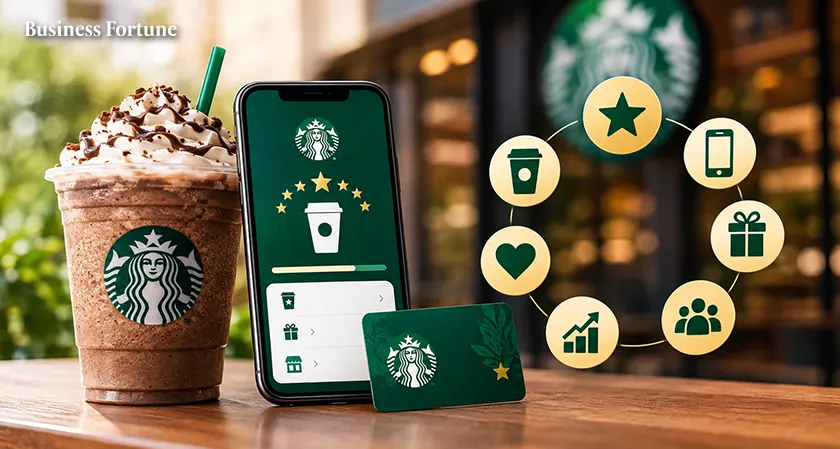
Why do customers keep coming back to Starbucks when there are so many coffee shops to choose from? Here is the secret behind Starbucks Rewards’ addictive loyalty strategy.
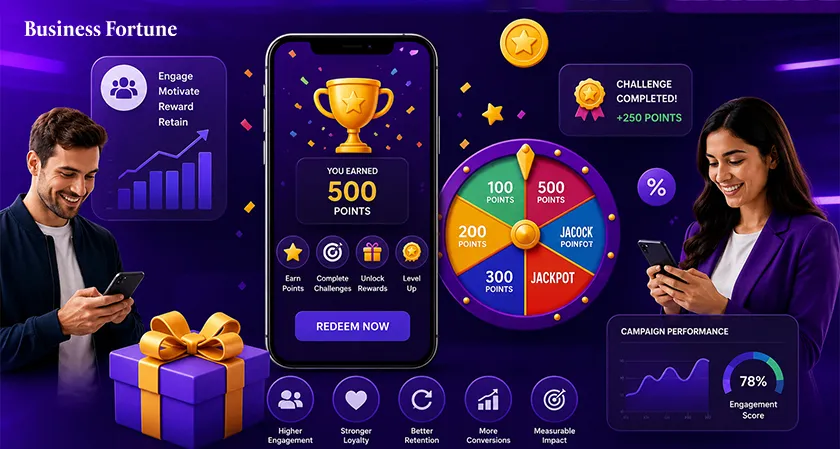
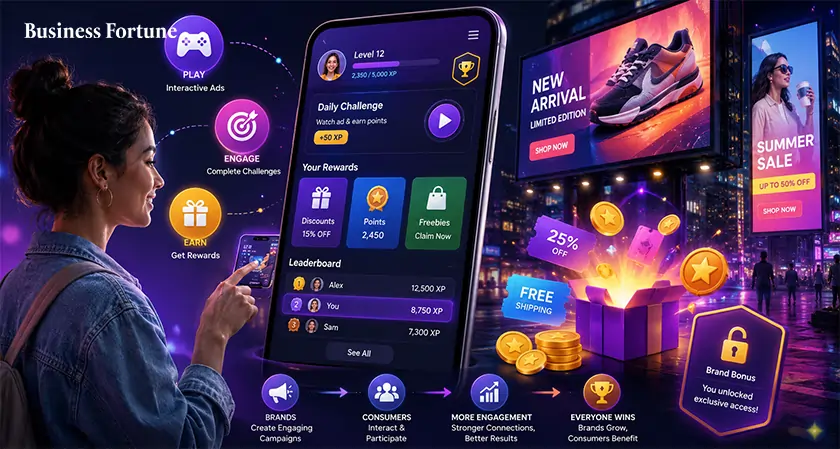
The coffee retailer, Starbucks has found a way to turn purchasing coffee into an exciting game. With stars, promotions, rewards, and loyalty levels, the brand offers customers little reasons to come back again. However, why does such strategy work for Starbucks and what can other businesses learn from it? This Business Fortune article will review some major lessons to be learned from Starbucks Rewards, the impact of gamification on customer behavior, and the latest loyalty changes made by the brand.
How Starbucks Rewards Turns Buying into a Game
You enter a coffee shop, order your drink, pay for it, and exit. To most of us, that is the end of the experience. But Starbucks go further by giving customers something to enjoy after each purchase.
Starbucks Rewards allows customers to earn Stars that may later be redeemed for selected beverages, food, and more. This is an example of how gamification works effectively when it is used to improve customer experience.
The thing is customers do not need to play a separate game to take part. They collect Stars when they purchase items that they like already. The special offers and promotions do not alter the usual buying activity but only makes it interesting.
- Make Progress Feel like a reward
One of the reasons why people like games is because they can see themselves getting closer to a goal Starbucks takes advantage of the same concept by rewarding its customers with loyalty Stars. These Stars give the customer a tool to keep track of their achievements.
Consider a scenario where a customer is almost having enough Stars to redeem their favorite coffee. In this case, not only will the customer see the cost of the item, but they will also see the achievement of their goal.
It is an important lesson for companies. The process of customers' progression should not be too difficult to understand. Nobody will be interested in participation in the loyalty program that takes too much time to figure out.
People will not be interested in a loyalty program that has complex rules or rewards, they would prefer to have an easy way for receiving useful benefits. However, the reward should also be worth the effort.
- Use Small Challenges to Build Habits
Starbucks uses bonus Stars, Double Star Days, and games such as Starbucks for Life to add a change to the customer experience.
The main feature of a good loyalty program is to make customers come back even without thinking of rewards. For example, a customer may be offered to get extra Stars or to participate in a special promotion. This offer provides a motive to look at the app and think of making another visit. The main thing is that small obstacles can trigger interest when they become a natural part of a customer's routine.
Companies do not necessarily have to provide costly rewards or conduct big campaigns. Even a simple challenge, where customers are rewarded for trying out a new product or coming at a certain period, may be enough to motivate them. There is a limit, however. If consumers get pushed to buy things that they don’t even need just to accomplish a task, then it might be a little bit frustrating for them. Gamification should help make the process easier, not a burden.
- Give Customers a Clear Reason to Move Forward
Goals become more interesting for people if they know what lies ahead. In such a way, Starbucks applies this principle by using different membership level, each of which provides a certain set of perks depending on the number of Stars earned.
In America, the company launched an updated version of the Rewards program on March 10, 2026, with three membership tiers: Green, Gold, and Reserve.
The new structure allows customers to have a clear path towards getting higher membership status. Green members get one Star per dollar spent, Gold members get 1.2 Stars per dollar, and Reserve members get 1.7 Stars per dollar for purchases made.
This provides an opportunity for progress. The customers will be able to see that with more participation, they are able to unlock new experiences instead of getting the same experience irrespective of what they do.
The other companies can adopt this concept in subscription-based service, online store, travel program, and even education portal. For example, a shopping site can give its customer early access to its products upon reaching a particular level, Myntra is doing this already.
- Personal Benefits Matter More Than Generic Rewards
Not all customers have the same needs. Some people may be looking for a treat for their birthday, while some customers prefer discounts, new products, or early access to the season menu.
Starbucks has been giving more attention to providing personalized benefits to its customers. With its Rewards program in 2026, it has provided personalized offers, monthly drink customizations through Free Mod Mondays, and extra benefits for Gold and Reserve customers. This can be a good example for other companies to follow.
Instead of providing all the clients with the same offer, companies can make different offers depending on what the clients like and do. For example, the regular client who buys tea would probably appreciate an offer of a new tea rather than a discount on some rare item. It is also true that personalization makes people feel understood, which makes the whole thing more meaningful and eliminates the perception that marketing is only about advertising. The most effective loyalty programs use the information about the consumers in order to improve the experience.
- Make Rewards Easy to Understand and Use
A loyalty program may offer great rewards, however consumers would not remain loyal if the terms and conditions are hard to understand.
The Starbucks Rewards program offers consumers several opportunities to redeem their Stars. In the US program launched in 2026, there are various options to redeem such as customizing your drinks, discounts, food, merchandise, among others. Consumers can also trade their 60 Stars for $2 discount on an eligible purchase.
Giving customers different options allows them to choose what is important to them. While some customers would like a smaller saving, others could collect Stars to get a drink or a meal. This approach makes the loyalty program more valuable since customers do not need to wait for one reward if there is another one that is better for them.
Hidden requirements, confusing expiration dates, or hard-to-redeem rewards create distrust. Customers should use their time on enjoying the perks, not understanding how they work.
- Build Loyalty Beyond Discounts
Discounts may help attract customers but they will be gone once the discounts are no more. This is illustrated by the Starbucks example of loyalty programs that can go beyond discounts.
The Reserve membership from Starbucks offers access to specific merchandise and unique coffee experiences. Additionally, the company is planning to launch the Global Coffee Experience in Tokyo in fall 2026 for 10 Reserve members and their guests.
Such benefits will create the connection between the loyalty program and the overall experience of visiting Starbucks. It is not only about collecting points to get a free cup of coffee; it can also give customers the opportunity to participate in experiences associated with the coffee culture of the company.
This strategy provides an example that can be very helpful for those companies that are interested in building relationships with their customers. The key is to offer something customers genuinely care about. A special benefit works best when it reflects what makes the brand different from its competitors.
- What Starbucks Is Doing Right Now
Starbucks aims to lure back their customers through making their coffee shops more inviting, offering better service and giving people more reasons to come there. The overall strategy of Starbucks is known as Back to Starbucks and is aimed at going back to what customers love about their coffee shop the most.
The firm is also making investments in product development and store renovations. The firm launched Energy Refreshers, updated its beverages menu, and renovated coffee houses to be warmer and more comfortable in 2026. The redesigned Starbucks Rewards loyalty program offers new membership tiers and personalized perks. The firm is also making efforts to enhance the experience of its employees and partners while improving efficiency in its stores.
What Businesses Can Learn from Starbucks Rewards
Points do not make a game-based loyalty program successful. Rather, it is all about the way in which the points are integrated into the customer experience.
Here are the main lessons businesses can take from Starbucks:
-
Make progress visible: Let customers see how close they are to a reward.
-
Use simple challenges: Give people a reason to participate without making the process complicated.
-
Offer achievable goals: Combine small rewards with bigger benefits for long-term engagement.
-
Personalize the experience: Make offers relevant to customer interests and habits.
-
Keep redemption simple: Explain the rules clearly and offer useful choices.
-
Reward loyalty in different ways: Consider experiences and access, not just discounts.
-
Listen and adapt: Use feedback and customer behavior to improve the program over time.
With this it can be seen that the gamification at Starbucks Rewards works well because it is built around something useful for the consumer. While a points system may get people’s attention, it is the actual benefits and progression that make customers more motivated. For business owners who want to develop customer loyalty is not to replicate all aspects of the Starbucks Rewards but rather to learn why they are effective and apply the concepts to their own customers.
FAQs
- What makes Starbucks Rewards different from a normal loyalty program?
Starbucks Rewards combines points with games, bonus offers, membership levels, and different redemption choices. This makes the experience more interactive than a program that only offers a discount after a set number of purchases.
- How does Starbucks Rewards gamification encourage repeat purchases?
Customers earn Stars on eligible purchases and can work toward rewards or higher membership levels. Progress tracking and limited-time offers may encourage another visit, although results depend on whether customers find the benefits worthwhile.
- What are the three Starbucks Rewards membership levels in 2026?
The redesigned US program has Green, Gold, and Reserve levels. Each provides different benefits, with higher levels offering faster Star earning and additional perks. The program launched on March 10, 2026.
- Can small businesses use Starbucks-style gamification?
Yes. A small business could offer points for purchases, a simple progress tracker, birthday benefits, or rewards for trying a new product. The program should be easy to understand, affordable to run, and suited to what its customers value.
- What is the biggest lesson from Starbucks Rewards for modern businesses?
The biggest lesson is that customer loyalty grows when people see real value in returning. Points and games can help, but relevant benefits, clear rules, and a good customer experience are what make a loyalty program worth using.
.webp)



















Comments