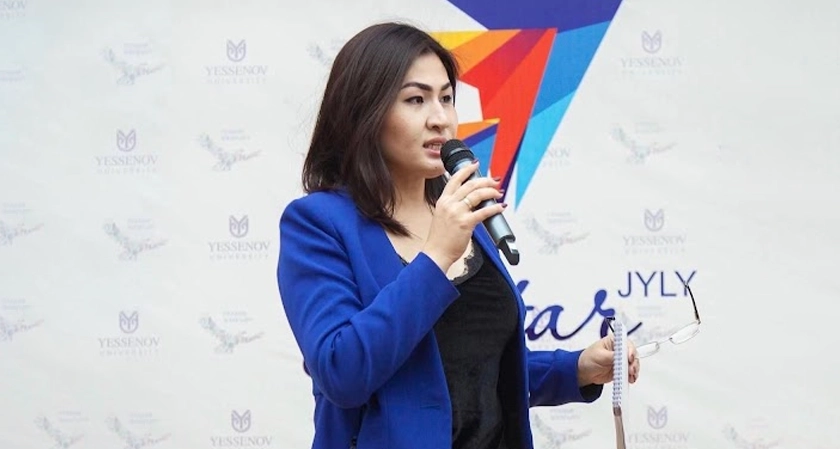
A new educational project aimed at developing interdisciplinary STEM programs for colleges and universities is being launched in the United States. Its initiator is Aina Balmukanova, an educational project management specialist with over 20 years of professional experience, is dedicated to helping American educational institutions create programs that integrate technology, engineering, natural sciences, and mathematics while simultaneously addressing the needs of employers and the modern labor market.
The project is based on a practical problem faced by many American colleges and universities: developing a program that integrates multiple disciplines requires the participation of faculty from various departments, administrative units, employers, and other stakeholders. Faculty often lack the dedicated time to coordinate such work, and responsibility for interdisciplinary collaboration can remain spread across multiple stakeholders. As a result, the creation of new interdisciplinary programs can be delayed.
STEM Synergy The Institute proposes organizing this process as a single, manageable system. The project team plans to support program development, from defining the educational objective and analyzing existing curricula to assigning courses, engaging academic specialists, designing the course structure, preparing materials for instructors, and evaluating results after implementation. The academic content and final approval of the program will remain with the instructors and the educational institution.
The project places special emphasis on the community Colleges are American colleges that play a significant role in preparing specialists for the labor market. For these institutions, interdisciplinary programs may be particularly relevant, as they must simultaneously consider employer demands, accreditation requirements, and student needs, while lacking the resources to independently coordinate complex educational projects. A second target group are four-year colleges and regional universities that are not part of the research sector and do not have dedicated departments specializing in interdisciplinary program development. Educational systems and associations that need to coordinate programs across multiple campuses may also be potential partners.
One of the key principles of STEM Synergy Institute - not just combining several subjects in one program, but building meaningful connections between them. Scientific Synthesis Method – a methodology that includes defining a problem area, mapping disciplines, developing an integration architecture, aligning learning outcomes, and methodological validation. This approach should allow the educational institution to see how individual disciplines contribute to the overall educational outcomes and professional competencies of graduates.
The practical results of this work should be ready-to-use educational solutions: curricula and course sequences, teaching materials, laboratory and project components, assessment tools, and teacher training materials. Separate documentation is planned for the connection of learning outcomes with employer requirements and academic accreditation criteria.
For Aina For Balmukanova, this project continues a professional direction she had been pursuing long before entering the American market. From 2018 to 2020, she served as the manager of the educational project English for Success in Britain Council Kazakhstan . The project was implemented with the support of Tengizchevroil and in partnership with the University of Leicester, was aimed, among other things, at developing the professional competencies of English and STEM teachers in educational institutions of the Atyrau and Mangistau regions.
From 2021 to 2025, Aina worked as a project manager at Almacom Invest, where she was responsible for implementing a large-scale educational infrastructure project. This included the creation and equipping of specialized STEM and STEAM spaces: physics and biochemistry labs, engineering and computer areas, robotics labs, 3D modeling and printing, and scientific and technical experimentation areas. Her responsibilities encompassed the full project management cycle and coordination of various participants.
In the new initiative, her role is also primarily focused on management and integration. Aina Balmukanova does not position herself as a subject matter expert in each STEM discipline. The content of individual academic programs is created and overseen by specialists in the relevant fields, while the project's goal is to organize their interaction, build a common program architecture, and guide the process through the necessary approval stages.
STEM Synergy The Institute plans to initially develop in California, and then scale the model to similar educational institutions in other states. The project will ultimately include not only curriculum development but also research-based evaluation of existing educational solutions, support for grant initiatives, and the creation of a professional platform for interaction between educators, researchers, industry representatives, and educational institution leaders.
Thus, the idea of STEM Synergy The Institute's mission isn't to create another educational program, but to build the infrastructure for the very process of developing interdisciplinary education. For American colleges and universities, this means the ability to outsource work that requires ongoing coordination between departments, academic specialists, administration, and employers, while maintaining academic authorship and authority within the institution itself.
Damel Malaeva


.webp)






























Comments