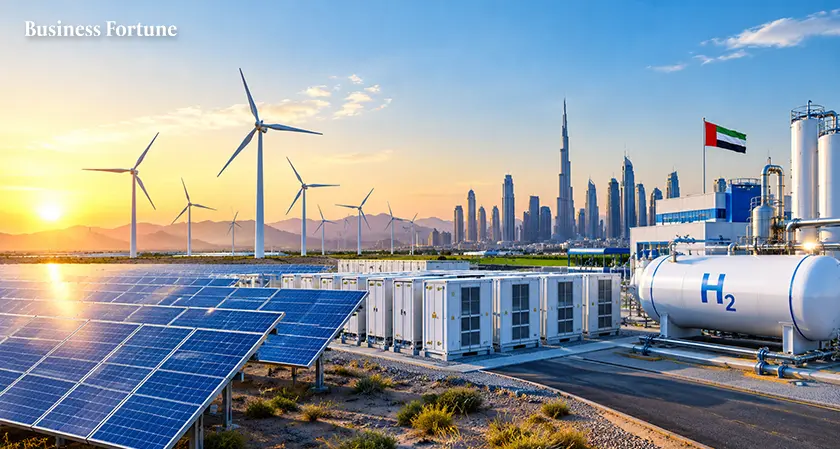
From Saudi Arabia’s mega solar projects to Abu Dhabi’s $6 billion storage plans, clean energy ambitions are raising despite commercial hurdles.
The Middle East energy transition is gaining momentum as countries across the Gulf and North Africa expand solar power, battery energy storage systems (BESS) and low-carbon fuel production. Driven by falling technology costs, energy security priorities and decarbonization objectives, the area is striving to establish itself as a leading clean energy center. However, there are several issues, such as regulatory uncertainty, lack of hydrogen infrastructure and commercial fuel production.
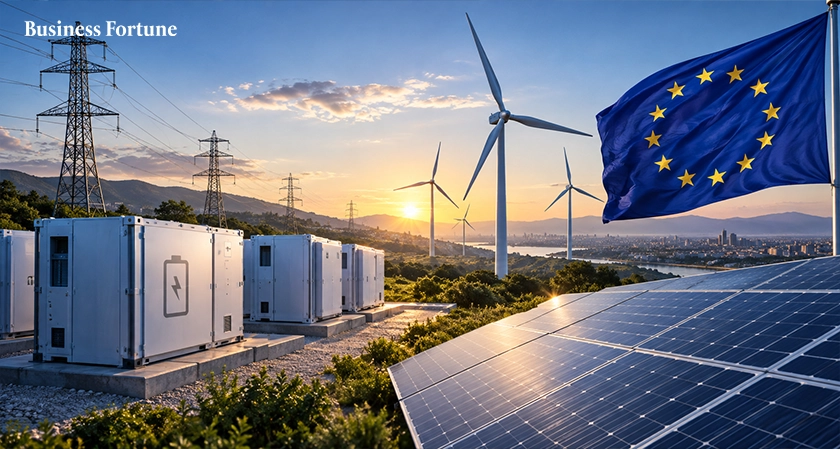
Solar Power and Battery Storage Reshape Regional Energy
According to DNV’s Energy Transition Outlook 2026: Rise of Renewables in the Gulf Region, MENA has the potential to install 860 GW of solar PV by 2040, followed by 2,200 GW of solar and wind power by 2060. The region is forecast to produce 92% of its electricity from renewable resources by 2060.
Deployment of solar energy in Saudi Arabia, the UAE and Oman is taking place along with battery storage. According to Dii Desert Energy’s report titled “The Battery Boom,” 20,785 MWh of operational utility-scale battery storage exists in MENA as of August 2026. Future installations may help reach around 149,358 MWh by 2030.
Masdar and Emirates Water and Electricity Company are also undertaking the development of another solar plus storage project worth $6 billion in Abu Dhabi. The project is geared toward generating 1 gigawatt of consistent energy output.
Green Ammonia and Hydrogen Face Market Challenges
Affordable renewable energy is generating possibilities for the production of green ammonia, whereas natural gas along with carbon capture and storage is enabling the production of blue ammonia. Saudi Arabia, the UAE and Qatar are looking at increasing their carbon capture facilities to lower emissions from their industries and energy production.
Green hydrogen is not commercially as advanced as renewable energy sources. The NEOM Green Hydrogen project that has been launched in Saudi Arabia aims at using 4 GW of renewable energy to generate hydrogen and produce about 1.2 million tons of green ammonia per year.
There are a number of hydrogen projects which have received huge financial investments but have still been unable to move out of their initial phases due to several reasons.
Policy Reforms Could Unlock Clean Energy Exports
There is no doubt that natural gas will still be significant during the transition phase, especially because more pressure is being put on LNG exporters to reduce methane emissions The main actors in the hydrogen industry have been advocating for more international regulatory and institutional structures such as book-and-claim certification system that allows producers to trade their attributes and not physical molecules. Better policy coordination, increased local industrial demands and development of smart infrastructure will speed up clean fuel adoption in the region.
Thus, Business Fortune believes that strategic investments, supportive policies and infrastructure development will position the Middle East as a competitive global clean energy hub.
Sources: https://finance.yahoo.com/energy/articles/middle-easts-next-energy-boom-200000687.html
FAQs
What is driving the Middle East energy transition?
Falling renewable energy costs, decarbonization goals and energy security priorities are key drivers.
Which countries are leading renewable energy development?
Saudi Arabia, the UAE and Oman are prominent solar and battery storage markets.
What is green ammonia?
It is ammonia produced using hydrogen made with renewable electricity.
Why is battery storage important?
Batteries help balance intermittent renewable generation and provide more reliable electricity.
What is the main challenge for green hydrogen?
High production costs, limited infrastructure and uncertain export markets are slowing development.


.webp)


























Comments