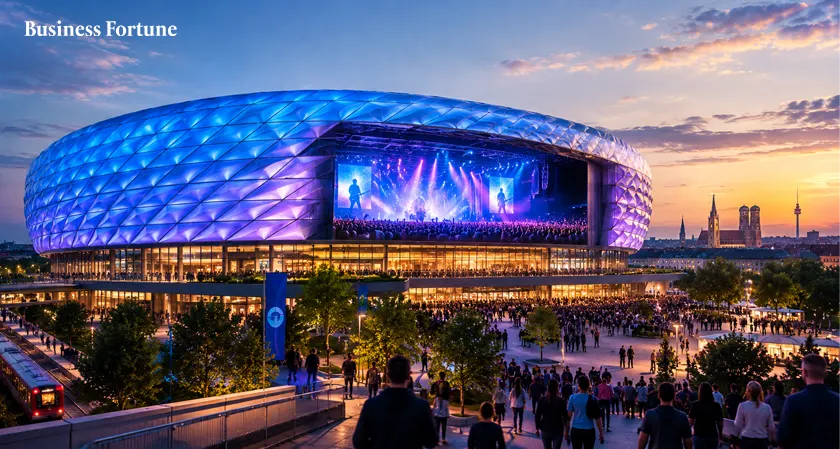
Munich Arena promises to transform Europe's live music scene with 20,000 seats, €400 million investment, and ambitious plans for 2029.
Munich Arena has officially begun construction near Munich International Airport, marking a major development for Germany’s live entertainment industry. Designed to accommodate 20,000 spectators, the music-first venue is expected to open in 2029. With private financing worth about €400 million, the plan seeks to enhance the status of Munich as an important European venue for concerts and is expected to create economic value worth €355 million annually.
Munich Arena Sets New Standards for Live Music Experiences
The groundbreaking ceremony took place on October 28, 2026 and was attended by Bavarian Prime Minister Dr. Markus Söder, Freising Mayor Monika Schwind, Live Nation officials Marek Lieberberg and Tom Lynch, as well as Munich Arena Managing Partner Lorenz Schmid.
Following much planning and approval, construction has finally commenced. This venue has been constructed in collaboration with Live Nation and will be Germany's biggest and most advanced concert arena.
Unlike other multipurpose venues that have been built before, Munich Arena will be built exclusively for live performances. Horseshoe seating design will stretch all the way up to 270 degrees and will place the audience close enough to artists.
The facility will also house exclusive lounges, restaurants, bars, production houses and backstage facilities. These amenities have been provided in order to lure the big names from the international touring circuit.
How Will Munich Arena Benefit Bavaria's Economy?
In addition to serving as an entertainment destination, the project will provide significant economic advantages for both Munich and the whole state of Bavaria.
Based on a report by Deloitte, Munich Arena can create an economic impact of around €390 million in the planning and development stage. During its operations, it will create a gross value added of about €355 million per year.
The hotel, restaurants and other local businesses are set to benefit from the increased visitor traffic and expenditure. This project also contains a hotel component within a live entertainment campus in proximity to Munich Airport.
One of the arena’s defining characteristics is its architecture. The venue has been designed by Populous, a London-based architectural firm, while the planning and management have been handled by HENN, an architectural firm based in Munich. The building will stand approximately 34 metres tall and have a diameter of 100 metres. Its design draws inspiration from the diamond pattern featured on the Bavarian flag.
Can Munich Arena Also Become an Olympic Venue?
Munich Arena is another venue that has been incorporated into Munich's bid for hosting the Olympics and Paralympics of 2036, 2040 or 2044. In case the bid wins, the venue will be utilized to host swimming and para-swimming events by fitting in a temporary swimming pool that will be removed later on.
The Bavarian Prime Minister, Mr. Markus Söder, referred to the project as a significant investment in the region’s future that involves innovation, entertainment and economic development. As a result, the opening of the arena in 2029 will position Munich Arena as one of the major places for live music and events.
Thus, Business Fortune believes that Munich Arena will strengthen Germany’s live entertainment landscape while creating lasting economic, cultural and international opportunities for Bavaria.
Sources: TicketNews, ANSA
FAQs
What is Munich Arena?
Munich Arena is a purpose-built concert venue near Munich International Airport, designed specifically for live music and entertainment.
When will Munich Arena open?
The venue is expected to open in 2029.
What will be Munich Arena's seating capacity?
The arena will accommodate approximately 20,000 spectators.
How much economic impact will Munich Arena generate?
A Deloitte study estimates annual gross value added of approximately €355 million once the arena becomes operational.
Will Munich Arena host Olympic events?
Potentially. If Munich secures the 2036, 2040 or 2044 Olympic and Paralympic Games, the arena could host swimming and para-swimming competitions.

.webp)





























Comments