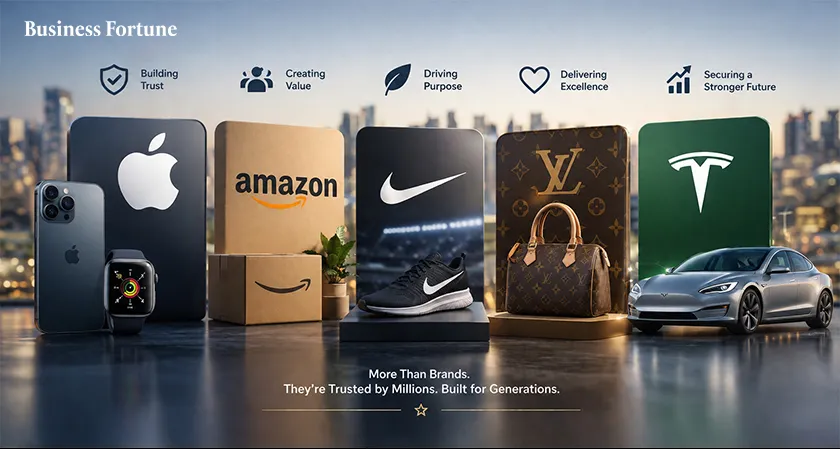
Discover what makes the Most Valuable Brands 2026 stand out. Explore how Apple, Amazon, Nike, Louis Vuitton, and others built lasting customer trust.
When you think about the Most Valuable Brands 2026, it's easy to picture billion dollar companies with global recognition. But that's only part of the story behind every iconic brand is a company that has spent years earning customer trust, adapting to change and finding new ways to stay relevant every day.
Some brands become so familiar that we rarely stop to think about the impact they have on our daily lives. A brand becomes truly valuable when it earns a place in people's everyday lives. Whether it's a smartphone, a pair of sneakers, a luxury handbag or a cup of coffee, the strongest brands is not built over night, it is built with trust through consistent quality, innovation, and memorable experiences. That's why customers keep choosing them, making them difficult for competitors to replace.
The companies featured in this article are setting the benchmark for excellence across industries. They remind us that the world's most valuable brands aren't just recognized everywhere, they're remembered, trusted and chosen again and again.
Most Valuable Brands of the Year 2026
What does it take to become one of the Most Valuable Brands of the Year 2026? Is it groundbreaking innovation or strong customer loyalty or the ability to stay relevant no matter how fast the world changes? The answer is a mix of all these factors and more. Here are some of top valuable brands of 2026.
Apple
Founded by Steve Jobs, Steve Wozniak, and Ronald Wayne in 1976, Apple has become a lifestyle brand that influences how people communicate, work, learn and create.
Apple continues to rank among the world's most valuable brands. What keeps Apple at the top year after year? Its ecosystem of iPhone, Mac, iPad, Apple Watch, and services like iCloud and Apple Music keeps millions of users connected and allows having wonderful experience. What makes Apple stand out is its ability to combine premium design with user-friendly technology. Instead of chasing every trend, the company focuses on refining its products and creating features that people genuinely use. In 2026, Apple strengthened its position by expanding AI-powered capabilities across its devices, improving privacy features, and growing its services business while opening new opportunities for long-term growth.
Amazon
Founded by Jeff Bezos in 1994 as an online bookstore, Amazon has grown into one of the world's most influential companies. What started in a garage is now a global ecosystem spanning e-commerce, cloud computing, entertainment, AI and smart devices. Many companies have tried to replicate Amazon's success, but only a few can nearly match its style and standards.
Whether someone is ordering groceries, streaming a movie, storing business data on AWS, or asking Alexa for the weather, Amazon has become part of daily routines across the globe. The company has built its reputation by constantly asking one simple question, how can we make life easier for customers? That customer-first mindset has driven innovations such as one-day delivery, AI-powered shopping recommendations, cashier-less stores, and one of the world's largest cloud platforms.
Nike & Jordan
Since Phil Knight and Bill Bowerman founded Nike in 1964. The launch of the Air Jordan line with basketball legend Michael Jordan in 1984 changed the industry forever. What began as a signature basketball shoe evolved into an independent cultural phenomenon that influences sports, fashion, music, and streetwear decades later. Jordan sneakers aren't simply products. They're symbols of ambition and individuality.
Nike continues to stay ahead by blending performance technology with powerful storytelling. Every product launch, athlete partnership and marketing campaign connects with people on an emotional level. Competitors can produce great shoes, but recreating the passion, loyalty, and cultural impact that Nike and Jordan have built over generations is an entirely different challenge.
L'Oréal Paris
Founded in 1909 by French chemist Eugène Schueller, L'Oréal Paris has spent more than a century helping people feel confident in their own skin. From hair color and skincare to makeup and anti-aging innovations, the brand has consistently evolved with changing beauty trends while remaining accessible to millions of consumers.
Its iconic slogan, "Because You're Worth It," has become much more than a marketing line. It represents empowerment, self-confidence, and the belief that beauty should be inclusive. L'Oréal continues to lead the industry by investing heavily in scientific research, sustainable beauty solutions, and AI-powered beauty technology that delivers more personalized experiences. What truly sets L'Oréal Paris apart is its ability to combine science with emotion.
Louis Vuitton
When Louis Vuitton founded his company in 1854, he couldn't have imagined that his handcrafted travel trunks would become one of the most recognizable luxury symbols in the world. More than 170 years later, the iconic LV monogram represents craftsmanship, exclusivity, and timeless elegance.
Louis Vuitton focuses on preserving its heritage while embracing modern creativity. Limited-edition collections, collaborations with leading artists and designers, and unforgettable runway shows keep the brand fresh without losing its identity. Luxury isn't just about price. It's about creating something people aspire to own for years, sometimes generations. That's why LV continues to dominate the luxury market. It has mastered the rare balance between tradition and innovation.
Nestlé
Founded in 1866, Nestlé has become the world's largest food and beverage company by earning something few businesses ever achieve, a place in everyday family life. From morning coffee and breakfast cereals to baby nutrition, chocolates, bottled water, and pet care, Nestlé's products reach millions of households every day.
What makes Nestlé exceptional isn't simply the number of brands it owns. It's the trust consumers place in those brands. Over the years, the company has continuously improved nutrition, invested in food science, supported sustainable sourcing, and responded to changing consumer preferences with healthier and more responsible product choices. That's why Nestlé continues to be one of the most valuable and trusted consumer brands in the world.
Lessons from the Leading Brands
Although these brands operate in different industries, they share several qualities that have helped them build lasting value. Their journeys show that becoming a globally respected brand is rarely about one amazing product or a single successful year. Instead, it is the result of making the right decisions every time. Every successful brand has its own story, but if you look closely, they all follow a few common principles. Whether you're building a startup, a growing business, or an established company, these ideas can help create a brand that people remember and trust.
The first lesson is simple, put customers at the center of every decision. Amazon didn't become an e-commerce giant because it sold more products. It became a household name because it constantly found ways to make shopping faster, easier, and more convenient. When businesses solve real customer problems instead of simply pushing products, loyalty follows naturally.
The second lesson is never stop evolving. Nike didn't limit itself to selling sports shoes. Through the Jordan brand, it created a cultural movement that connects sports, fashion, and lifestyle.The takeaway? Don't be afraid to reinvent your brand while staying true to your core values.
Another important lesson is to invest in quality and innovation. L'Oréal Paris has spent decades combining scientific research with beauty, proving that continuous improvement keeps customers coming back. Likewise, Nestlé has remained relevant by responding to changing consumer preferences with healthier choices and sustainable practices instead of relying on its long history.
What Sets the World's Most Valuable Brands Apart?
What separates the world's biggest brands from the rest? It isn't just revenue. The world's most valuable brands have earned something that's much harder, that is customer trust. They solve real problems and keep finding better ways to meet changing customer needs. The smartest companies know that AI is most powerful when it enhances human experience rather than replaces it, so that they can create meaningful customer interactions.
Customer experience has also become a defining factor. Today people expect convenience at every step, whether they're shopping online, using a mobile app, or walking into a store. As Jeff Bezos famously said, "Your brand is what other people say about you when you're not in the room." That simple idea is what makes the world's strongest brands so valuable. Their reputation isn't built through advertising alone, it has earned the name with trust and consistency.
As Business Fortune believes, brands that continue to stand out aren't the ones trying to follow every new trend, they're the ones confident enough to evolve while staying true to what made people trust them in the first place. They know when to innovate, when to adapt and when to stay focused on their purpose. Whether it's investing in sustainability, exploring new markets, or creating products that solve everyday challenges, every move is driven by long-term value rather than short-lived hype. That's why customers don't just buy from these brands once. They keep coming back, generation after generation.


.webp)





























Comments