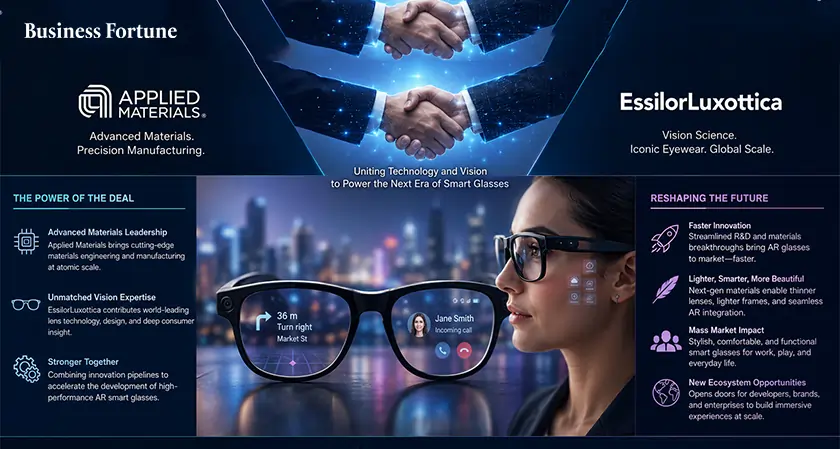
EssilorLuxottica and Applied Materials join forces to develop advanced AR smart glasses, raising questions about the future of wearable technology innovation.
The largest eyewear manufacturers in the world, EssilorLuxottica, and Applied Materials, a semiconductor equipment company based in the US, have partnered for a long time to create augmented reality (AR) display technology and artificial intelligence-powered smart glasses. The companies launched the partnership in an effort to integrate modern materials engineering with optical capabilities. It is expected that the applied materials strike deal will aid in the advancement of wearable technology aimed at enhancing digital experiences through regular eyewear.
The partnership combines Applied Materials' expertise in semiconductor-related technologies and advanced material solutions with EssilorLuxottica's skills in lenses, frames, and smart eyewear design. The collaboration will concentrate on developing optical systems that can support AR applications in the future while resolving issues with usability, size, and performance.
Will Advanced Optical Innovation Make Smart Glasses More Accessible for Consumers?
The partnership is a reflection of the increasing competitiveness in the wearable technology market, where companies are looking for methods to integrate computational power, displays, and artificial intelligence into lightweight consumer products. AR glasses need sophisticated display systems that can project digital content into the user's field of vision, in contrast to conventional smart glasses that mostly rely on cameras, microphones, and voice assistants.
EssilorLuxottica has already increased its market share in AI-powered eyeglasses through collaborations that fuse digital technology with innovative design. By creating advanced optical platforms, the company hopes to improve its position in future smart eyewear sectors, as seen by its most recent partnership with Applied Materials.
Applied Materials, a company renowned for providing semiconductor manufacturing equipment, contributes knowledge in the engineering of specialized material layers needed for advanced electronic and display technologies. It is expected that the partnership will investigate advances that could lead to more effective and scalable augmented reality solutions.
The deal is seen by industry watchers as part of a wider trend toward wearable computing, where glasses may play an important part as a user interface for digital services. Widespread adoption, however, will depend on a number of variables, including cost, battery performance, comfort, and useful consumer applications.
The deal shows how partnership between traditional eyewear companies and semiconductor technology companies is becoming increasingly important as the market for smart glasses expands.
Thus, Business Fortune is of the view that EssilorLuxottica and Applied Materials’ collaboration could drive significant progress in AR-powered smart glasses, influencing the future of wearable technology innovation and consumer adoption.
FAQs
What is the Applied Materials and EssilorLuxottica deal about?
The partnership focuses on developing AR display technology and AI-powered smart glasses using advanced optical and material technologies.
What role will Applied Materials play in the partnership?
Applied Materials will contribute semiconductor and advanced materials expertise to support future optical technology development.
Why are AR glasses considered challenging to develop?
AR glasses require compact, high-performance display systems that can integrate digital visuals into a user’s view while remaining lightweight.
What is EssilorLuxottica known for?
EssilorLuxottica is a global eyewear company involved in lenses, frames, and smart eyewear innovation.
How could this partnership affect the future of wearable technology?
The collaboration could help accelerate the development of more advanced and practical smart glasses for consumers.


.webp)