Reading time: 8 minutes
From smarter smartphones to AI-powered gadgets, discover the brands, breakthrough innovations, and surprising trends shaping the future of everyday technology.
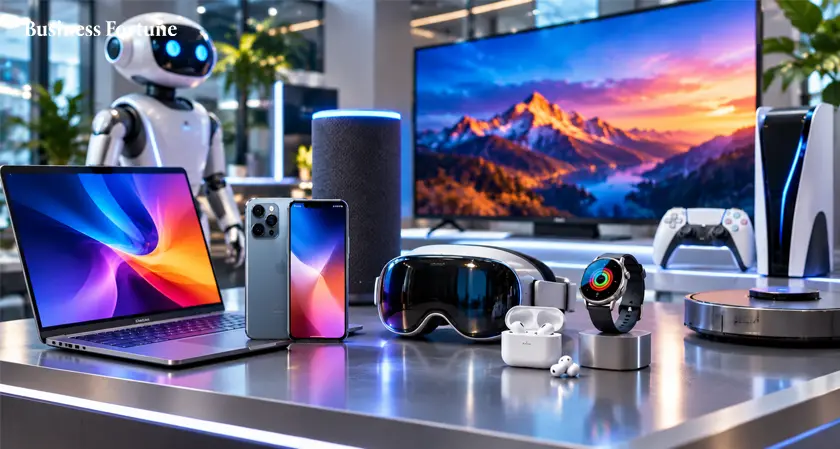
Consumer electronics have evolved into one of the vital components in the lives of many people who use these technologies for communication, business, travel, shopping and entertainment. From mobile phones and laptops to smart TVs, wearable devices and household appliances, the use of technology is becoming more and more integral. There are several leading consumer electronics companies in the world whose products drive technological innovations in this sphere.
The global industry is undergoing a big transformation since consumer needs are changing. The consumers are not anymore satisfied with just a device with improved technical capabilities. They want a smarter device, improved battery life, better connectivity, higher security standards and personalization in their products. This is being facilitated by artificial intelligence, IoT and semiconductor technology advancements.
Existing companies and new technology companies are also vying for increasing their presence internationally. Some are concentrating on producing expensive smartphones and computers, whereas others are putting effort into manufacturing devices related to home entertainment, wearables and smart appliances. Such trends are offering new prospects for international markets.
In this Business Fortune article, we explore the top consumer electronics companies in the world, their key products, technologies and innovations that are shaping the industry in 2026.
What Are Consumer Electronics Companies and Why Do They Matter?
Consumer electronics companies make electronic products for individual and home usage purposes. The products range from mobile phones to computers, laptops, televisions, headphones, digital cameras, gaming devices, smart watches and other household appliances.
The products of these businesses enable consumers to interact with modern technology. The advancements made by such firms affect the way consumers consume information, communicate, manage their households and entertain themselves. Consumer electronics industry have, therefore, gone beyond the development of single electronic devices to designing systems that integrate smartphones, TVs, smartwatches, wireless headphones and household devices.
As a result, leading electronics companies engage in competition based on product quality, R&D, software skills, design and customer service. Innovation by such companies has helped foster advances in other areas like computing and communications.
Which Are the Top Consumer Electronics Companies in the World?
There are several international businesses that have gained prominence because of the combination of their products, technology, brands and distribution channels. The following are eight big players that shape the market in 2026.
-
Apple
Apple, headquarters in Cupertino, California, is among the best known names in the consumer technology industry. Apple products include iPhone, Mac computer, iPad, Apple watch, AirPods and Apple TV.
Apple’s competitive advantage arises from its integration of hardware, software and digital services into an ecosystem. The operating system at Apple gives users the ability to shift between different devices with access to applications, documents and personal data.
The company has also been focusing on artificial intelligence via Apple Intelligence, where it has offered features such as writing assistants, images and better personal assistants for its devices.
-
Samsung Electronics
Samsung Electronics, headquartered in South Korea, is one of the leading companies in the world involved in manufacturing smartphones, televisions, displays and domestic appliances. The Galaxy range of smartphones, tablets, smartwatches and Galaxy Buds target various customer groups.
The company is especially well-known for OLED and QLED TVs. Moreover, it produces memory chips and semiconductors, which are used in electronics produced by Samsung.
Features of the Galaxy AI products show the growing focus of the company on using AI in consumer goods. The company also has an ecosystem of the connected home that helps control connected appliances.
-
Sony Group Corporation
Sony has established its reputation on an international scale based on entertainment technology, games, cameras and audio devices. The Japanese firm provides its customers through its products, which include Bravia televisions, PlayStation console, Alpha cameras and Bluetooth headsets.
The PlayStation division integrates gaming technology with digital entertainment services. Sony also develops camera sensors, image processing and audio technology solutions.
The combination of electronics and entertainment gives Sony a distinctive position among global consumer electronics brands.
-
Xiaomi
Chinese company Xiaomi has gained international attention by providing smartphones, smart home appliances, wearables and electronics products at varied cost segments. The product range includes Redmi and Xiaomi smartphones, smart TVs, fitness bands, wireless earphones and connected appliances.
Some of its major strong points include offering competitive pricing along with the latest specs of the products. The company is even working on building an ecosystem using its HyperOS platform, which reflects its expansion from just being a smartphone maker.
-
LG Electronics
LG Electronics is known for its range of televisions, refrigerators, washing machines, air conditioners and household entertainment systems. This Korean brand has established itself successfully in the international market of household electronics.
The company's OLED TV technology provides high-quality images and good contrast ratio. In addition, LG develops household appliances integration via its ThinQ platform, allowing customers to control their compatible devices. LG starts more and more working on household solutions powered by artificial intelligence which could help with managing energy, customize appliance settings and make household appliances easier to use.
-
Lenovo
Lenovo has gained popularity in personal computing through their range of laptop, desktop, tablet and gaming computer products. The company provides services to students, professionals and gaming enthusiasts using their various computing requirements.
Furthermore, Lenovo is making investments in AI-driven personal computing solutions. The AI-based PCs from Lenovo are designed to enhance productivity and create customized digital experiences for users. The need for computers that can handle more advanced applications is leading Lenovo to increase its global footprint.
-
Panasonic
Panasonic is a Japanese electrical goods company which has been in the business of manufacturing television sets, cameras, audio systems and home appliances for a long time.
Panasonic’s Lumix range of cameras has been quite well-liked by photographers and videographers, while its range of home appliances includes refrigerators, washing machines and cooking appliances.
Panasonic works on making its products energy-efficient and reliable and tries to make the user’s experience convenient.
-
Huawei
Huawei has a large consumer tech product line-up ranging from smartphones, tablets, smart watches, wireless audio products and even connected devices.
Their Mate series and Pura smartphone series demonstrate the innovations in camera technology and mobile computing made by the company. The company's investment in wearable technology is reflected through its Watch range, providing fitness monitoring and wellness-oriented features.
HarmonyOS has been expanded by the company so that the compatible devices can be networked and work together for better customer experience.
What Are the Best Electronics Companies in 2026 Offering Through Innovation?
The best electronics companies in 2026 are competing using not only product releases but by concentrating their efforts on AI implementation, connectivity, energy savings, advanced display technologies and better user experience.
Various AI features are becoming more widespread among smartphones and computers, while smart home appliances provide automation functionality. In addition, wearable technology brings more advanced tracking features and personal health benefits.
Also worth noting is sustainable manufacturing. Various companies are investigating how to use recyclable materials, how to make energy-efficient hardware, how to make products live longer and make repairs easier.
These electronics market leaders are developing new technologies to meet customer requirements. The capacity to offer innovative products for reasonable prices remains very important for their competitiveness.
What Are the Top Consumer Electronics Companies in the World?
There is no single ranking that defines the world's leading manufacturers as companies function within different ranges of goods. There can be different rankings by market capitalization, revenues, brand recognition and ship numbers.
However, those firms that have been mentioned above are examples of companies that play important roles in the world market as their products are available to customers in cell phones, computers, TVs, gaming consoles, cameras and even household appliances.
Some firms manufacture expensive items, but there are companies that attract customers with their cost-efficiency, technology and variety of products.
Why Are Smart Devices Becoming More Popular?
Smart devices are becoming increasingly popular since consumers want technology that will save their time, be convenient and allow integration of various aspects of their life.
Smartphones, smartwatches, smart speakers, smart TVs and household appliances may communicate using wireless connections and interconnected apps. Thus, the users may control their devices via a central platform.
The other crucial feature is AI. Nowadays, devices provide personalized recommendations, voice assistants, automatic settings and convenient options for performing common actions. Reduction in the cost of technologies and widespread internet have also stimulated adoption of smart products, especially in developing countries.
Where Is the Global Consumer Electronics Market Growing Fastest?
Different growth trends characterize the global market. Emerging Asian countries have been receiving attention owing to their high incomes, increased internet use, urbanization and demand for mobile phones and other gadgets at home. Europe is being favored by upgraded premium products and demand for connected living. The Middle East and Africa are also providing chances as they are expanding their consumer bases and adopting technology.
North America still matters owing to its purchasing power and demand for premium gadgets. China is also a big player in the electronics market, which is enabled by its manufacturing ecosystem, native brands and technology infrastructure.
Regional variations are driving the development of products that fit into consumers' purchasing power and preferences. Affordable mobile phones, energy-saving gadgets and connected gadgets will still provide growth opportunities.
Can AI Transform the Consumer Electronics Industry?
There are many aspects of consumer electronics industry that artificial intelligence may revolutionize. It will change the way of operation of gadgets, production process and consumers' interactions with technology.
Smartphones with AI may facilitate taking photos, language assistance, content creation and personalization. Computers may employ AI to become more productive and effective, whereas household appliances may adapt some functions to consumers' liking.
Product design, testing and even customer support can benefit from AI technology. These applications may allow companies to be more efficient and better satisfy consumer demands.
There are also some issues to address: data security, cybersecurity, expenses related to manufacturing processes and responsible use of AI technology. Those companies that integrate smart solutions with effectiveness and convenience can get an advantage over their competitors.
What Does the Future Hold for Consumer Electronics Manufacturers?
The future of consumer electronics makers would depend on how they meet changing consumer demands and at the same time create functional and affordable innovations. Smartphones, wearables, smart TVs, smart appliances and AI-driven computers are some of the things which will continue to shape innovation within the industry.
There is going to be more integration of hardware, software, cloud services and artificial intelligence in the future. Ultimately, sustainability, product security and durability would become more significant aspects of innovation in the future.
It is only those companies which offer functional innovation and not additional features that will be able to gain consumer confidence in the future. The future of electronics innovation would be about convenience, access and functionality.
FAQs
Which company is the global leader in the consumer electronics industry?
Apple and Samsung are among the most influential consumer electronics companies worldwide, leading through smartphones, computers, televisions, wearable devices, and connected technology ecosystems.
What factors should consumers consider when choosing a consumer electronics brand?
Consumers should evaluate product quality, technological features, pricing, durability, software support, after-sales service, energy efficiency, and compatibility with other devices before choosing a brand.
How is artificial intelligence changing the consumer electronics industry?
AI is making electronic devices smarter through personalised recommendations, intelligent voice assistants, automated home functions, advanced photography, and improved productivity features.
Which regions are creating the biggest growth opportunities for consumer electronics companies?
Asia-Pacific, particularly emerging Asian economies, offers significant growth opportunities because of rising disposable incomes, urbanisation, expanding internet access, and increasing demand for smart devices.
What will shape the future of global consumer electronics brands?
AI integration, connected device ecosystems, sustainable manufacturing, advanced semiconductors, energy-efficient products, and improved cybersecurity will play important roles in shaping the industry's future.


.webp)




























Comments