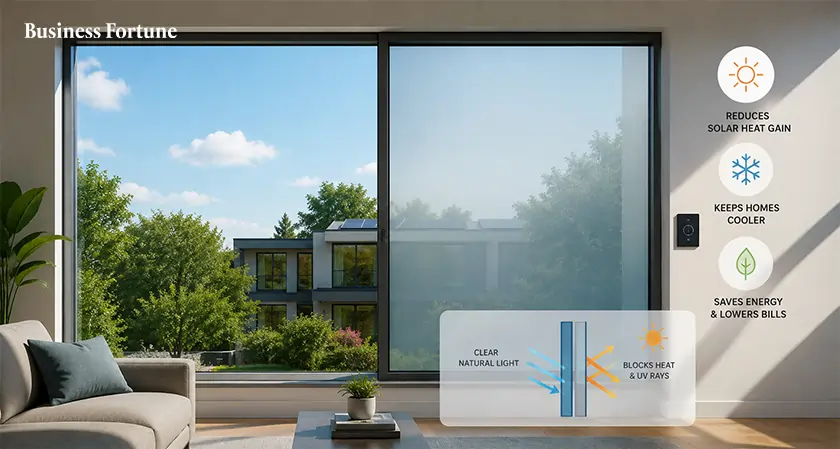
TNO smart windows automatically block solar heat without electricity, helping buildings save energy, reduce CO₂ emissions, and improve indoor comfort.
TNO smart windows have moved beyond the laboratory and into real-world buildings, marking a significant step toward smarter and more energy-efficient homes. Developed by the Dutch research organization TNO, the innovative glass is now being tested in occupied buildings and residential properties for the first time.
Unlike traditional solar control glass or electrically operated smart windows, SunSmart windows work automatically. A special transparent coating responds to temperature changes, blocking solar heat when temperatures rise to around 21°C while allowing warmth to enter when temperatures are lower. The process requires no electricity, wiring, or manual controls.
A Window That Thinks for Itself
The technology relies on a carefully engineered coating made from vanadium dioxide and other materials. As temperatures change, the crystal structure of the coating adjusts, controlling the amount of solar heat that passes through the glass. What makes the innovation stand out is that the glass remains clear and transparent throughout the process. Occupants can enjoy natural daylight without noticing any color change or dark tint.
More than 300 square meters of SunSmart glass has already been produced in commercial-sized panels and installed in locations including the Brightlands Circular Space building in Geleen and a residential home in Almere.
Can Smart Windows Really Cut Energy Bills?
Compared with standard HR++ glazing, TNO smart windows can reduce household energy consumption by approximately 5% to 9%. For an average Dutch household, that could mean:
-
Around €500 in annual energy savings
-
Nearly 400 kilograms less CO₂ emissions per year
-
Up to 60% fewer indoor hours above 28°C
These benefits could help lower cooling costs during summer while maintaining comfort indoors.
From Research Project to Market Opportunity
Researchers say developing the coating was the biggest challenge. Earlier heat-blocking coatings often turned glass yellow, limiting their appeal. The TNO team spent years refining the formula to maintain transparency while improving heat control. The organization is now working with industry partners to determine the best path toward large-scale production and market introduction. Commercial rollout efforts are already underway, with strong interest from the building sector.
Looking Ahead
As Business Fortune observes, energy costs continue to rise and countries push toward climate-neutral buildings, TNO smart windows could become an important part of future construction. By automatically managing solar heat without electricity or complex systems, the technology offers a simple yet powerful way to make homes and offices more comfortable, efficient, and sustainable.
FAQs
What are TNO smart windows?
TNO smart windows are temperature-responsive windows that automatically regulate solar heat entering a building without using electricity.
How do the windows work?
A transparent thermochromic coating changes its behavior based on temperature, allowing or blocking solar heat as needed.
Do the windows become darker when activated?
No. The glass remains visually transparent and does not show a noticeable tint change.
How much energy can homeowners save?
Tests indicate energy savings of about 5% to 9%, which could translate to roughly €500 per year for an average household in the Netherlands.
Where are the windows being tested?
The technology is currently installed in real buildings, including the Brightlands Circular Space building in Geleen and a residential property in Almere.


.webp)































Comments