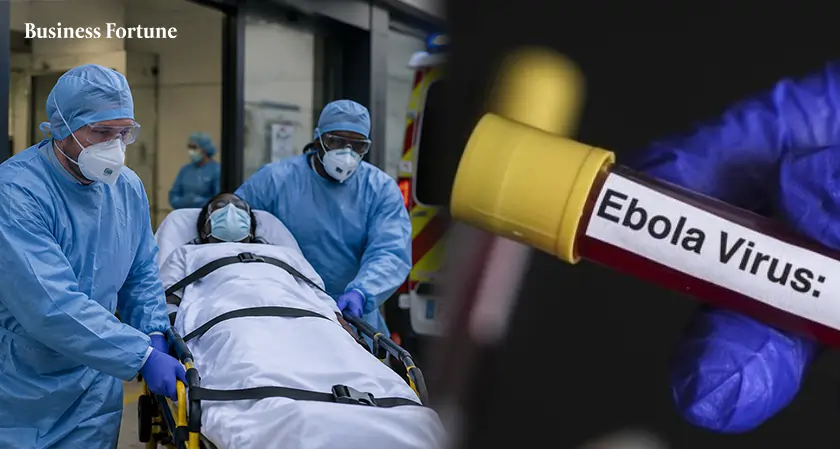
France has confirmed its first Ebola case during the current outbreak, raising concerns worldwide while health officials emphasize that the risk to the public remains extremely low.
The Ebola France case involves a doctor who recently returned from a humanitarian mission in the Democratic Republic of the Congo (DRC), where a major Ebola outbreak is ongoing. French health authorities said the healthcare worker was immediately isolated upon arrival and transferred to a specialized medical facility. Officials confirmed that the patient is in stable condition and receiving treatment under strict safety protocols.
Authorities have also launched a contact-tracing operation to identify anyone who may have interacted with the doctor. Those identified will be asked to self-isolate for 21 days as a precaution.
Swift Action Helps Limit Risk
French officials stressed that all necessary measures were taken from the moment the patient arrived in the country. According to the Health Ministry, the chances of the virus spreading among the general public are very low.
The World Health Organization (WHO) echoed that message. WHO Director-General Tedros Adhanom Ghebreyesus stated that there is no reason for panic, noting that fewer than 30 Ebola cases have been detected outside Africa over the past five decades. This marks the first confirmed case of Ebola in France linked to the current outbreak and the first confirmed case in Europe during this health emergency.
Why Is the Outbreak So Difficult to Control?
The current outbreak is centered in the DRC's northeastern Ituri province, though cases have also been reported in neighboring Uganda.
Several factors are making containment difficult:
-
Ongoing conflict and security threats in affected regions
-
Limited healthcare infrastructure
-
Challenges in tracing contacts
-
Difficult access to displaced populations living in camps
-
Lack of approved vaccines for the Bundibugyo strain responsible for this outbreak
Health workers remain among the most vulnerable groups, as Ebola spreads through direct contact with infected bodily fluids.
The Numbers Highlight the Challenge
The outbreak has already become one of the most concerning in recent years.
Current reported figures include:
-
More than 1,000 confirmed infections in the DRC
-
Over 260 deaths linked to the virus
-
More than 100 recoveries
-
20 confirmed cases in Uganda
-
2 reported deaths in Uganda
Experts believe the actual number of infections could be significantly higher because the virus may have circulated undetected for weeks before being officially identified.
Global Health Agencies Are Watching Closely
The WHO declared the outbreak a Public Health Emergency of International Concern in May. International organizations, including UNICEF and Gavi, are now working with researchers and vaccine developers to accelerate efforts toward a vaccine for the Bundibugyo strain.
While health workers in the DRC report signs of improvement in some communities, challenges remain. Security concerns, funding shortages, and pressure on healthcare systems continue to complicate response efforts.
Looking Ahead
As Business Fortune observes, French authorities appear to have acted quickly and effectively to contain the situation. However, the case serves as a reminder that infectious disease outbreaks can cross borders rapidly in an interconnected world. As researchers push for new vaccines and stronger outbreak responses, global cooperation will remain critical in preventing Ebola from gaining a wider foothold beyond Central Africa.
FAQs
What is Ebola?
Ebola is a severe viral disease that spreads through direct contact with infected bodily fluids and can cause serious illness and death.
Who is the Ebola patient in France?
The patient is a doctor who recently returned from a humanitarian mission in an Ebola-affected area of the Democratic Republic of the Congo.
Is there a risk of a widespread outbreak in France?
French health authorities and the WHO say the risk to the general public is very low due to rapid isolation and monitoring measures.
Why is the current Ebola outbreak unusual?
The outbreak is caused by the Bundibugyo strain of Ebola, for which there are currently no approved vaccines or specific treatments.
What is being done to stop the outbreak?
Health agencies are conducting contact tracing, expanding treatment capacity, supporting affected communities, and accelerating research into vaccines for the Bundibugyo strain.


.webp)