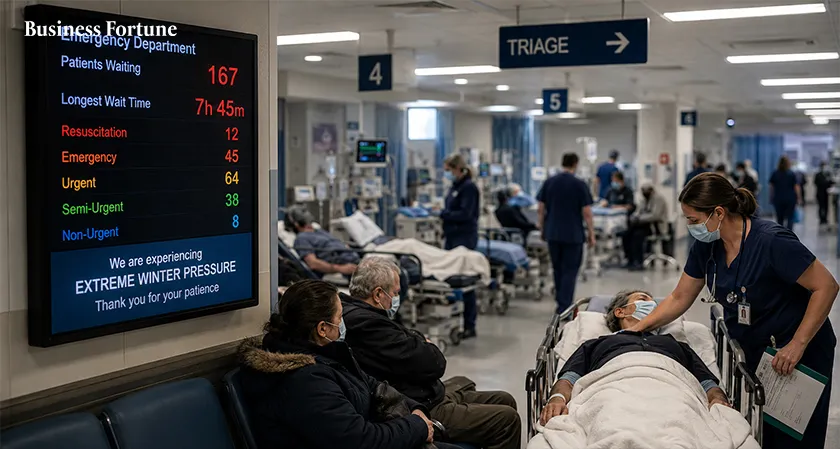
NSW hospitals face record winter emergency demand as rising illnesses, ambulance pressure and capacity challenges strain healthcare services statewide.
New South Wales emergency departments are facing unprecedented winter pressure as record patient arrivals, rising respiratory illnesses and ambulance demand push the state’s hospital system to its limits. Health officials have urged residents to seek emergency care only for serious conditions while expanding support services to manage increasing demand across hospitals.
Record Emergency Demand Strains NSW Hospitals
The New South Wales health minister, Ryan Park, said nearly 10,000 people visited Sydney emergency departments on Monday, marking the busiest winter day ever recorded. The figure was about 1,000 above the daily average, highlighting the pressure faced by medical teams across the state.
Ambulance services also experienced major demand, with 4,100 callouts recorded during the same period. The government has introduced a permanent command centre to coordinate hospital capacity, working with local health districts and NSW Ambulance to manage peak periods more effectively.
Key pressure points affecting the healthcare system include:
-
Record winter emergency presentations across Sydney hospitals
-
Increased ambulance demand creating additional operational challenges
-
Respiratory illnesses driving more hospital visits statewide
-
Limited hospital capacity affecting patient flow management
-
Urgent care services supporting non-critical medical needs
Winter Illnesses Increase Healthcare Pressure
Influenza and RSV activity were moderate, according to the most recent NSW Health respiratory monitoring data, but Covid-19 activity was still low. Health officials anticipate that the number of influenza-related emergency presentations will continue to rise during the winter.
Park urged locals to use Healthdirect and urgent care services when necessary so that emergency departments may concentrate on serious cases. In order to offer more access outside of regular schedules, some healthcare facilities are now expanding their operating hours.
Concerns have been voiced regarding patients being in hospital beds while awaiting aged care or disability support arrangements and the NSW hospital system is also coping with delayed patient transfers. According to Park, these delays had an impact on over 1,300 patients.
Calls Grow for Long-Term Health Investment
According to NSW Premier Chris Minns, the current time frame is among the most difficult for emergency services this year. He emphasized the effects of colder temperatures and higher demand in regional and Western Sydney.
Healthcare executives cautioned that steering people away from emergency rooms is not a viable strategy. According to the Australian Medical Association, NSW needs more funding for general practice services, hospital beds, medical staffing and preventative healthcare.
Nearly 792,000 people visited emergency rooms in NSW hospitals between January and March, according to the Bureau of Health Information, indicating a sustained increase in the demand for healthcare over the prior year.
Business Fortune is of the view that sustained investment in healthcare capacity, staffing and preventive services will be essential to address rising emergency pressures across New South Wales.
FAQs
Why are New South Wales emergency departments experiencing record pressure?
New South Wales emergency departments are facing increased pressure due to record winter patient arrivals, rising respiratory infections, ambulance demand and limited hospital capacity.
Are people being advised to avoid emergency departments in NSW?
Health officials have advised residents to avoid emergency departments for non-urgent issues and seek alternative care options when conditions are not life-threatening.
What healthcare alternatives are available for non-emergency medical concerns?
Residents can access urgent care clinics, general practitioners and Healthdirect services for medical advice and treatment outside emergency departments.
Which illnesses are contributing to increased hospital demand in New South Wales?
Seasonal illnesses including influenza and RSV are contributing to higher hospital visits, while Covid-19 cases remain at a lower level.
What measures is NbSW taking to manage hospital system pressures?
The NSW government is expanding coordination through a command centre, extending some healthcare service hours and improving patient flow management.


.webp)
































Comments