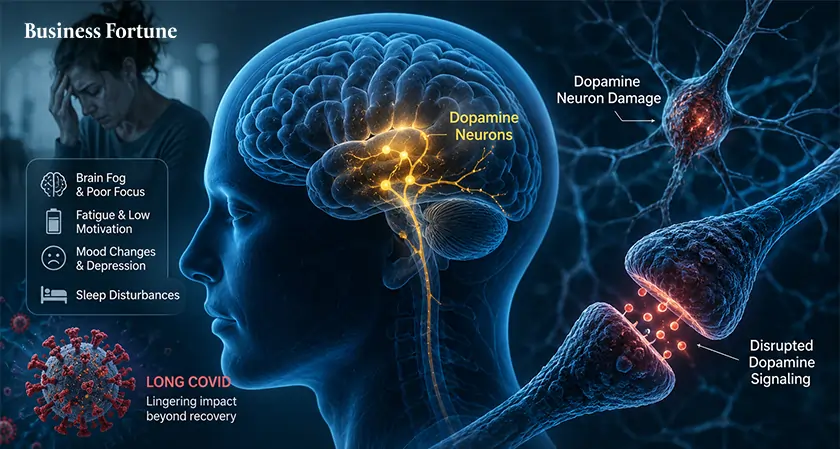
New research links dopamine neuron loss to long COVID symptoms, raising questions about treatments and the future of neurological recovery.
A new study has provided the strongest evidence linking Long COVID dopamine neurons injury with persistent neurological symptoms, including brain fog, fatigue, memory difficulties, and slowed movement. Published in eBioMedicine, the research used PET brain imaging to examine 24 people with long COVID and 43 healthy individuals, finding reduced dopamine nerve ending density in key brain regions.
Dopamine Neuron Changes Explain Symptoms
Researchers from the Centre for Addiction and Mental Health in Canada found lower dopamine markers across the striatum, a brain structure involved in motivation, movement, and thinking. The findings suggest long COVID may affect the brain’s dopamine system.
Key findings include:
-
Reduced dopamine markers across major brain regions
-
Lower motivation linked to ventral striatum changes
-
Slower movement tied to dorsal putamen changes
-
Memory issues connected to caudate putamen reductions
-
Dopamine pathways may offer treatment opportunities
The study suggests long COVID neurological symptoms could involve dopamine disruption beyond inflammation and immune changes. Researchers said earlier studies focused on inflammation, while this research highlights dopamine-releasing neurons as a therapeutic target.
Potential Future Long COVID Treatments
Scientists said the findings could support research into medicines that enhance dopamine function. Possible approaches include dopamine precursors and drugs affecting dopamine metabolism, though further studies are needed.
Senior author Dr Jeffrey Meyer said the research indicates long COVID is partly a disorder of the brain’s dopamine system. The study builds on previous findings showing increased brain inflammation in regions containing dopamine-releasing neurons.
The discovery offers an understanding of long COVID brain effects and may guide therapies for patients facing cognitive symptoms, fatigue, and reduced motivation. Researchers believe targeting dopamine pathways could improve treatment strategies.
Thus, Business Fortune believes that emerging dopamine research may redefine long COVID treatment approaches by unlocking new neurological therapies and possibilities.
FAQs
What did the study reveal about long COVID?
It linked long COVID symptoms to reduced dopamine function in the brain.
How were dopamine changes studied?
Researchers used PET brain imaging to examine dopamine markers
Which symptoms are linked to dopamine loss?
Fatigue, memory issues, and slower movement were associated
Could dopamine treatments help long COVID patients?
They may offer future treatment options, but more research is needed
Where was the study published?
The findings were published in eBioMedicine.


.webp)
































Comments