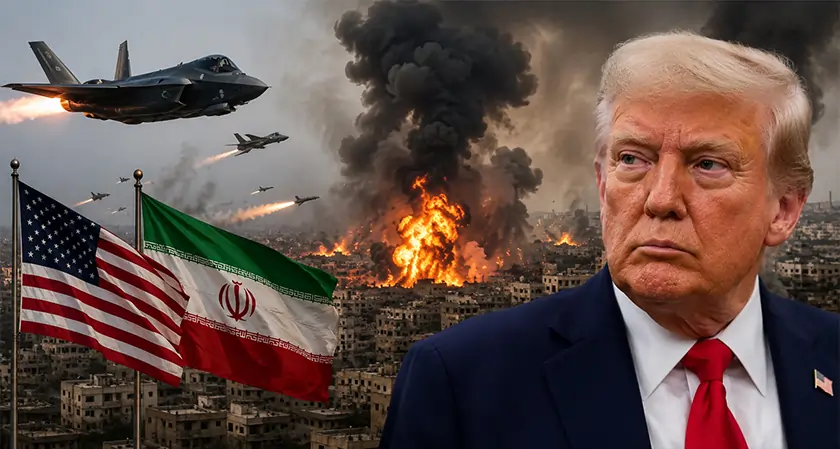
Trump questions the ceasefire as the US-Iran war intensifies, with fresh strikes raising concerns over diplomacy and regional stability.
The US-Iran war has entered a new phase of uncertainty as President Donald Trump questions the future of the ceasefire, while fresh US-Iran trade strikes intensify tensions between the two countries. Trump has suggested Washington may “finish the job,” but also denied that the latest attacks represent a return to a prolonged conflict. The developments have raised concerns over diplomacy, energy markets and the possibility of wider regional instability.
"For me, I think it's over. I don't want to deal with them anymore,"
- Donald Trump
Trump’s Mixed Signals Raise Conflict Concerns
Trump’s statements have created uncertainty over whether the US actions are aimed at pressuring Tehran into negotiations or preparing for a broader military campaign. Officials say recent strikes targeted Iran’s ability to threaten navigation in the Strait of Hormuz, a key route for global oil shipments.
Key developments shaping the conflict include:
-
Trump questions the ceasefire while warning Iran again
-
US launches fresh strikes targeting Iranian capabilities
-
Iran reports casualties after American airstrikes
-
Oil markets react to rising regional tensions
-
Diplomats work to preserve fragile agreements
Iran Responds with Military and Political Pressure
Iran has accused Washington of escalating the conflict after two days of US airstrikes that reportedly killed and injured civilians. Iran’s military also claimed it targeted US-linked facilities in the Gulf, including Patriot systems and logistics infrastructure.
The worsening confrontation has increased fears that the US-Iran trade strikes could disrupt energy supplies and regional security. Analysts warn that crude prices may rise further if tensions continue around the Strait of Hormuz.
Diplomacy Faces Major Test amid Escalation
Efforts to maintain a Trump deal with Iran remain uncertain as mediators attempt to prevent further escalation. The previous negotiations had created limited progress between the longtime rivals, but renewed attacks have complicated future discussions.
The US-Iran conflict is also becoming a political challenge, with higher fuel prices potentially affecting voters ahead of the US midterm elections. Meanwhile, Iran continues to manage internal divisions following the death and funeral proceedings of Supreme Leader Ayatollah Ali Khamenei.
Thus, Business Fortune is of the view that the escalating US-Iran war requires careful diplomacy, as continued military actions could deepen geopolitical risks and global economic uncertainty.
FAQs
What is causing the latest US-Iran tensions?
New military strikes and disagreements over diplomacy have increased tensions.
Did Trump end the Iran ceasefire?
Trump questioned the ceasefire but avoided confirming a complete breakdown.
Why is the Strait of Hormuz important?
It is a major global route for oil and gas shipments.
How are oil markets reacting to the conflict?
Rising tensions are increasing concerns about possible supply disruptions.
Can negotiations between the US and Iran continue?
Mediators are attempting to keep diplomatic channels open.


.webp)




























Comments