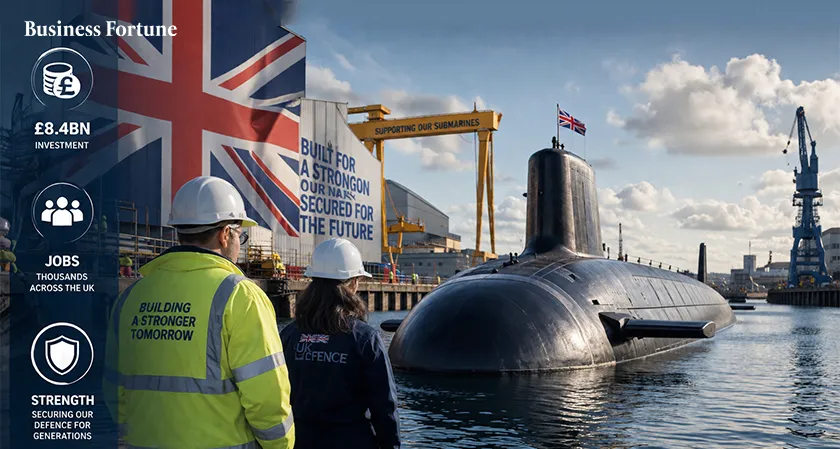
The UK’s latest defence funding strengthens submarine capabilities, creates skilled jobs, and supports long-term growth across communities and industries.
The UK government is set to announce a major £8.4bn UK nuclear deterrent investment to strengthen national security, accelerate the Dreadnought Class submarine programme and create thousands of skilled employment opportunities across Britain. The defence funding package will support tens of thousands of jobs, reinforce the British defence industry and expand opportunities for young people through new apprenticeship initiatives.
Major Defence Investment Strengthens Nuclear Programme
The latest investment marks the beginning of the fourth phase of the UK’s Dreadnought Class submarine programme, ensuring the continuation of the country’s nuclear deterrent capabilities. The funding will support the construction, testing and delivery of advanced submarines designed to protect the UK for future generations.
The programme is centered around BAE Systems’ shipyard in Barrow-in-Furness, where productivity has increased significantly while creating around 1,800 additional roles. The project highlights how government-backed defence investment can stimulate regional economic growth.
Andy Burnham said: “Security is not only about what we build, it is about who builds it, and who benefits from it. These submarines will protect Britain for decades to come while creating jobs and apprenticeships across the country.”
Key highlights of the investment include:
-
£8.4bn funding for nuclear deterrent development
-
47,000 existing defence-related jobs supported nationwide
-
22,000 apprenticeships planned by 2035
-
6,000 UK suppliers strengthened through investment
-
Thousands of skilled roles created across communities
Jobs and Apprenticeships Drive Regional Growth
The UK Defence Nuclear Enterprise currently supports thousands of workers across locations including Barrow, Bristol, Devonport, Derby and Aldermaston. The workforce is expected to grow further as demand for specialized defence skills increases over the coming years.
A new apprenticeship scheme in Northwest England will help small and medium-sized businesses within the defence supply chain recruit and train 30 apprentices over three years. The initiative aims to create stronger pathways for young people entering skilled industries.
British Industry Receives Major Support
Under the new contracts, £5.9bn of investment will go directly to BAE Systems, while £2.5bn will support the wider supply chain. Companies involved in submarine manufacturing, nuclear engineering, specialist materials and maintenance services will benefit from the expanded defence spending.
The investment also supports organizations such as Rolls-Royce, AWE, Sheffield Forgemasters and Babcock, which play important roles in maintaining the UK’s nuclear defence capabilities.
Dreadnought Submarines Enter Next Development Phase
Delivery Phase 4 will enable HMS Dreadnought, the first submarine in the new class, to complete sea trials before entering Royal Navy service in the early 2030s. HMS Valiant will also progress towards sea trials, while the remaining submarines continue construction.
The announcement reflects the government’s continued commitment to the Strategic Defence Review and maintaining the UK’s nuclear deterrent under the nuclear triple lock.
Business Fortune is of the view that this investment demonstrates how defence spending can strengthen security, industries, skills and communities nationwide.
FAQs
What does the £8.4bn UK nuclear deterrent investment aim to achieve?
The investment will advance the Dreadnought Class submarine programme, strengthen UK national security, and support long-term defence capabilities.
How will the investment impact jobs and local communities?
The funding will support thousands of skilled jobs, apprenticeships, and economic opportunities across regions involved in the UK defence supply chain.
What role does BAE Systems play in the nuclear deterrent programme?
BAE Systems designs and builds the UK’s Dreadnought Class and attack submarines at its Barrow-in-Furness shipyard.
When will the first Dreadnought Class submarine become operational?
HMS Dreadnought is expected to complete sea trials and enter Royal Navy service in the early 2030s.
How will young people benefit from the new defence apprenticeship schemes?
The apprenticeship initiatives will help young people gain specialized skills and access employment opportunities within the defence industry.


.webp)
































Comments