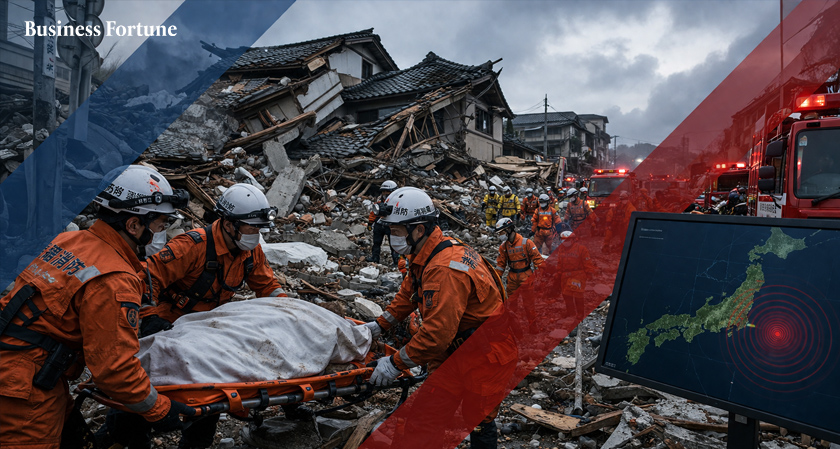
A powerful 7.1 magnitude earthquake devastated Japan's Kumamoto region, killing 13, injuring over 100, displacing thousands and triggering massive rescue efforts.
A devastating Japan earthquake measuring 7.1 magnitude struck the southwestern Kumamoto region on Kyushu island on Tuesday, leaving at least 13 people dead, more than 100 injured and thousands displaced. The powerful tremor caused widespread destruction, including collapsed buildings, damaged roads, factory accidents and a shopping mall disaster that trapped dozens of people.
Rescue teams, military personnel and emergency services continue searching for survivors while authorities restore essential services and monitor persistent aftershocks.
Shopping Mall Collapse Sparks Major Rescue Operation
One of the most severe incidents occurred at the Aeon Mall in Kashima Town, where the second floor collapsed during the quake. Authorities reported several workers missing as rescue crews searched through the debris. A subsequent explosion, believed to be linked to a gas leak, occurred after most shoppers and employees had evacuated. Officials continue examining the incident while confirming that hundreds escaped safely.
Kumamoto Earthquake Damages Infrastructure across Kyushu
Roads, bridges, industry and residential neighborhoods were all severely impacted by the Kumamoto earthquake. At the Yatsushiro plant of Nippon Paper Industries, a factory chimney collapsed, trapping several people under the debris. While searching for individuals who are still missing, rescue crews were able to recover victims and survivors. During the earthquakes, historic Kumamoto Castle also sustained new structural damage.
Hospitals, Evacuation Centres Face Growing Pressure
In addition to treating patients with burns, fractures and crush injuries, hospitals in the impacted area had to deal with electrical outages and water leaks. In five prefectures, over nine thousand people spent the night in more than 500 evacuation centers while authorities attempted to restore transportation, water and energy services that had been affected by the disaster.
Key Highlights
- At least 13 fatalities confirmed after powerful earthquake struck.
- Shopping mall collapse trapped workers beneath concrete debris.
- Over 9,000 residents sheltered inside evacuation centres overnight.
- Military deployed thousands supporting rescue and relief operations.
- Aftershocks expected to continue over the coming days.
Government Mobilises Emergency Response
Within hours of the disaster, Prime Minister Sanae Takaichi formed an emergency task force and promised to use every resource at his disposal to aid rescue efforts. With aircraft support, some 3,600 members of the Self-Defense Forces helped firefighters, carried injured citizens and brought emergency supplies and drinking water. Following inspections, officials also verified that there were no abnormalities at nearby nuclear power facilities.
Prime Minister Sanae Takaichi said:
“There are people who are still waiting to be rescued, and it’s a race against time. We will go all out to find and rescue as many people as we can.”
Transport Disruptions and Ongoing Aftershock Risk
The earthquake caused road network disruptions, a cargo train derailment, the temporary closure of Kumamoto Airport and the temporary suspension of Shinkansen bullet train services. The Japan Meteorological Agency cautioned that severe aftershocks could continue for the next two to three days, encouraging residents to remain attentive even though a tsunami alarm was withdrawn after authorities found no serious threat.
As rescue teams fight aftershocks and scramble to save lives throughout the devastated region, Business Fortune believes that Japan's quick emergency response is still crucial.
FAQs
What caused the Japan earthquake?
The Japan earthquake occurred because the country lies along the Pacific "Ring of Fire," where four major tectonic plates meet, making it one of the world's most seismically active regions.
How severe was the Kumamoto earthquake?
The Kumamoto earthquake measured 7.1 in magnitude according to the Japan Meteorological Agency and caused widespread building collapses, infrastructure damage and multiple casualties across Kyushu.
How many people were affected by the Japan earthquake?
At least 13 people were killed, more than 100 were injured and over 9,000 residents sought shelter in evacuation centres as rescue operations continued.
What actions has the Japanese government taken after the earthquake?
The government deployed around 3,600 Self-Defense Forces personnel, launched large-scale search and rescue missions, restored essential services and established an emergency response task force led by Prime Minister Sanae Takaichi.
Is there still a risk after the Japan earthquake?
Yes. The Japan Meteorological Agency has warned that strong aftershocks may continue for several days and authorities have urged residents to remain cautious around damaged buildings and affected areas.


.webp)































Comments