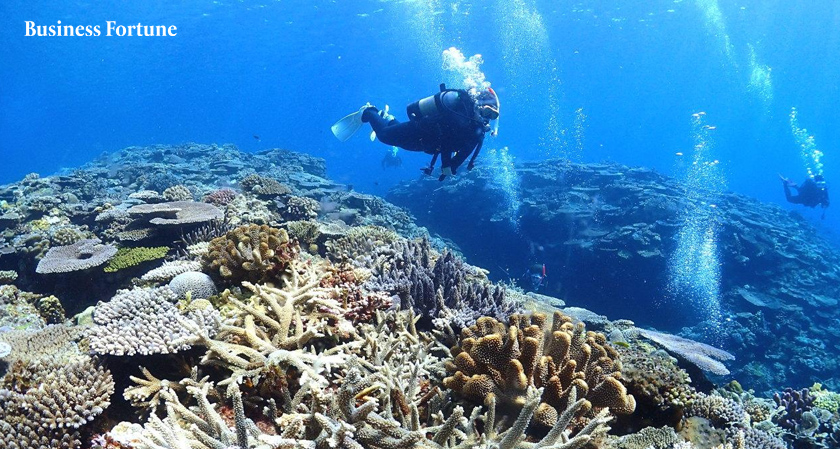
Japan coral protectors are racing to revive Okinawa's coral reefs using heatwave simulators, resilient coral breeding and conservation efforts against climate change.
Japan coral protectors are stepping up efforts to rescue Okinawa's iconic coral reefs as climate change and rising ocean temperatures threaten one of the world's richest marine ecosystems. Scientists and conservationists are deploying cutting edge technologies, including heatwave simulators and resilient coral breeding, to combat widespread coral bleaching and protect marine biodiversity before another devastating marine heatwave strikes.
Climate Change Puts Okinawa's Coral Reefs at Risk
Okinawa's coral reefs suffered severe damage during the 2024 marine heatwave, leaving vast underwater areas bleached and lifeless. Experts warn that with global ocean temperatures reaching record highs and future El Niño conditions expected to intensify warming, another mass bleaching event could occur in the coming years.
Although recent typhoons temporarily cooled Okinawa's coastal waters, scientists believe this offers only short term relief.
"It's almost 100 percent that soon in Okinawa, all around the world, we will have another mass bleaching event. Just like a bomb, it will explode," said Professor Timothy Ravasi of the Okinawa Institute of Science and Technology.
Heatwave Simulators Offer New Hope
Researchers at the Okinawa Institute are using one of the world's only "heatwave simulators" to study how coral reefs respond to rising temperatures and ocean acidification.
The controlled seawater tanks recreate future marine conditions, allowing scientists to observe how coral, fish, giant clams and other marine species adapt to climate stress.
"If we don't understand what climate change, ocean warming or acidification does to coral ecosystems, there is a chance we're going to lose them," Ravasi said.
'Miracle Coral' Built to Survive
Conservationist Koji Kinjo has developed what he calls "miracle coral" at an artificial indoor sea in Yomitan. Instead of protecting coral from stress, he exposed them to strong UV rays and other harsh conditions during growth, producing resilient corals that survived the devastating 2024 bleaching event.
"I can say with absolute certainty that to raise creatures able to survive nature's harshness, they must be toughened up while growing up," Kinjo said.
Kinjo believes active human intervention is now essential as natural reefs struggle to recover from climate change and pollution.
Tourism and Conservation Must Work Together
Tourism contributes more than 80% of Okinawa's economy, but increased coastal development, pollution and overfishing continue to place additional pressure on fragile reef ecosystems.
Scientists say balancing economic growth with environmental protection will be critical to preserving Okinawa's coral reefs for future generations.
A Race Against Time
Coral reefs cover only around 0.1% of Earth's surface, yet they provide habitat for nearly 25% of all marine fish species. Researchers warn that without urgent climate action and continued conservation efforts, many of these ecosystems could disappear permanently.
Business Fortune believes that Japan's innovative conservation projects are now being watched globally as potential models for protecting coral reefs from the accelerating impacts of climate change.
FAQs
Who are the Japan coral protectors?
They are scientists, conservationists and local organizations in Okinawa working to restore and protect coral reefs through research and restoration projects.
Why are Okinawa's coral reefs bleaching?
Rising ocean temperatures cause coral bleaching, where corals lose the algae they depend on for survival.
What is a heatwave simulator?
A heatwave simulator is a research system that recreates future ocean conditions to study how coral reefs and marine life respond to warming waters and ocean acidification.
What is 'miracle coral'?
"Miracle coral" refers to specially cultivated coral bred to withstand extreme heat and environmental stress, making it more resistant to bleaching.
Why are Okinawa's coral reefs important?
Okinawa's coral reefs are important because they support around one quarter of the world's marine fish species and protect coastlines.


.webp)































Comments