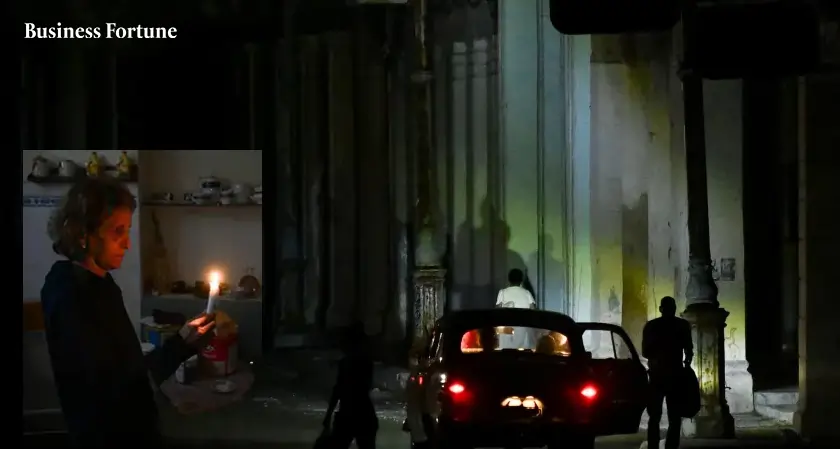
The Cuba power outage leaves millions without electricity as fuel shortages, grid failures, and economic pressures deepen the island's crisis.
A massive Cuba blackout has once again left millions of people without electricity, marking the country's third nationwide power failure of 2026. The latest disruption has deepened concerns about Cuba's worsening energy crisis, as fuel shortages and an aging power grid continue to strain daily life across the island.
According to Cuba's state-run electricity company, the national power generation system suffered a complete disconnection, triggering widespread outages. Authorities said investigations are underway while emergency measures have been activated to restore service to critical facilities.
A Growing Crisis Hits Everyday Life
The latest blackout is the eighth major outage reported since late 2024. For many Cubans, extended power cuts have become part of everyday life. In some parts of Havana, residents have faced outages lasting more than 24 hours, while certain rural communities have endured over 70 hours without electricity. The situation has affected work, communication, and access to essential services. Businesses have struggled to operate, and many families have been forced to adapt to unpredictable schedules.
"Living like this is agony. You never know when electricity will return," said Havana resident Meyboll Font, describing the uncertainty faced by many Cuban households.
Officials stated that hospitals, food production centers, and other vital services were prioritized during the emergency. However, electricity providers were only able to meet a small fraction of Havana's overall demand during the crisis.
Why Is Cuba Facing So Many Blackouts?
The current Cuba power outage crisis stems from several challenges. The country's electricity network relies heavily on aging power plants, many of which date back decades. At the same time, fuel supplies have become increasingly limited.
Cuban authorities argue that tighter US sanctions and restrictions on oil shipments have worsened the problem. Since the beginning of the year, fewer fuel deliveries have reached the island, making it harder to operate power stations and maintain a stable grid.
The recent Cuba nationwide blackout also comes amid broader economic difficulties, including shortages of food, medicine, and other essential goods.
Can Renewable Energy Provide Relief?
To reduce dependence on imported fuel, Cuba has invested in solar energy projects. While renewable energy production is growing, solar power still accounts for only a small share of the country's electricity supply. As Business Fortune observes, Cuba's ability to modernize its energy infrastructure and diversify its power sources may determine whether future blackouts can be avoided. Until then, many residents remain uncertain about when reliable electricity will return.
FAQs
What caused the latest Cuba power outage?
Officials said the national electricity generation system suffered a complete disconnection. The exact cause remains under investigation.
How many nationwide blackouts has Cuba experienced recently?
This was Cuba's third nationwide blackout of 2026 and the eighth major outage since late 2024.
Why is Cuba facing electricity shortages?
The crisis is linked to fuel shortages, aging power plants, and ongoing challenges affecting the country's energy infrastructure.
How are residents affected by the outages?
Many areas experience extended power cuts, disrupting work, internet access, food storage, and everyday activities.
Can renewable energy solve Cuba's power crisis?
Renewable energy may help in the long term, but solar power currently provides only a limited portion of the country's overall electricity supply.


.webp)





























Comments