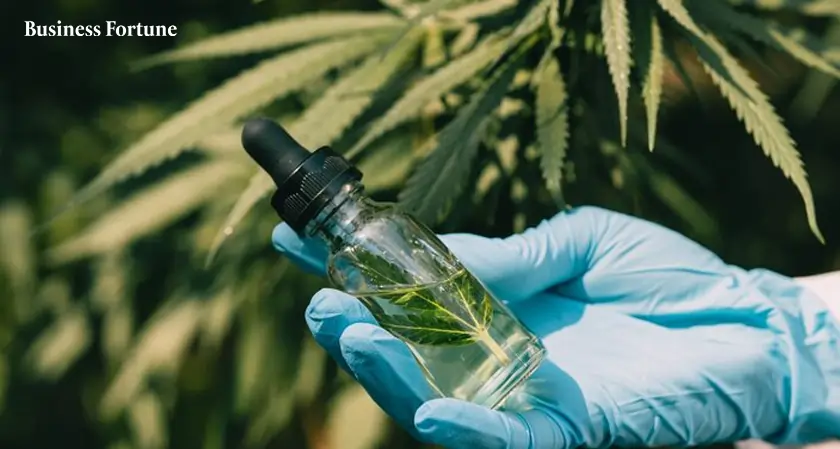
A new Connecticut CBD plastic made from hemp could replace petroleum-based materials in high-performance industries by 2035. Learn how.
For years, cannabidiol (CBD) has mostly been associated with wellness products, oils, and medical treatments. But discovery of Connecticut CBD plastic is now opening an entirely different chapter for the cannabis plant. Researchers have created a hemp-derived plastic that could one day replace some petroleum-based materials used in industries such as healthcare, aerospace, and electronics, offering a more sustainable alternative without compromising performance.
The breakthrough comes from Gregory Sotzing, professor of chemistry and polymer science at the University of Connecticut, working with Purdue University materials engineering professor Mukerrem Cakmak. Their research, published in Chem Circularity, introduces a new material called polycannabidiol carbonate (pCBDC), a plastic made from CBD that is about 92% bio-based.
CBD Beyond Health
Unlike many plant-based plastics that struggle with strength and durability, pCBDC performs at a level comparable to or even better than PET, the plastic widely used in beverage bottles and packaging.
The material can withstand high temperatures, including boiling water, while maintaining its shape. When heated, it can stretch up to 1,600% of its original length, making it remarkably flexible. And that's where things start to get interesting. The material also naturally carries antimicrobial, antioxidant, and UV-blocking properties because of the CBD used in its production.
"I'm really trying to get people away from petroleum," Gregory Sotzing said while explaining the motivation behind the research.
The idea began when Sotzing noticed that CBD has a molecular structure similar to bisphenol A (BPA), a chemical commonly used in plastics that has raised health concerns. That similarity inspired his team to explore CBD as a safer building block for advanced plastics.
Could Hemp Become the Next Industrial Superstar?
Instead of competing with low-cost disposable plastics, the researchers are targeting premium engineering plastics used in medical devices, aerospace components, and electronic substrates. These industries require materials that can handle repeated sterilization, high heat, and demanding environments.
As Business Fortune observes, the team is also investigating whether the plastic's antioxidant properties could help protect metals like copper from corrosion and potentially creating new applications in electronics. However, major challenges remain. CBD production is still expensive, and current hemp farming cannot supply enough raw material for large-scale manufacturing. For now, replacing everyday plastic bottles remains unrealistic.
With a $3 million grant from the National Science Foundation, the researchers are working to scale production and reduce costs. They believe that as hemp cultivation expands, CBD-based plastics could become cost-competitive with petroleum-based alternatives by 2035.
FAQs
What is Connecticut CBD plastic?
Connecticut CBD plastic refers to a new hemp-derived plastic called polycannabidiol carbonate (pCBDC), developed by researchers at the University of Connecticut using cannabidiol (CBD) as its primary building block.
What makes this CBD plastic different from regular plastic?
It is about 92% bio-based, offers high heat resistance, exceptional flexibility, and naturally provides antimicrobial, antioxidant, and UV-blocking properties.
Where could CBD-based plastic be used?
Researchers believe it is best suited for high-performance products such as medical devices, aerospace components, electronics, and other engineering-grade materials.
Why isn't it being used for everyday plastic bottles yet?
Producing CBD remains costly, and current hemp cultivation cannot supply enough raw material to replace inexpensive mass-market plastics like PET.
When could CBD plastics become commercially viable?
The research team hopes that improvements in hemp production and manufacturing could bring costs close to petroleum-based plastics by around 2035, making wider commercial use more practical.


.webp)




























Comments