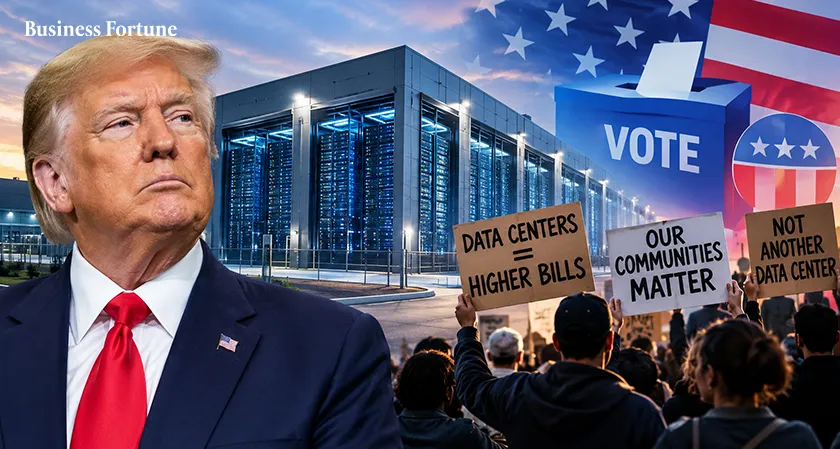
Trump data centers face voter backlash over electricity, water, pollution and tax incentives, reshaping 2026 midterm races across key states.
President Donald Trump’s support for data center expansion is colliding with voter resistance ahead of the 2026 midterm elections, making Trump data centers a politically sensitive issue for candidates in both parties. Trump argues that artificial intelligence facilities can deliver jobs, tax revenue and strategic advantages in the U.S. race against China. Yet concerns over electricity costs, water consumption, pollution and tax incentives are pushing candidates to distance themselves from projects.
Data Centers Become a Midterm Liability
Trump has described AI plants and data centers as economic opportunities, but the political calculation is increasingly complicated. Facilities powering artificial intelligence and cloud computing can consume substantial electricity and water, prompting residents to question whether benefits outweigh local costs.
The National Republican Senatorial Committee has warned that voter anger over data centers could threaten Sen. Jon Husted’s reelection prospects in Ohio. Democratic nominee Sherrod Brown has attacked Husted over the issue as supporters of a statewide referendum seek restrictions.
Candidates Shift toward Local Controls
The data center debate is shaping races in Nevada, Texas and Wisconsin. Nevada Democratic gubernatorial nominee Aaron Ford has proposed ending new state tax breaks and requiring projects to cover electricity needs and protect water supplies.
Texas Gov. Greg Abbott has moved toward tighter oversight after previously promoting major artificial intelligence investments. Trump criticized Abbott’s shift, arguing that restrictions could hinder development. Abbott’s office has emphasized protecting Texas’ power grid, water supply and residents’ quality of life.
Trump’s AI Strategy Faces Local Pushback
Trump views data center development as part of a national strategy to strengthen AI infrastructure and compete with China. His administration has encouraged technology companies to prevent data center growth from increasing household utility bills.
However, new power generation and infrastructure can take years to develop, leaving communities concerned about near-term impacts. The political tension reflects a broader challenge: policymakers want AI investment, while voters increasingly demand projects pay their own costs and receive local approval.
Key points:
-
Trump backs data centers for jobs and tax revenue.
-
Voters worry about electricity, water use and pollution.
-
Ohio races show growing political risks for Republicans.
-
Nevada candidates seek tighter rules and fewer tax breaks.
-
Texas and Wisconsin races reflect similar tensions.
Business Fortune believes that data center growth will remain vital, but political leaders must balance innovation with community concerns and costs.
FAQs
Why are Trump data centers becoming a political issue?
Trump supports data center expansion because of its potential to create jobs, generate tax revenue and strengthen U.S. AI infrastructure. However, voters are increasingly concerned about electricity costs, water consumption, pollution and public incentives.
Why are voters concerned about data center projects?
Large data centers can require significant amounts of electricity and water. Communities are questioning whether these projects provide enough local economic benefits to justify potential impacts on utility costs, water supplies and the environment.
How could data centers affect Republican candidates?
Data center opposition could create challenges for Republican candidates who support Trump’s AI infrastructure agenda. In Ohio, for example, concerns about data centers have become a potential vulnerability for Sen. Jon Husted ahead of the 2026 midterms.
What are Nevada candidates proposing on data centers?
Nevada Democratic gubernatorial nominee Aaron Ford has proposed ending new state tax breaks for data centers. He also supports requiring projects to cover their electricity needs and protect the state’s water supplies.
How is Texas responding to data center concerns?
Texas Gov. Greg Abbott has moved toward greater oversight of data center development, focusing on the state’s power grid, water supply and residents’ quality of life. His position has created tension with Trump, who argues that excessive restrictions could slow AI development.


.webp)





























Comments