
Here are the top Data Center companies showing how big they are and where they are investing.
Amazon, Microsoft and Google make up 57% of the world’s top data center companies (Synergy Research Group) making them the top players. Landlords like Equinix and Digital Realty offer an alternative race but private capital is changing everything.
Best data center companies in the world
There are three tiers of players in the data center sector.
-
Cloud giants who build their own sites.
-
Colocation providers who rent out space.
-
Investors who purchase entire platforms.
Due to increased demand for AI, North America is extremely tight with vacancy rates at a record low. Now operators are competing for power rather than land.
What are the leading data center companies in the world?
It depends on what you’re measuring. Synergy show there are three types of data center globally. Hyperscale operators control 48%, non-hyperscale colocation 20% and enterprise on-premise rooms 32%. In 2018 on-premise sites had 56% market share but by 2031 hyperscalers will have 67% and on-premise will have reduced to only 19%.
This means there are three tiers of global data center companies. Those who own and build their own, landlords who rent to everyone else and financiers who purchase the landlords (as seen with the Aligned deal this July).
The leading companies who own data centers are Amazon, Microsoft and Google. Meta, Alibaba, Tencent, Oracle, Apple, ByteDance and CoreWeave also feature in the top rankings (August 2026). Synergy report there were 1,360 hyperscale data centers at the end of 2025. They have 915 data centers in their pipeline.
Which are the largest data center companies in the world?
The table compares five major data center operators using each company's own latest disclosures.
|
Company |
Based in |
Footprint |
Capacity cited |
2026 signal |
|
Equinix |
Redwood City, Calif. |
281 data centers |
About 3 GW developable |
Q3 annualized gross bookings of $533 million, up 35% |
|
Digital Realty |
Austin, Texas |
310 data centers |
3.1 GW operating |
Q3 revenue of $1.9 billion, up 21% |
|
NTT Global Data Centers |
Japan |
160+ data centers |
1,630 MW operating |
Nearly 115 MW of new U.S. commitments |
|
Iron Mountain |
Portsmouth, N.H. |
31 data centers |
528.5 MW operating |
110 MW leased through July |
|
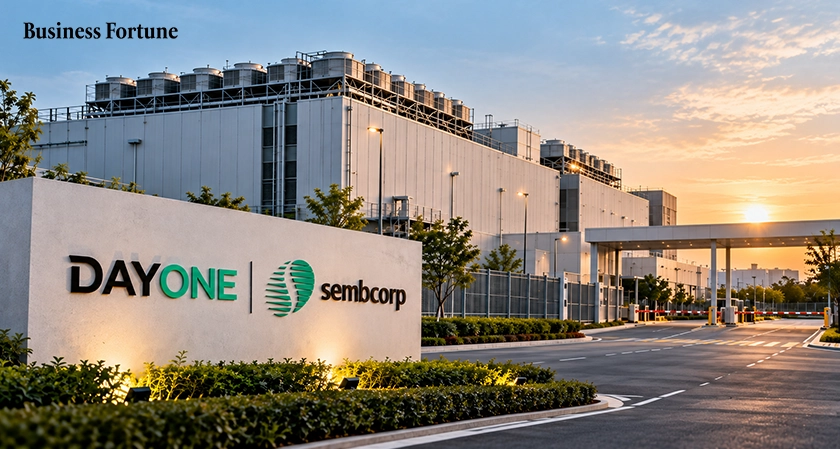
Aligned |
Dallas |
51 campuses |
6.4 GW operational and planned |
$40 billion takeover closed July 21 |
There is a variety of disclosure methods. Equinix states its developable space, NTT, Digital Realty and Iron Mountain state their operational capacity. Aligned combines both. However, there is still a trend. Digital Realty has 8.5GW of buildable space compared to 3.1GW of operational space, meaning there is 2.7x more potential. Iron Mountain also has 1,372.9MW in total capacity, providing 2.6x more space. This shows, the data center infrastructure companies are expecting the next build-out to be much larger than before.
How do the Leading data center providers gain customers?
The two Data center market leaders, Equinix and Digital Realty have different strategies. Equinix are using location, advertising they have the most customer interconnections (513,000) and over 225 cloud on ramps. In Q3, they had 10% year on year growth in interconnection revenue, with a 24% increase in Fabric. Digital Realty are using scale, with Barron's reporting in October 2025 that they have over a third of their revenue from their top 10 customers. Whereas Equinix only have 17% of revenue from their top 10.
Andy Power, Digital Realty's chief executive said in their Q3 results that "we achieved record leasing activity, increased our backlog and delivered another double-digit quarter of earnings growth."
NTT have global coverage, having facilities across over 20 countries. They plan to invest at least $9 billion until 2033 to increase their domestic capacity to 1GW from around 300MW (Bloomberg, August).
Iron Mountain has seen impressive growth. Known for their record storage services, they had 47% growth in Q1 data center revenue to $255 million. Their asset lifecycle management division (dealing with old hardware) had an increase of 92%.
Why are investors spending $40 billion on a datacenter platform?
On 21st July 2026, Artificial Intelligence Infrastructure Partnership, MGX and BlackRock's Global Infrastructure Partners purchased Aligned Data Centers for an enterprise value of around $40 billion, then committed $5 billion more for growth. This was the biggest M&A deal in the data center industry (Data Center Dynamics). Aligned has 51 campuses with over 6.4GW of operational and buildable capacity.
The partnership have invested $30 billion equity target and could reach $100 billion (with debt) and this is their first investment. This shows they believe in the secure power rather than the buildings.
Where is the global data center market expanding fastest?
The United States is dominating the pipeline. Synergy report that there is around 45 GW of IT capacity to be added across 74 companies. This would mean doubling the capacity in the United States within 3 years.
60% of global hyperscale capacity is across 20 states/metro areas (Synergy, August 2026). Northern Virginia and Greater Beijing Area alone make up 17%. However, Texas has seen impressive growth, with 71% growth in operational hyperscale capacity in one year compared to a global average of 36%. Dublin, Amsterdam and Singapore have fallen down the rankings due to local constraints.
Space is tight across the globe. The vacancy rate globally was 6.7% in Q1 2026 (CBRE). North American primary markets reached record lows with vacancy at 1.4% in H1. Atlanta had 1% in Q1. Pat Lynch, Executive Managing Director, CBRE Data Center Solutions said "companies can no longer take availability for granted."
China has its own cast of data center service providers. GDS Holdings, a Shanghai based developer and operator have increased their 2026 sales target to 1GW (Chairman and CEO William Huang).
What is slowing down the data center sector?
Power. The IEA's report on Energy and AI shows that data centers consumed a total of around 415 TWh in 2024 and accounts for 1.5% of global energy consumption. By 2030 this is expected to increase to around 945 TWh, just over what Japan consumes today. The US made up 45% of the 2024 consumption whilst China contributed 25%. Supply is also being slowed due to power constraints in prime markets such as Northern Virginia and Chicago.
Supply is also being delayed. CBRE believes the increase in build times will mean there will be limited supply in the US until 2030. 80% of newly built space in the top four US markets in the US were pre-leased at year-end 2025.
What does this mean for renters?
Prices will be higher. CBRE expect the limited supply in the US to cause record high prices until 2030. Iron Mountain highlighted that their weighted average lease maturity across data centers was 10.2 years in Q2. Their cash rental prices increased by 9% in Q4 2025. Those looking to buy will have to wait.
Interesting to Note
There are 1,360 hyperscale data centers globally at the end of 2025.
62% of global hyperscale operators are based in the US, the largest four being located here.
Equinix increased its full year 2026 guidance for the third consecutive quarter on 28th October 2026.
Digital Realty had 310 data centers in its portfolio at 30 June 2026, 89 of which were held within unconsolidated entities.
NTT had capacity of 1,630 MW at 31 March 2026, with capacity planned of 770 MW.
Global supply reached 16 GW across the top sixteen markets in Q1 2026, an increase of 25% from previous year (CBRE).
Vacancy in Hong Kong dropped to 18%, down from 28% the previous year.
Inventory grew the most (41.3%) in Latin America, followed by North America (33%).
There are multiple top players in data centers now. The cloud giants own the space whilst the colocation players such as Equinix, Digital Realty and NTT rent it out. Investors back the build out. Power is key here, whoever can get onto the grid first can set the pace.
Business Fortune, believes looking ahead, it will be interesting to see how the 915 hyperscale facilities in the pipeline from Synergy perform. If vacancy remains low then the best data centers in the world will be those delivering megawatts on time.
FAQs
1. Who are the top data center companies in the world?
On hyperscale capacity, Amazon, Microsoft and Google are the top players with a combined 57%. This is followed by Meta, Alibaba, Tencent, Oracle, Apple, ByteDance and CoreWeave. Equinix, Digital Realty and NTT Global Data Centers provide the largest footprint within the colocation space, however Iron Mountain and Aligned are growing quickly.
2. When has the global data center industry grown?
This has been an eight year growth spurt, however it has been greatly accelerated by AI. In 2018, 56% of global capacity was held in enterprise on premise sites. Now this has dropped to 32% (Synergy). John Dinsdale from Synergy comments that "AI has really accelerated these changes over the last three years".
3. Are there any new business opportunities from data center growth?
Yes. A factor behind the growth is the leasing from hyperscalers and growth from neocloud providers (Synergy). Hyperscale Data signed a 20MW deal with a California-based neocloud provider which will generate over $1.2bn during the maximum term. Iron Mountain saw its asset lifecycle arm grow by 92% in Q1 2026.
4. Is the global datacenter market growing?
Yes. CBRE measured 16 GW of supply within the top sixteen markets in Q1 2026. This was a 25% increase from previous year. Synergy state that global hyperscale operational capacity grew by 36% last year. The IEA expects data center energy demand to reach around 945 TWh by 2030.
5. Why is data center vacancy so low?
Demand is outpacing even record levels of supply. Vacancy rates in North America's primary markets have dropped to 1.4% in H1 2026, however capacity under construction has increased by 24.8% to 7,481.1 MW. This is being slowed down by power, land and grid constraints.

.webp)




















Comments