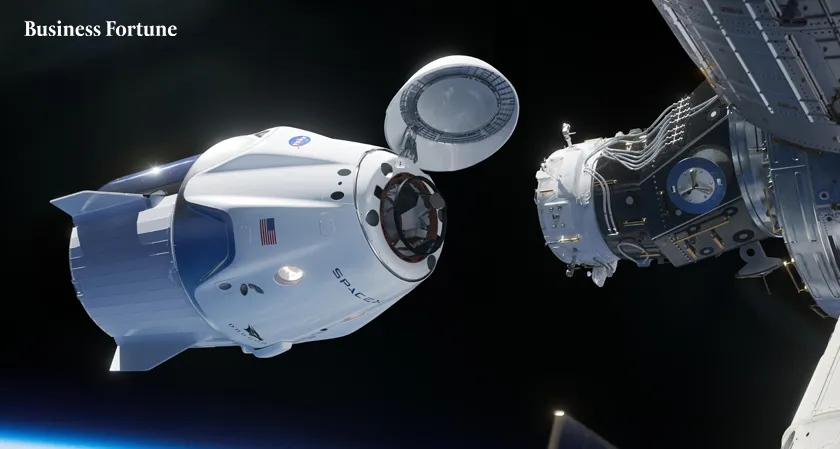
Discover the Best space missions to watch 2026, as astronauts, robotic explorers and powerful spacecraft push humanity toward new lunar and deep-space frontiers.
In 2026, space exploration will be heading into an important year as some missions go beyond the Moon and Mars to asteroids, Mercury and even the far reaches of the universe. The Best space missions to watch 2026 are more than exciting launches and incredible voyages. Rather, they are part of an attempt to find answers to the important questions concerning planet evolution, safety of Earth from certain threats, searching for resources and technologies development for the further human exploration.
The Artemis project of NASA goes beyond the limits of human exploration, Chang'e 7 is expanding the lunar exploration by China and ESA is looking into asteroid deflection, the study of the magnetosphere of Earth and strange environment of Mercury. Apart from these headline missions, Hubble, Webb and Chandra telescopes reveal amazing secrets from all parts of the universe, while Perseverance continues to support the need for Mars exploration through science.
The reason why the year 2026 is so exciting is the multiplicity of goals being accomplished at one time. There will be missions carrying astronauts, missions deploying robotic probes and there will even be some missions observing bodies that we do not know much about yet.
What Makes the Top Space Missions 2026 So Important?
The top space missions 2026 will be aimed at exploring the Moon, Earth’s magnetic field, asteroids and Mercury, thus being crucial for the further development of planetary research and even future human exploration. The mission by NASA named Artemis II will send four astronauts in the orbit around the Moon in order to test Orion spacecraft and life support systems, which will be used in the future lunar missions. The mission of China named Chang'e 7 will explore the south pole of the Moon in order to find any traces of water and other substances necessary for humans' survival.
ESA’s mission Hera will explore the asteroid Dimorphos after the impact of the spacecraft DART sent by NASA. At the same time, ESA’s mission SMILE will research interaction of the solar wind with the magnetic sphere of the Earth. BepiColombo will enter the orbit of Mercury in order to conduct researches of its surface, magnetic environment and interior.
Key missions to watch
- Artemis II: Four astronauts will fly around the Moon and test Orion’s systems.
- Chang’e 7: China will investigate the Moon’s south polar region for ice and other resources.
- Hera: ESA will study the impact site created by NASA’s DART asteroid-deflection test.
- SMILE: The mission will examine how solar wind interacts with Earth’s magnetosphere.
- BepiColombo: Europe and Japan will study Mercury’s surface, magnetic field and interior.
What Are the Upcoming Space Missions 2026 to Watch?
Upcoming space missions 2026 will be crucial for human exploration, as NASA's Artemis program transitions from testing into the mode of sustained lunar exploration. In the meantime, Artemis II has successfully finished its almost 10-day trip around the Moon using a crew of four astronauts in the Orion. The mission set the record for the distance in human space travel while testing the critical components of the flight and getting astronauts closer to the Moon. The future Artemis missions will build upon this success. For instance, Artemis III scheduled for 2027 will include testing commercial lunar landing systems and docking maneuvers in low Earth orbit. Moreover, Artemis IV scheduled for 2028 will help NASA make its first-ever lunar landing according to the current plan. Finally, Artemis V will take place in 2028 and will initiate a yearly cycle of missions. Thus, the mentioned Artemis missions will be among the most important space missions to watch.
5 Artemis Missions to Watch
- Artemis I: The objective of this mission was to put the NASA Space Launch System rocket and the Orion spacecraft to the test on their journey to the Moon without a crew on board.
- Artemis II: This crewed mission included sending the four-astronaut team of the Orion spacecraft on a mission around the Moon.
- Artemis III: Planned for 2027, this mission is planned to showcase the commercial lunar landing vehicles and other docking techniques required for future Moon missions.
- Artemis IV: This mission scheduled for 2028 is supposed to enhance NASA’s presence on the lunar surface.
- Artemis V: Similarly, in 2028, Artemis V mission would be helping out with creating a steady pace of the Moon missions.
Which NASA Missions in 2026 Could Unlock New Discoveries?
However, major NASA space missions 2026 go well beyond upcoming launches and include NASA's long-term observations and exploration space missions, which have helped increase knowledge in this field of science considerably. The Chandra X-ray Observatory provides information regarding some of the most energy-rich places in the universe, thus contributing to scientists' knowledge of star formation and evolution, galaxies and cosmic structures.
While the James Webb Space Telescope observes the universe from its early stages until the formation of planetary systems, the Hubble Space Telescope continues to study far-off galaxies and other space objects.
Meanwhile, the Perseverance rover will continue its work on Mars by collecting rock and soil samples, which may be brought to the Earth someday. Also, the Europa Clipper is among the major NASA space missions 2026. The aim of the latter is to explore Europa, a moon of Jupiter and to find out whether there can be any conditions suitable for life beneath the surface of this object.
NASA’s Ongoing Missions in Space
- Chandra X-ray Observatory: Enables observation of X-rays from very extreme regions of the universe, allowing for study of the universe's formation and development.
- Europa Clipper: NASA’s first mission dedicated to detailed exploration of Europa, studying the icy moon’s surface and interior as it prepares to reach Jupiter in 2030.
- Hubble Space Telescope: Continues its landmark observations of galaxies, stars, nebulae and other distant objects after more than three decades in orbit.
- James Webb Space Telescope: Investigates everything from the universe’s earliest luminous objects to the formation of galaxies, stars and potentially habitable planetary systems.
- Mars Perseverance Rover: Collects and stores Martian rock and regolith samples, creating a valuable scientific archive for potential future sample-return efforts.
Who Are the Four Astronauts Taking Artemis II Around the Moon?
Artemis II crew is at the center of space exploration 2026, taking part in a mission which is meant to demonstrate that the people can safely venture far beyond Earth in NASA’s Orion spacecraft. The mission will involve four astronauts who have diverse backgrounds and roles. The commander of the mission will be Reid Wiseman, while the pilot of the spaceship, who will assist in controlling Orion, will be Victor Glover. Specialists Christina Koch and Jeremy Hansen will be involved in performing tasks associated with the scientific and technological mission of the trip. The flight will take the team beyond the Moon and provide a good opportunity to test the equipment with the crew aboard. The mission is also essential to prepare for upcoming NASA missions aimed at the return of humans to the surface of the Moon and setting up permanent habitation near it.
The Four Astronauts behind Artemis II
- Reid Wiseman, Commander: Leads the Artemis II crew and oversees the mission as Orion begins its first crewed journey around the Moon.
- Victor Glover, Pilot: Responsible for helping operate Orion and supporting the spacecraft’s flight operations throughout the deep-space mission.
- Christina Koch, Mission Specialist: Brings extensive spaceflight experience to the crew and will support the mission’s technical and scientific objectives.
- Jeremy Hansen, Mission Specialist: Represents the Canadian Space Agency and becomes part of Canada’s contribution to NASA’s next era of lunar exploration.
Which Lunar Missions 2026 Could Define the Next Era of Moon Exploration?
The lunar missions 2026 lineup represents indicate an increasing trend of moving away from sporadic lunar expeditions to continuous exploration of the Moon. Various government agencies and commercial companies plan to conduct their missions in different areas of the celestial body. For instance, NASA's project Artemis II had already flown humans around the Moon. The Chinese mission Chang'e 7 will explore the Moon's south pole and search for water ice inside the permanently shaded craters.
There are also other interesting missions of commercial companies that would add to the activity on the Moon. So, the Firefly's Blue Ghost Mission 2 is intended to visit the lunar far side and the Intuitive Machines' IM-3 would deliver NASA's payload to the Reiner Gamma. There is also Blue Origin's Blue Moon Pathfinder that is also planned to be conducted.
Five Lunar Missions to Follow in 2026
- Artemis II: NASA’s crewed lunar flyby demonstrated Orion’s capabilities and provided valuable experience for future human missions.
- Chang’e 7: China’s robotic mission will explore the lunar south pole and search for water and other useful resources.
- Blue Ghost Mission 2: Firefly’s mission aims to deliver scientific and technological payloads to the lunar far side.
- IM-3: Intuitive Machines plans to send NASA payloads toward Reiner Gamma, expanding commercial lunar delivery capabilities.
- Blue Moon Pathfinder Mission 1: Blue Origin’s robotic demonstration is designed to test technologies for future lunar cargo and landing missions.
Could Moon Missions 2026 Change the Future of Space Exploration?
The Moon missions 2026 could become a defining chapter in the return to lunar exploration, as nations and private organizations explore new scientific areas and improved technologies. Exploration of the lunar south pole region and other harsh environments would provide a chance to examine the surfaces of the Moon and conduct water ice surveys, as well as experiment with equipment designed for harsh environments.
For Business Fortune, the importance of moon missions goes beyond their execution. The increased activity on the Moon might promote the development of commercial landing modules, autonomous vehicles, communication and navigation systems and other technology that could be part of space economic growth. Competition between countries and organizations could push faster innovations at a reduced price.
However, it is still unclear what would come after the missions. The lessons learned during the missions can play an important role in the future of Moon exploration. If landing systems, exploration of resources and robotics are improved, it could make the Moon a base of future missions to Mars and other planets.


.webp)






























Comments