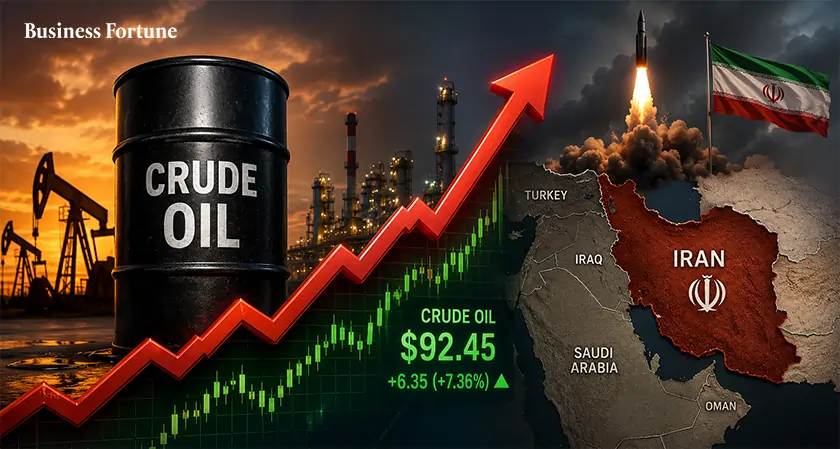
Crude oil prices surge above $94 per barrel after Iran announces the closure of the Strait of Hormuz following fresh U.S. strikes.
Global oil markets were shaken on Thursday as crude oil prices climbed sharply following Iran’s announcement that it had fully closed the Strait of Hormuz after fresh military clashes with the United States. As crude oil prices surge, concerns over global energy supplies, inflation, and economic stability has intensified.
Iran Announces Closure of Hormuz
The Strait of Hormuz is considered one of the world's most important oil transit routes and one of the most critical energy chokepoints in the world. Nearly one-fifth of global oil consumption and large volumes of liquefied natural gas pass through the narrow waterway every day.
Iran’s decision to close the route followed renewed hostilities with the United States after a U.S. Apache helicopter reportedly crashed in the strait. Tensions escalated further when Washington launched additional strikes on Iranian targets.
Iranian state media reported that the Islamic Revolutionary Guard Corps (IRGC) struck two vessels attempting to transit the waterway. However, the U.S. military maintained that commercial shipping activity through the strait continues despite the tensions.
What Happens if Oil Shipments Stop?
Energy analysts warn that any prolonged disruption could have serious consequences for global oil markets. Gulf producers rely heavily on the Strait of Hormuz to export crude, and restrictions on shipping could tighten supplies worldwide.
Several factors are already adding pressure to the market:
-
Brent crude briefly approached $95 per barrel.
-
WTI crude gained more than $2.50 per barrel.
-
S. crude inventories fell by 7.2 million barrels in the latest reporting week.
-
OPEC production in May dropped to its lowest level in more than two decades.
-
Global traders are factoring in a growing geopolitical risk premium.
These developments have increased concerns that refiners may struggle to secure enough crude supplies if tensions continue.
Political Tensions Add Fuel to Market Anxiety
U.S. President Donald Trump accused Tehran of delaying negotiations on an interim peace agreement and claimed that American forces had helped more than 200 commercial ships safely transit the region. He also stated that the United States, rather than Iran, was effectively controlling the Strait of Hormuz.
Meanwhile, additional U.S. military strikes against targets inside Iran have raised fears that the fragile ceasefire reached earlier this year could collapse completely.
Inflation Concerns Spread Beyond Oil
The jump in energy prices is already influencing other financial markets. Gold prices slipped to a six-month low as investors weighed the possibility that higher oil costs could keep inflation elevated and delay future interest-rate cuts.
Currency markets also showed signs of uncertainty, with traders closely watching both geopolitical developments and inflation data from the United States.
What Comes Next for Global Markets?
As Business Fortune observes, the closure of the Strait of Hormuz has placed the global energy system on high alert. If tensions ease and shipping routes remain open, oil prices could stabilize. However, a prolonged conflict or further disruptions could push crude prices higher, increase inflationary pressures, and create fresh challenges for economies worldwide. Market participants will be closely watching diplomatic efforts and military developments in the days ahead.
FAQs
1. Why is the Strait of Hormuz so important?
The Strait of Hormuz is a major shipping route through which about 20% of the world's oil supply passes, making it vital to global energy markets.
2. Why did oil prices rise sharply?
Oil prices increased because investors fear that the closure of the Strait of Hormuz could disrupt global crude supplies.
3. How much did oil prices increase?
Brent crude climbed above $94 per barrel, while WTI crude rose above $92 per barrel during Thursday's trading.
4. How could this affect consumers?
Higher oil prices can lead to increased fuel costs, transportation expenses, and inflation, which may raise prices for goods and services.
5. What are investors watching now?
Investors are monitoring military developments, diplomatic negotiations, shipping activity in the Strait of Hormuz, and global oil inventory levels.


.webp)