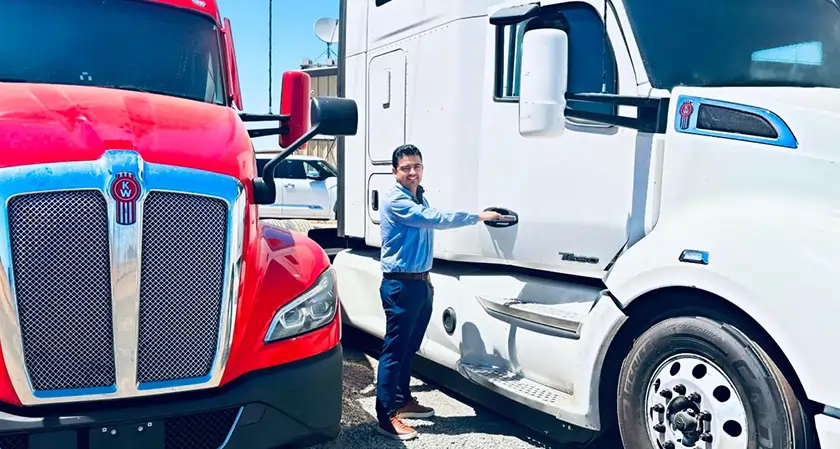
The trucking business has long operated on a simple formula. That’s sell the equipment, close the paperwork, and move on to the next customer.
Dealerships in North America have viewed owner-operators as part of a transactional relationship for decades. In today's market, subject to stringent environmental legislation, high operational costs, and difficult conditions for small fleets trying to survive, such an approach becomes increasingly untenable.
However, Gabriel Escárcega, a specialist in Marketing and Product Development Management, believes he has a solution: “Most companies still try to sell people what they think will move fastest off the lot. I learned a long time ago that customers rarely explain their real problems in the first conversation.
“You have to ask better questions, spend time understanding how they operate, and uncover what is creating pressure inside their business. Once you understand that, the solution becomes much bigger than a truck sale. That’s where sustainable growth actually starts.”
It’s this philosophy that became the foundation of his repeatable innovation model that has been adopted worldwide.
Gabriel’s client list spans global firms like Cemex to Mexico’s largest freight carrier, which operated more than 6,000 trucks and 10,000 trailers. He also works with Alianza Trayecto, the largest over-the-road company in Mexico, with a fleet of 4,500 heavy-duty semi-trucks and +9,000 trailers. In addition, he is working with the top five public logistics companies in Mexico, including Solistica, DHL, FedEx, as well as Traxion, SAB de CV, and MARVA.
And without any fanfare, Gabriel has also transformed a simple California truck dealership into a profitable venture worth $3.85 million within 4 years, starting from annual earnings of only $240,000. The success of this venture was not achieved through hasty growth but through transformation in how the dealership relates to its clientele.
As operations manager of A & D Wholesale Trucks & Parts LLC, Gabriel is responsible for both marketing and product development. However, his game-changing decisions did not originate from any predetermined expansion strategy but from his acute observations.
His similar approach can also explain Gabriel's success in financial services and fleet management. Thanks to his unique approach combining technical skills, financial know-how, marketing strategy, and product development, he has created comprehensive business ecosystems in a field that still offers only disjointed service solutions.
Here is how he did it using the example of the trucking company: "The business operated as a sales yard initially. Drivers could buy their trucks here, but afterward they had to spend several days figuring things out elsewhere. Repairs were conducted in another city. They needed other companies to help with compliance issues and obtain financing. It’s extremely stressful for these people, but my solution was very simple. I just asked them what they needed to simplify their operation. What do you think they said? They needed one single location that could do everything for them."
Instead of merely increasing stock, Gabriel launched three new ventures: diesel engine repair services, CARB compliance services, and customized financial services for owner-operators and small fleet operators.
The company's workforce expanded to six specialists. But more importantly, the dealership transformed from a transactional seller to a service-oriented solution provider.
Gabriel’s success in scaling is rendered even more remarkable by the brutal conditions currently gripping the North American trucking industry.
In 2025 and into 2026, thousands of carriers—large and small—have shut down or filed for bankruptcy protection amid a prolonged freight recession, soaring fuel and maintenance costs, volatile insurance rates, and increasingly stringent environmental regulations.
Many owner-operators and small fleets have simply been unable to survive the pressure. It is against this backdrop of widespread industry contraction that Gabriel has demonstrated exceptional depth in operations management across transportation and logistics, fleet financing structures, and large-scale urban development projects.
His proven ability to deliver a roughly 15-fold increase in annual revenue while constructing integrated, customer-centric ecosystems underscores both the breadth of his expertise and the real-world impact of his “Needs-Based” methodology.
These adjustments were guided by methods Gabriel learned during his Master’s education in Business Development and Innovation at ITESM (Tecnológico de Monterrey), specifically concerning iterative product development based on customer discovery rather than management assumptions.
According to Gabriel: "My graduate education emphasized innovation that would be consistently replicable across all industries. The first mistake companies make is developing products in an environment separate from actual end users.
“In my methodology, iteration is key. I talk to the clients, find out what is required to build a functional version of the service, implement the solution, analyze and improve constantly. This process repeats infinitely. The client becomes an integral part of the product development process rather than just receiving the ready-made product."
This type of product development has already become extremely important for industries such as the commercial trucking industry, especially in heavily regulated corridors of California, where increasingly stringent emissions restrictions and rising operational costs are driving costs.
California owner-operators are increasingly subject to maintenance cost pressures, volatile insurance rates, and compliance issues. These can overwhelm small businesses operating on thin margins.
Gabriel recognized early that many independent drivers were struggling. It’s because the support systems surrounding them remained disconnected and inefficient.
He reveals: “I spend a great deal of time trying to understand what pressure points are damaging a customer’s operation. Many drivers initially focus only on the purchase price because it is the most immediate concern.
“But once you start discussing route structure, maintenance exposure, financing schedules, downtime risks, and regulatory obligations, you often realize the bigger issue is operational stability. That changes the conversation completely. Because now you are building around sustainability instead of short-term cost.”
The practical impact of that thinking can be measured both financially and operationally.
Under Gabriel’s direction, A & D Wholesale Trucks & Parts expanded beyond sales into a one-stop operational model that reduced customer fragmentation while creating multiple revenue channels inside the same business ecosystem.
There’s one client interaction in particular that was highly illustrative of his methodology. Gabriel recalls: "A trucking company approached us with a single truck that was always breaking down. Rather than treating it as a straightforward loan arrangement, we crafted an entire strategy for running their operations effectively. From cash flow to maintenance to compliance, we helped solve their problems gradually. Just under two years later, the same client owned a fleet of 20 trucks. Encounters like this teach me the hard truth about why growth will remain sustainable only when there is a foundation of problem-solving involved."
Long before arriving at A & D, Gabriel had already established himself in transportation finance and fleet development. And the background traces back to family influence.
His father founded Grupo San Quintín in 1976. He operated a fleet of 42 trucks transporting perishable goods between Mexico and the United States. However, his mother became one of the early advocates for vehicle financing inside Mexican car dealerships during the 1990s. During those days, most purchases were still cash-based.
He goes on to describe the two very different businesses run in parallel while he was growing up: "My father transported his trucks across the border, and my mother figured out how to fund cars during times when no one gave anyone credit in Mexico. The common thread I took away from both of those activities is that the real deal never had anything to do with the product. The real deal always involved finding out what held people back and crafting a path forward that would work for them."
Following his Bachelor of Science in Industrial Engineering from Cetys University, Gabriel spent his early career in construction, transportation, housing development, and finance before moving into management roles within the commercial trucking sector.
Early in his career, he managed public-private partnership projects valued at 3.2 billion pesos. Gabriel helped coordinate sustainable housing initiatives that channeled 120 million USD from NAD Bank toward solar systems for low−income households, many earning as little as 800 per month and spending a quarter of that on electricity.
He also helped structure a $300 million trust to finance the Valle San Pedro development, a planned city of 200,000 homes and a university campus.
By the time Gabriel joined Kenworth Mexicana’s Paclease division in 2012, he had developed a reputation for balancing operational detail with commercial growth. He earned the company’s President’s Circle Award twice, in 2014 and 2015, recognizing him as Regional Sales Manager of the Year in Mexico.
According to Gabriel: "I learned while at Kenworth that it's easy to tell who understands your business when you work in transportation. Trucking is a business filled with reality. There's nothing theoretical here. Drivers discuss downtime, freight issues, fuel risk, maintenance needs, and driver turnover. When a customer sees you come in speaking sales speak, they don't trust you."
That understanding later became critical at Engen Capital. Gabriel generated $23.5 million USD in origination volume during 2017, exceeding targets by 147 percent while maintaining a 237 percent gross margin. The previous year, he originated $15.8 million USD in 9 months, achieving 158% of the target performance.
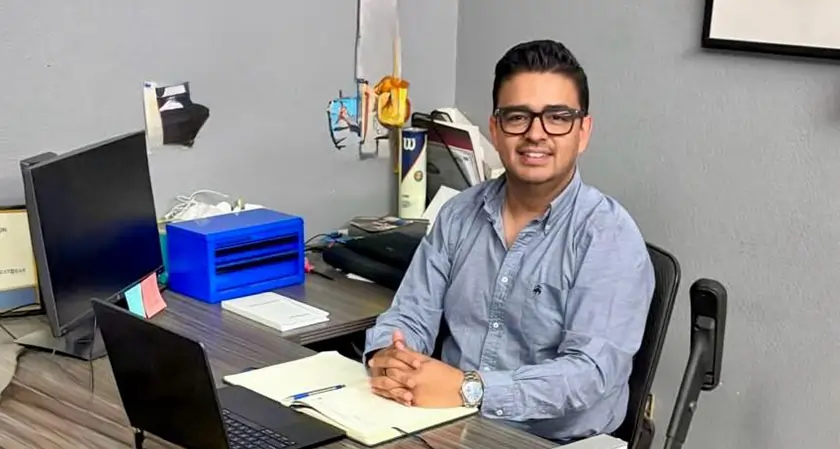
He earned “Originator of the Year” recognition during both years and the Challenger of the Year honor twice at G Capital.
Gabriel shares: "One of the biggest frustrations I encountered in Mexico was watching banks reject transportation companies that were actually profitable. The problem wasn't the business. It was the way tax structures made the financials look on paper. I ended up serving as a translator of both language and operational reality."
He adds: "Once you could show a credit committee what was actually happening inside the fleet, the numbers made sense. That translation function became part of every product I developed afterward."
Cuauhtémoc Pérez is a Real Estate Entrepreneur and Developer who worked with Gabriel at Urbi, one of Mexico’s leading homebuilders.
Speaking of their work together, he recalls: “His most distinctive attribute is his capacity to distill multifaceted situations into lucid, implementable narratives. During our collaboration, this aptitude proved essential in synchronizing diverse stakeholders around a deal.
“He routinely articulated technically sophisticated structures in a manner that each audience could grasp, a foundational marketing competence. The consistent ability to articulate compelling value propositions and convey them clearly shows his professional identity.”
These are just a few of the projects Gabriel has worked on where his work has made not only a huge impact on profit margins but also enabled expansion.
Another example is when he was part of the team at Element Fleet Management, formerly GE Capital Mexico, and further expanded his influence across the transportation sector.
During his tenure as Trucks Director from 2016 until 2021, Gabriel led 27 sales managers managing about $5.7 billion MXN in origination volume. In addition, he developed integrated asset-lifecycle products that included financing, maintenance, telematics, insurance, specification design, and end-of-lease options.
Gabriel reveals: "At Element, the challenge became much more complex because we had to merge transportation operations and institutional finance. My Human Resources staff used to joke about my search for unicorns because I required experts who understood both heavy equipment and banking structures. This is not a common combination. However, trucking companies require professionals who would work in both domains. Otherwise, financial products would be operationally flawed or operational products would be financially inefficient."
In the border-region trucking industry, Gabriel's one-stop-shop dealership model affected small players' strategies for compliance consulting and owner-operator financing.
In the past, dealerships specialized in sales while other entities provided services related to regulations, repairs, and financing. Gabriel's integrated approach questioned this conventional wisdom by implementing customer discovery and iterative development at the dealership level.
During the years surrounding Element’s expansion into increasingly complex transportation markets, Daniel Benitez Martinez observed that influence firsthand. He’s the Vice Chairman of Marca Patrimonio and a former CFO connected to several major Mexican trucking organizations.
Daniel comments: "Gabriel was a vital strategic ally during the period of significant market transformation. He demonstrated a rare skill to blend traditional transportation operations and innovative financial and corporate frameworks. Due to his analytical rigor, persistence, and awareness of stakeholders' needs, Gabriel maintained momentum in critical projects despite the uncertainties introduced by the pandemic. Besides flawless sales execution, he continuously increased operational efficiency, identified organizational gaps, and reinforced the competitive position of the relevant entities."
The result is a specific contribution that has changed practices inside a traditionally sales-driven market.
Instead of treating product development as an internal corporate exercise, Gabriel applies continuous customer interviews, operational feedback loops, and iterative service refinement directly within dealership operations.
As Gabriel puts it: “In transportation, there are no academic solutions to test out. It all comes straight to reality right away. If your financing is squeezing your client's cash flow, it will show very soon. If maintenance doesn’t work, trucks don’t go anywhere. The process requires always being close to reality, adapting quickly rather than sticking stubbornly to one's original strategy."
Juan Flores was the Credit Director at GE Capital during the period Gabriel worked within the organization.
Juan describes that ability as one of the defining characteristics of his success: “From 2014 through 2018, he consistently distinguished himself as one of the strongest commercial leaders within GE Capital. What separated him from many sales professionals was his capacity to identify the operational pain points behind each client request and translate them into disciplined financial structures.
Moreover, he adds: "Gabriel knew all there is to know about transportation equipment, was able to establish trust with clients right away, and had the courage not to engage in any deals with unnecessary financial exposure. Year after year, he managed to deliver significant volume growth at the same time keeping a very analytical and collaborative attitude with the underwriting and credit departments."
However, Gabriel’s impact extended beyond his work with clients.
During the pandemic lockdown, he was a guest panelist in discussions on transport leasing trends in Mexico and served as a judge for the 2025 Globee Awards for Leadership, covering innovations in the Blue Ocean category.
Gabriel says: “Judging innovation awards and participating in various industry panels gave me a much broader perspective of what prevents companies from moving forward. Regardless of the sector, people have strong intuition about operations, but they can be constrained by financial issues, regulatory hurdles, or a lack of support. So when mentoring early-stage entrepreneurs, particularly those in our area, Imperial Valley, I always tell them to focus on identifying the actual challenge first and building around it. Learn how to iterate faster.”
Colleagues frequently sought his guidance on navigating the intersection of transportation operations and structured finance.
Gabriel explains: “One of the most rewarding experiences for me involved mentoring someone from the engineering side of the business into transportation finance. At the beginning, he understood equipment extremely well but had limited exposure to financial strategy. We spent years working through customer structures, operational economics, and long-term planning. Today he serves as an electric vehicle director at one of the largest companies in Mexico. Seeing somebody expand their capabilities like that is deeply satisfying because it creates ripple effects far beyond your own organization.”
In addition to measuring success by business expansion, Gabriel freely acknowledges the economic problems in California's Imperial Valley. He envisions a future where transportation-based enterprises will be the backbone of regional economic development.
He says: “This region is full of possibilities, but most startups lack the benefit of a comprehensive support network. Providing small business owners with guidance on financing, planning, compliance, and mentorship within the same environment greatly enhances the likelihood of success. This is essential since any profitable small fleet generates employment, supports families, and keeps local economies functioning effectively.”
Ecosystem-based thinking is finally coming to prominence within the broader trucking industry. The growing pressures of regulatory compliance and technological innovation are driving change in the dealer-fleet operator relationship from a transaction-oriented to a service-focused, operationally continuous model.
The connection between marketing, product development, and transportation logistics that Gabriel illustrates is not an accident; he shows how these three fields may interrelate.
All the while, his approach to problem-solving has been rooted in his fundamental understanding, honed through early years of customer discussions, operational analysis, and iteration.
Gabriel concludes: “Companies create deeper connections with their customers when they don’t try to sell them anything. Instead, listening to the places where customers lose money, feel stressed, and encounter problems helps find solutions which will keep working long after a deal has been done.”
About the Author
Sowmiya Sri Mani is a writer for Business Fortune, covering AI, Robotics, Software, Entrepreneurship, and Opinion. She delivers clear and engaging insights on emerging trends and industrial developments, helping readers understand the evolving landscape of technology and innovation.


.webp)