3D-printed surgery at Hadassah Medical Center helps a 24-year-old woman walk again after rare Gorham-Stout disease rebuilt and lengthened her leg.
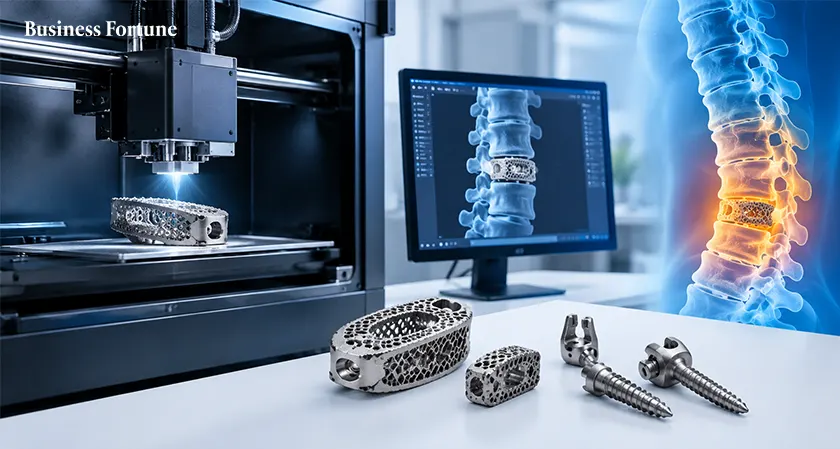
At Hadassah Medical Center in Israel, surgeons recently performed 3D Printed Surgery, an advanced procedure on a 24-year-old woman suffering from Gorham-Stout disease, a rare condition that causes bones to disappear. Doctors used 3D printing technology to design and implant custom-made replacements for missing bone structures.
What happens when bones simply disappear? Gorham-Stout disease, often called vanishing bone disease, is one of the rarest medical conditions in the world. It causes bone tissue to break down and gradually disappear from the body. There is no clear cause, no known cure, and it can affect people at any age. In some cases, it even stops on its own without explanation.
For this young woman, the disease left her with one leg significantly shorter than the other. For most of her life, she relied on crutches to walk, limiting her mobility and independence.
Can technology rebuild what the body has lost
Doctors at Hadassah took on the challenge with an approach never before attempted in Israel. Using advanced imaging and 3D printing, they created a personalized solution tailored to her exact anatomy.
The surgical team designed a custom 3D-printed reconstruction of her missing pelvic bone and hip joint. They also developed a separate implant to replace her thigh bone, which had been affected by the disease.
As 3D printing reshapes healthcare worldwide, Osmania General Hospital launched a free program in March providing 3D-printed artificial limbs, making the technology more accessible to patients.
How complex was the surgery
The operation itself was long and highly complex. Surgeons carefully implanted the custom-made structures, ensuring they aligned perfectly with the patient’s body. Precision was critical, as even small errors could affect movement and recovery.
After the surgery, her leg was successfully lengthened by eight centimeters (3.2 inches). But the procedure was only part of the journey.
Following the operation, the patient underwent an intensive rehabilitation program. This phase focused on rebuilding strength, improving mobility, and helping her body adapt to the new implants.
“This case is unusual not only because of the rarity of the disease, but also because of the innovative solution found,” said Dr. Omer Or, an orthopedic oncologist and specialist in metabolic bone diseases at Hadassah.
Future Outlook
As Business Fortunes observes, this case highlights the growing role of 3D printing in healthcare. By creating patient-specific implants, doctors can now tackle conditions that were once considered untreatable.
While Gorham disease still has no cure, this success offers hope. It shows that even in the face of rare and unpredictable illnesses, innovation can open doors that once seemed impossible.


.webp)