The US-Iran deal marks a major step toward ending the conflict, featuring a ceasefire, sanctions relief, reopening of the Strait of Hormuz, and 60 days of talks aimed at securing lasting peace.
The long-running conflict between the United States and Iran may be entering a new phase after both countries signed an initial US-Iran deal aimed at ending the war and preventing further escalation across the Middle East.
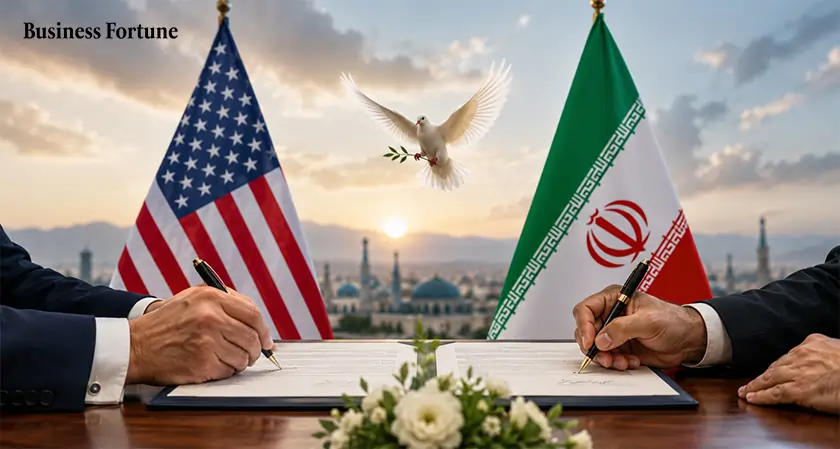
US President Donald Trump and Iranian President Masoud Pezeshkian signed the 14-point memorandum on Wednesday, allowing the agreement to take effect immediately. The signing took place during the G7 Summit in France, where Trump was seen signing a hard copy of the document at a dinner hosted by French President Emmanuel Macron.
The agreement outlines a plan toward peace while both nations continue negotiations on unresolved issues over the next 60 days. The deadline can be extended if both sides agree.
A ceasefire takes center stage
The first and most significant part of the agreement calls for an immediate and permanent end to military operations on all fronts. This includes efforts to reduce tensions involving Lebanon, where fighting linked to the conflict has continued for months. The deal comes after months of violence that disrupted regional stability, pushed energy prices higher, and affected global markets.
What's included in the agreement?
Several major commitments are already part of the memorandum:
-
Reopening of the Strait of Hormuz, a key global trade route.
-
A proposed $300 billion reconstruction plan for Iran.
-
Removal of all US economic sanctions on Iran.
-
Gradual end to the US naval blockade within 30 days.
-
Safe passage for commercial ships through the Strait of Hormuz.
-
Continued negotiations toward a permanent peace settlement.
These measures are designed to ease economic pressure and restore normal trade activity in the region.
But what about Iran's nuclear programme?
One of the biggest questions remains unanswered. The issue of Iran's nuclear programme, cited by Washington as a key reason behind the conflict, has been left for future negotiations. Both countries have agreed to discuss the matter during the next phase of talks. This means the broader goal of a US-Iran end war settlement still depends on reaching a final agreement.
Optimism mixed with caution
While President Trump described the deal as a way to avoid an "economic catastrophe," he also warned that failure to reach a final agreement could lead to renewed military action. Iranian parliamentary speaker Mohammad Bagher Ghalibaf welcomed the agreement but stressed that Tehran remains cautious and prepared to respond if negotiations collapse.
Notably, Israel has not yet publicly commented on the signing, even as regional tensions continue in Lebanon.
As Business Fortune observes, the agreement marks a significant diplomatic breakthrough, but it is only the beginning. The next 60 days will determine whether the temporary framework evolves into a lasting peace deal. If successful, the accord could reopen trade routes, stabilize energy markets, reduce regional tensions, and reshape political relations across the Middle East for years to come.
FAQs
- What is the US-Iran deal?
It is an initial 14-point agreement signed by the US and Iran to end military conflict and work toward a final peace settlement.
- Has the war officially ended?
The agreement introduces an immediate ceasefire and suspension of military operations, but a permanent peace deal still needs to be negotiated.
- Why is the Strait of Hormuz important?
The waterway handles a large share of the world's oil and LNG shipments. Reopening it could help stabilize global energy markets.
- Are US sanctions on Iran being removed?
Yes. The memorandum states that the US will terminate economic sanctions on Iran as part of the agreement.
- What happens during the next 60 days?
Both countries will negotiate unresolved issues, including Iran's nuclear programme, and attempt to finalize a long-term peace agreement.


.webp)