Iran attacks US base intensifies tensions after fresh missile exchanges with US forces, raising concerns over broader instability across the Gulf region and beyond.
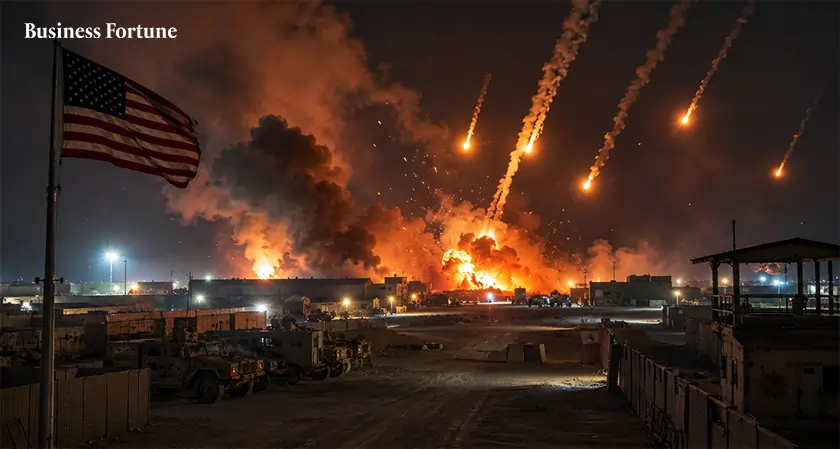
Tensions between Iran and the United States intensified sharply after Iran attacks US base, triggering a rapid cycle of retaliation and counter-retaliation across the Gulf region. The escalation follows a series of military exchanges in which Iranian forces launched missile and drone strikes on American military installations in response to earlier US air operations. The strikes mark one of the most serious flare-ups in recent years, raising fears of a broader regional confrontation involving multiple actors.
The latest developments come amid sustained hostilities between Tehran and Washington, with both sides claiming defensive justification for their actions. Iran said its operations targeted American military infrastructure in response to US strikes on Iranian territory, while US officials described their actions as “self-defense operations” aimed at degrading Iranian military capabilities. International observers have warned that the rapid escalation is pushing both countries closer to a sustained conflict environment.
How did the US base attack change the trajectory of the crisis?
The US base attack has significantly altered the strategic landscape, causing heightened military readiness across US installations in the Middle East. Reports indicate that several bases in the Gulf region were placed on alert following incoming missile activity, while allied nations activated air defense systems to intercept additional threats. Although most incoming strikes were possibly intercepted, the psychological and political impact has been substantial, deepening instability across the region.
As both countries hold firmly held positions, diplomatic attempts continue to be hindered. Tehran maintains that increased military pressure will result in more retaliation, while Washington continues to associate de-escalation with nuclear talks. Analysts observe that there is no imminent breakthrough and that the lines of communication between the two parties are still open but fragile.
The narrative surrounding the US-Iran war has now broadened beyond bilateral conflict, encompassing global diplomatic stakeholders, energy markets, and regional security concerns. With both sides expressing strategic purpose without actually committing to full-scale warfare, the Strait of Hormuz, a vital oil transit route, has turned into a major pressure point. International players are calling for restraint to stop the situation from getting worse, but it is still volatile.
Thus, Business Fortune is of the view that sustained restraint and urgent diplomacy are essential to prevent wider regional escalation.
FAQs
What triggered the latest Iran–US escalation?
The crisis escalated after Iranian missile and drone strikes targeted US military bases in response to earlier US airstrikes on Iranian facilities.
What is the US response to the attacks?
The US conducted retaliatory strikes and increased military readiness across its regional bases, citing self-defense.
Are other countries involved in the conflict?
While not directly engaged in combat, several regional allies have activated defense systems and are monitoring the situation closely.
Could this lead to a full-scale war?
Experts warn the risk exists if retaliatory cycles continue, though diplomatic channels remain technically open.
What is the global impact of the conflict?
Oil markets, shipping routes, and regional stability have all been affected, with rising uncertainty in global energy supply chains.


.webp)