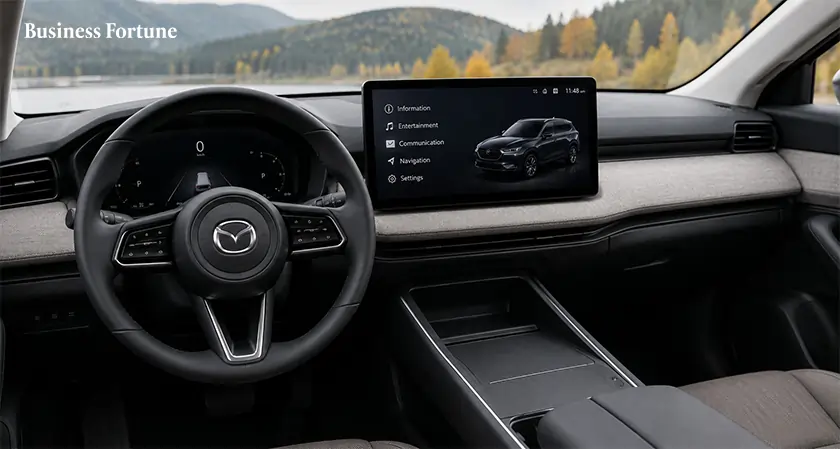
The Mazda CX-5 buttonless interior is drawing attention as Mazda replaces physical controls with a touchscreen, raising fresh questions about safety and usability.
The Mazda CX-5 buttonless interior is becoming one of the most talked-about features of the all-new 2026 model. While the SUV has earned praise for its premium cabin, refined design, and enjoyable driving experience, not everyone is convinced by Mazda’s decision to remove most physical buttons and switches.
Instead of traditional controls for climate settings and audio functions, the new CX-5 relies heavily on a large touchscreen. Buyers can choose between a standard 12.9-inch display or an optional 15.6-inch screen, making it Mazda’s biggest infotainment system yet.
Mazda Defends the Shift Away From Buttons
Mazda executives argue that the move is not just about modern styling. According to CX-5 Program Manager Koichiro Yamaguchi, the touchscreen layout was designed with safety in mind.
The new display sits closer to the driver’s line of sight, allowing adjustments to be made with less time spent looking away from the road. Climate controls remain permanently visible at the bottom of the screen, reducing the need to search through menus. Mazda believes this setup can help drivers make quick changes without diverting their attention for long periods.
A Major Change in Mazda’s Philosophy
For years, Mazda stood out from many competitors by favoring physical controls and rotary dials. The company often argued that touchscreens could distract drivers and increase the risk of losing focus while driving.
The 2026 CX-5 marks a significant change in that thinking. Previous models used a rotary controller positioned near the gear selector, allowing drivers to operate functions using muscle memory. Now, Mazda is embracing a touchscreen-first approach, suggesting that advances in screen placement and interface design have changed the equation.
But Are Drivers Ready to Give Up Physical Controls?
This is where opinions begin to split. Many automotive reviewers appreciate the responsiveness and clean design of the new system. However, some critics argue that physical knobs and buttons remain easier to use without looking, especially for simple tasks like adjusting temperature or volume.
Interestingly, several automakers have recently started bringing back physical controls after years of moving everything to touchscreens. That trend has raised questions about whether Mazda is moving in the opposite direction at the wrong time.
For now, Mazda remains confident that its new approach improves convenience and safety. Whether drivers agree may only become clear after the SUV spends more time on the road.
Looking Ahead
As Business Fortune observes, the debate surrounding the Mazda CX-5 reflects a larger shift happening across the automotive industry. As vehicles become more digital, manufacturers must balance modern technology with ease of use and driver safety. The success of the CX-5’s buttonless interior could influence how future vehicles are designed, making it an important model to watch in the years ahead.
FAQs
What is the Mazda CX-5 buttonless interior?
It is a new cabin design in the 2026 Mazda CX-5 that removes most physical buttons and replaces them with touchscreen controls for audio and climate functions.
What screen sizes are available in the 2026 Mazda CX-5?
The SUV comes with either a 12.9-inch touchscreen as standard or an optional 15.6-inch touchscreen.
Why did Mazda remove physical buttons?
Mazda says the touchscreen's position allows drivers to make adjustments more quickly and spend less time looking away from the road.
Did Mazda previously support physical controls?
Yes. For many years, Mazda favored rotary controllers and physical buttons, arguing they were less distracting than touchscreens.
Are other automakers moving toward or away from touchscreens?
While many brands adopted touchscreen-heavy designs in recent years, some manufacturers are now reintroducing physical controls in response to customer feedback and usability concerns.


.webp)