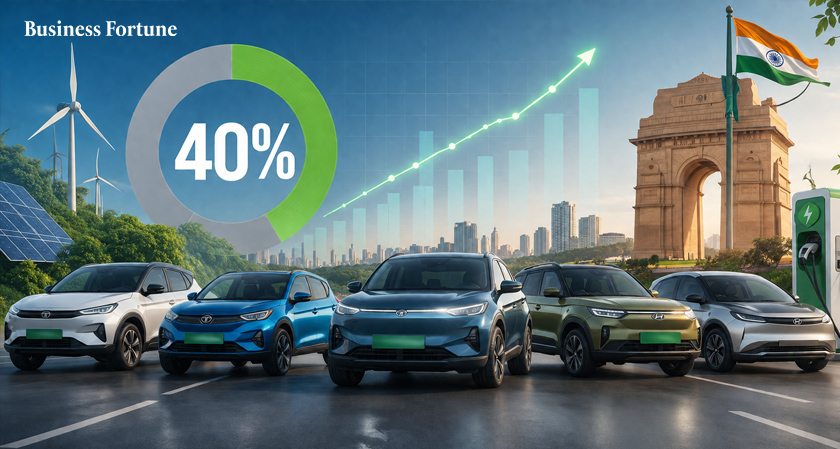
Alternative fuel vehicles accounted for over 40% of India's passenger vehicle retail sales in June, driven by rising demand for EVs, hybrids and CNG models.
Alternative fuel vehicles are rapidly transforming India's passenger vehicle market, accounting for more than 40% of total retail sales in June, according to the Federation of Automobile Dealers Associations (FADA). The growing preference for electric vehicles (EVs), hybrid cars and CNG powered models reflects changing consumer priorities as rising petrol and diesel prices push buyers toward more cost effective and environmentally friendly mobility options.
Rising Fuel Prices Drive Consumer Shift
The latest FADA retail sales data shows that alternative fuel vehicles increased their market share from nearly 38% in May to over 40% in June. CNG powered vehicles led the segment with a 24.3% share of passenger vehicle sales, followed by hybrid models at 8.3% and battery electric vehicles at 7.8%.
The surge comes as fuel prices have increased across several parts of India due to geopolitical tensions in West Asia, making conventional petrol and diesel vehicles more expensive to operate.
Electric Vehicles Continue to Gain Momentum
Electric vehicles remain one of the fastest growing segments in the Indian automotive industry. Although EVs generally have higher upfront costs, their significantly lower charging and maintenance expenses continue to attract buyers.
Several state governments have further boosted EV adoption by offering incentives such as exemptions on road tax and vehicle registration fees, making ownership more affordable.
The electric two wheeler market has been particularly strong, with EV penetration reaching 10.6% in June. Nearly 63% of all electric vehicles sold during the month were two wheelers, highlighting their growing popularity among daily commuters.
Hybrids Face Tax Challenges
Hybrid vehicles are also seeing increasing interest from consumers seeking better fuel efficiency without relying entirely on charging infrastructure.
However, higher taxation remains a major obstacle. While EVs attract a GST rate of just 5%, hybrid vehicles continue to face effective tax rates ranging from 40% to 48%, limiting their market growth despite rising consumer demand.
Industry Sees Strong Growth
Automakers have reported impressive sales growth in the EV segment. "EV adoption is steadily moving beyond early adopters into the mass market," TVS Motor said while reporting an 86% increase in its electric two wheeler business during the first quarter.
Bajaj Auto also recorded around 70% growth in electric two wheeler sales, significantly outperforming the overall two wheeler industry.
Business Fortune believes that with increasing fuel costs, expanding charging infrastructure and government support for electric mobility, alternative fuel vehicles are expected to play an even larger role in India's automotive future.
FAQs
What are alternative fuel vehicles?
Alternative fuel vehicles include electric vehicles (EVs), hybrid vehicles and CNG powered vehicles that use fuels other than petrol or diesel.
What percentage of India's passenger vehicle sales were alternative fuel vehicles in June?
Alternative fuel vehicles accounted for over 40% of passenger vehicle retail sales in June.
Which alternative fuel vehicle segment had the highest market share?
CNG powered vehicles led the segment with a 24.3% share, followed by hybrids (8.3%) and battery electric vehicles (7.8%).
Why are more consumers choosing alternative fuel vehicles?
Consumers are choosing alternative fuel vehicles because of rising petrol and diesel prices, lower running costs, government incentives for EVs and growing environmental awareness.
Why are hybrid vehicle sales lower than EV sales?
Hybrid vehicles face higher taxation, with effective tax rates of 40–48%, while EVs have a much lower GST rate of 5%, making them more affordable.


.webp)































Comments