U.S. and Iran tensions escalate again after missile strikes, drone interceptions, and airstrikes across the Gulf and Lebanon. Here’s what happened and what it means for regional stability.
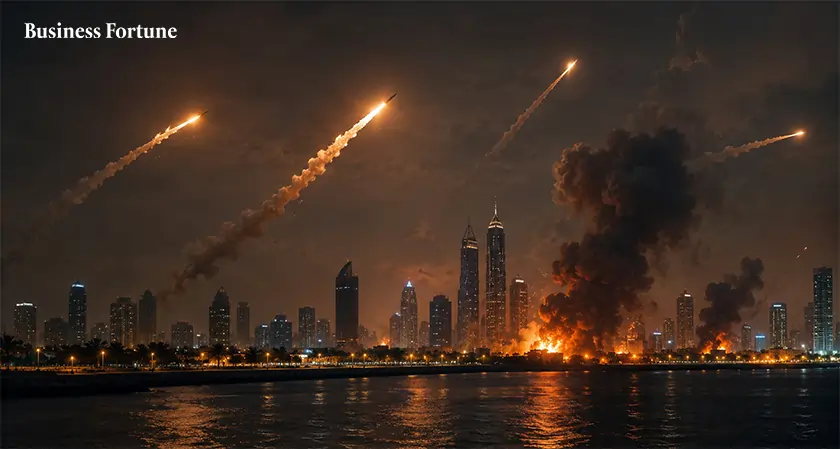
Tensions between the United States and Iran increased again on Saturday after both countries carried out new missile attacks, putting their fragile ceasefire under pressure. US military officials said Iran launched seven ballistic missiles toward Kuwait and Bahrain, two Gulf countries that host American military bases. According to the US military, six of the missiles were intercepted, while one failed to reach its target.
Iran's Revolutionary Guard said it had attacked "enemy bases" in the region as a response to recent US military operations.
Fresh Attacks Put Ceasefire at Risk
Earlier on Saturday, US forces said they shot down four Iranian drones that were heading toward the Strait of Hormuz, one of the world's most important shipping routes. The US military said the drones posed a threat to ships operating in the area. Later, American forces carried out strikes on Iranian radar sites along the country's southern coast to prevent further attacks.
Iran then responded by launching missiles at US military facilities in Kuwait and Bahrain. The latest exchange is one of the most serious challenges to the ceasefire that has been in place since April.
Air Travel Disrupted as Security Concerns Grow
The attacks briefly affected air travel in Kuwait. Kuwaiti authorities temporarily closed the country's airspace and diverted 11 flights to nearby airports as a safety measure. Air traffic later resumed after officials confirmed the situation was under control.
The latest tensions come only days after a drone attack on Kuwait International Airport killed one person and injured more than 60 others. Iran denied responsibility for that attack and claimed the damage was caused by a US missile interceptor. However, the US military rejected that explanation and blamed Iran for the strike.
A Surprising Football Connection
Even as tensions remain high, the United States has granted visas to Iran's national football team for the upcoming World Cup. Iran is scheduled to play its first match in Los Angeles on June 15. It will be the first time a World Cup host nation welcomes a team from a country it is currently in conflict with.
Fighting Continues in Lebanon
At the same time, violence continued in Lebanon. Israeli warplanes carried out airstrikes in the town of Sahmar in western Lebanon's Bekaa Valley. Local reports said buildings were damaged, but no injuries were reported.
In southern Lebanon, several Lebanese soldiers, including a brigadier general, were killed in an Israeli strike on a military vehicle near Nabatiyeh, according to the Lebanese army. The attacks happened despite a renewed ceasefire between Israel and Lebanon. Israeli officials accused Hezbollah of violating the agreement and issued evacuation warnings for several villages near the border.
What Happens Next
As Business Fortune observes, latest missile attacks and military strikes show that tensions across the Middle East remain high. While ceasefires are still officially in place, continued fighting between the US and Iran, as well as between Israel and groups in Lebanon, could make the region even more unstable. The coming days will be crucial in determining whether diplomacy can prevent a wider conflict.
FAQs
- Why did Iran launch missiles toward Kuwait and Bahrain?
Iran said the missile attacks were retaliation for recent US military strikes on Iranian targets, including an oil tanker and locations near Qeshm Island.
- How many missiles were intercepted?
US Central Command stated that six of the seven ballistic missiles launched by Iran were intercepted, while one failed to reach its intended target.
- Why was Kuwait's airspace temporarily closed?
Kuwait closed its airspace as a precaution after missile and drone threats were detected. Eleven commercial flights were diverted before normal operations resumed.
- What happened in Lebanon?
Israeli airstrikes hit multiple locations in Lebanon, including Sahmar and areas near Nabatiyeh. Lebanese authorities reported military casualties and civilian deaths from recent attacks.
- Is the US-Iran ceasefire still in place?
Officially, the ceasefire remains in effect, but the recent exchange of missile attacks, drone operations, and military strikes has placed significant pressure on the agreement.


.webp)