Rahul Gandhi detained near PM Modi's residence after a protest over paper leaks. The outcome could have bigger political consequences than expected.
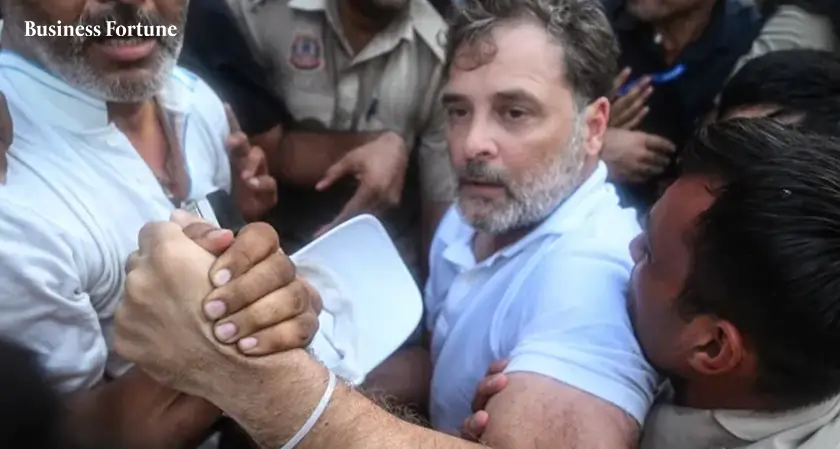
It was supposed to be a protest about students and exam paper leaks. Instead, it became a political moment that everyone seemed to be discussing. Rahul Gandhi detained during a protest near Prime Minister Narendra Modi’s residence has quickly become one of the most talked-about political developments in the country. The dramatic scenes, which showed the Leader of the Opposition being removed by police, suffering a nosebleed, and later being detained, have reignited the debate over exam paper leaks, student protests, and the government's response.
The protest was organized by Congress leaders to raise concerns about alleged paper leaks in NEET and the police action against students and youth protesters. Rahul Gandhi, accompanied by senior Congress leaders such as Priyanka Gandhi, Mallikarjun Kharge, Akhilesh Yadav marched toward the Prime Minister’s residence to demand accountability and a discussion on the issue.
One Image Changed the Day’s Political Narrative
Politics often revolves around powerful visuals, and Tuesday’s protest produced several. Images of Rahul Gandhi being dragged away by police while bleeding from the nose quickly spread across social media and TV channels.
Senior journalist Rajdeep Sardesai argued that the government's handling of the protest may have unintentionally strengthened the Congress's position.
“Instead of allowing a peaceful protest or allowing a discussion in Parliament, the authorities have handed the Congress perhaps exactly what it wanted,” Sardesai said.
For Congress, the visuals helped bring attention back to the paper leak controversy and student concerns that had recently been dominated by protests led by the Cockroach Janta Party (CJP).
Why Did Congress Protest on PM’s Doorstep?
The move was unusual because protests near the Prime Minister’s residence are extremely rare due to security restrictions. Rahul Gandhi said the action was necessary because student concerns were not receiving enough attention and Parliament was not adequately discussing the issue.
Congress leaders have demanded a detailed debate in Parliament and the resignation of Union Education Minister Dharmendra Pradhan over alleged failures in handling NEET exam. Meanwhile, the government defended the police action by citing security concerns and maintained that it remains willing to engage with protesters while ensuring law and order.
Will the Protest Increase Pressure on the Government?
The incident has shifted public attention from administrative questions surrounding paper leaks to a broader political debate about protest rights, accountability, and democratic conflict. At the same time, Prime Minister Modi stated that preventing paper leaks is a national responsibility and highlighted the government's efforts to investigate and act against those involved.
As Parliament continues to debate education reforms and examination honesty, the political impact of these images may continue to shape public discussions. The coming weeks will reveal whether the protest becomes a turning point in the larger conversation around student issues and government accountability.
Where the Protest Leads?
Business Fortune believes the controversy is unlikely to fade soon. Students are still waiting for clear answers, while opposition parties continue to put pressure on the government. As a result, the issue is likely to remain a major topic in politics and Parliament in the coming months. What happens next and how both the government and the opposition handle the situation could shape the education and examination system and India’s political narrative in the near future.
FAQs
Why was Rahul Gandhi detained?
Rahul Gandhi was detained by police during a protest near Prime Minister Narendra Modi’s residence over the issue of exam paper leaks and the treatment of student protesters.
What were the main demands of the Congress party?
Congress demanded a discussion in Parliament on paper leaks and sought the resignation of Union Education Minister Dharmendra Pradhan.
Why is the NEET paper leak issue important?
The controversy has raised concerns about examination fairness, student futures, and the credibility of recruitment and admission processes.
What was the government's response to the protest?
The government cited security concerns for the police action and stated that it is willing to engage with protesters while maintaining public order.
How could this incident affect Indian politics?
The protest and the visuals that emerged from it may increase political pressure on the government and keep the debate over education reforms and accountability in the national spotlight.


.webp)




























Comments