Bain tests software using AI-generated replicas to help investors evaluate acquisition targets, identify competitive advantages, and assess AI disruption risks reshaping the software industry and private equity dealmaking.
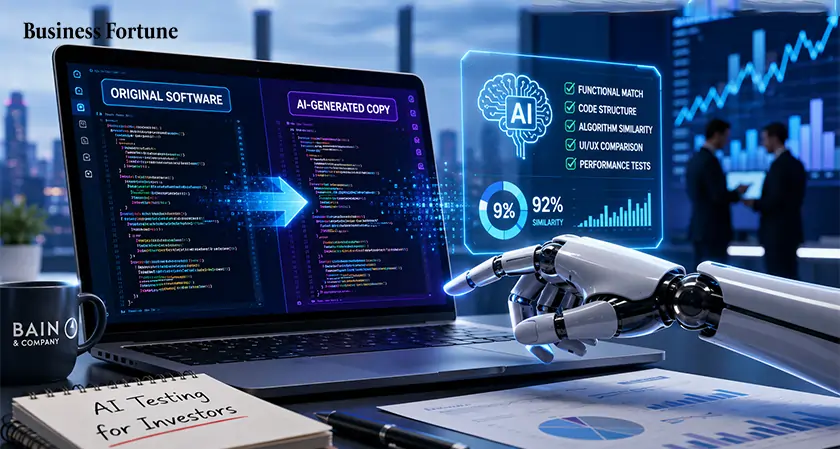
Bain tests software in a way that could reshape how private equity firms evaluate technology companies. Instead of only reviewing presentations, financials, and product demos, consultants are now using generative AI to build rough versions of a target company's software and see how easily it can be recreated.
AI Is Turning Software into a Hands-On Exercise
Bain & Company has been using a technique known as "vibecoding" where AI generates code from simple prompts. The firm creates working prototypes that mimic key features of software products being considered for acquisition. The goal is to determine whether a company's advantage truly comes from its code or from other strengths such as customer relationships, proprietary data, workflows, or market position.
What started in 2023 as a specialized engineering effort has now expanded across Bain's private equity advisory teams. According to the firm, hundreds of AI-generated prototypes have already been built during deal evaluations.
Can AI Reveal Which Software Companies Have Real Moats?
As AI makes software development faster and cheaper, investors are asking whether some products can be copied more easily than previously believed. Instead of relying on assumptions, buyers can now interact with AI-built replicas and test how unique a product really is.
This shift comes as software valuations face growing pressure. Investors have become more cautious about businesses that may struggle to maintain their competitive edge in an AI-driven market.
The Focus Is Moving Beyond Code
Industry experts say a software replica is not the same as a real business. A prototype cannot recreate years of customer trust, operational experience, support systems, security controls, or valuable data.
Still, these AI-generated models help investors identify where a company's long-term value truly exists. Companies with strong ecosystems, specialized data, regulatory expertise, or deeply embedded customer workflows may continue to stand out even if parts of their software can be replicated.
As Business Fortune observes, AI continues to transform software development and investors are expected to rely more heavily on AI-powered testing during acquisitions. Companies seeking buyers may increasingly need to prove that their value extends beyond code and into assets that are harder to copy.
FAQs
What does "vibecoding" mean?
Vibecoding refers to using AI tools and prompts to generate software code and quickly build functional prototypes.
Why is Bain creating software replicas?
The firm uses replicas to assess how difficult a product is to reproduce and whether it has a sustainable competitive advantage.
Does a software replica replace traditional due diligence?
No. It complements traditional reviews by providing a practical way to evaluate a product's strengths and weaknesses.
What makes a software company difficult to copy?
Factors such as proprietary data, customer loyalty, industry expertise, integrations, and regulatory knowledge often create stronger barriers than code alone.
How is AI affecting software acquisitions?
AI is increasing scrutiny during dealmaking because investors want to understand which companies can remain competitive as software development becomes faster and cheaper.


.webp)