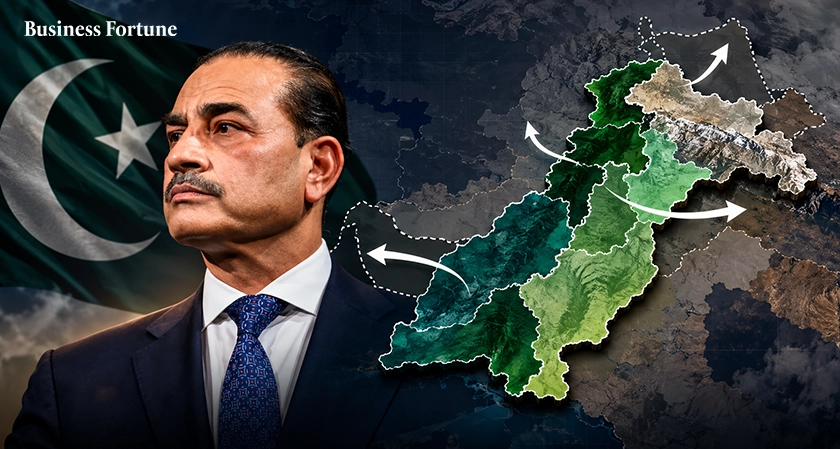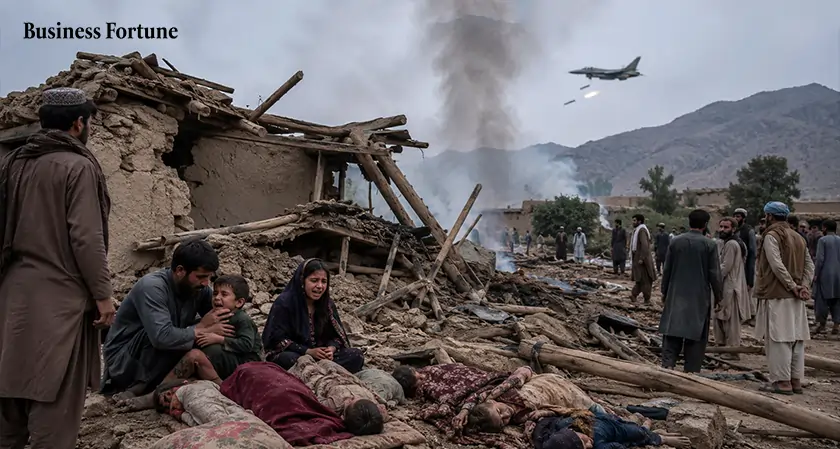
At least 13 people, including 11 children, were killed in air strikes in eastern Afghanistan, reigniting tensions between Pakistan and Afghanistan and raising fears of further border conflict.
Tensions between Pakistan and Afghanistan have risen again after Afghan authorities accused Pakistan's military of carrying out air strikes on Afghanistan that killed at least 13 people, most of them children.
According to Afghanistan's Taliban government, the strikes hit civilian homes in the provinces of Kunar, Khost, and Paktika late on Tuesday. Taliban spokesperson Zabihullah Mujahid said the victims included 11 children, one woman, and one elderly man. Fourteen other people, all women and children, were reportedly injured.
The attacks mark one of the deadliest incidents in recent weeks and could end the brief period of calm along the Afghanistan-Pakistan border.
Attack on Civilians Sparks Anger
Afghan officials strongly condemned the strikes, calling them a violation of Afghanistan's sovereignty and airspace. "We strongly condemn this humanitarian crime and act of aggression," Mujahid said in a statement.
Local officials reported that one strike in Khost province hit a house in the Spera district, killing nine people and injuring ten others. In neighboring Paktika province, another attack reportedly struck a residential building, killing three civilians, including children. Pakistan had not officially commented on the strikes at the time of reporting.
Why Are Border Tensions Rising Again
The latest violence comes just one day after suspected fighters from Tehrik-i-Taliban Pakistan (TTP), also known as the Pakistan Taliban, attacked a security post in Pakistan's northwestern Khyber Pakhtunkhwa province. The assault killed six members of Pakistan's Federal Constabulary and wounded several others.
Pakistani security officials told media outlets that the air strikes targeted militant hideouts allegedly used by groups launching attacks inside Pakistan.
Islamabad has repeatedly accused Afghanistan of sheltering TTP fighters responsible for deadly attacks on Pakistani soil. Afghan authorities deny those allegations and argue that Pakistan's security challenges are domestic issues.
A Fragile Peace Under Pressure
As Business Fortune observes, relations between the neighboring countries have remained tense since the Taliban returned to power in Afghanistan in 2021. Cross-border clashes intensified earlier this year, leading to one of the worst confrontations in years. Although a ceasefire agreement was reached in March with mediation efforts from China, the truce later collapsed as both sides accused each other of violations.
The human cost of the conflict continues to rise. According to a United Nations report released in May, cross-border fighting killed at least 372 Afghan civilians and injured another 397 during the first three months of 2026.
As accusations and revengeful actions continue, the latest strikes could push the two countries toward another cycle of violence. Regional observers will be closely watching whether diplomatic efforts can restore stability or whether tensions along the border escalate further in the months ahead.
FAQs
1. How many people were killed in the air strikes?
Afghan authorities say at least 13 people were killed, including 11 children, one woman, and one elderly man.
2. Which Afghan provinces were targeted?
The strikes reportedly hit Kunar, Khost, and Paktika provinces in eastern Afghanistan.
3. Why did Pakistan allegedly carry out the strikes?
Pakistani security officials said the operation targeted facilities and hideouts linked to militants accused of carrying out attacks inside Pakistan.
4. What is the TTP?
Tehrik-i-Taliban Pakistan (TTP), often called the Pakistan Taliban, is a militant group that has conducted attacks against Pakistani security forces and government targets.
5. What could happen next?
The incident may increase tensions between Pakistan and Afghanistan, potentially leading to further military confrontations unless diplomatic efforts succeed in reducing hostilities.


.webp)