India launches nationwide HPV vaccination and screening initiative as Tedros Adhanom Ghebreyesus praises efforts to eliminate cervical cancer by 2030.
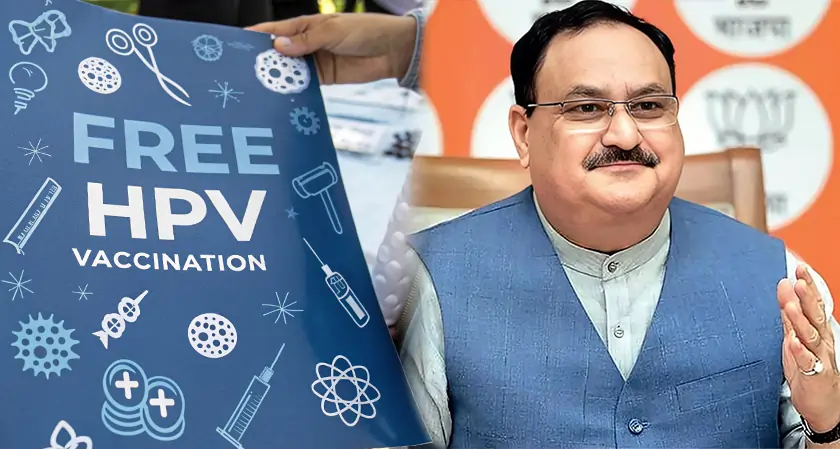
Union Health Minister Jagat Prakash Nadda reaffirmed India's ongoing commitment to eliminating cervical cancer as a public health concern and to fostering international health partnerships during a conference call on global health issues with Tedros Adhanom Ghebreyesus, Director-General of the World Health Organization (WHO). During the call the minister explained how India has taken an integrated approach toward combating cervical cancer through the initiation of early diagnosis, screening, preventive measures and immediate treatment of affected individuals.
The minister noted that through various health facilities, such as Ayushman Arogya Mandirs and other hospitals and clinics, cervical cancer screening services are now provided to women aged 30 to 65 through the delivery of Visual Inspection with Acetic Acid (VIA) at no cost. To date 86 million women in India have been screened under the National Programme for Prevention and Control of Non-Communicable Diseases.
Mr. Nadda also placed emphasis on India’s National HPV (Human Papillomavirus) Vaccine Programme. He said that the HPV Vaccine Programme was launched by PM Narendra Modi on February 28 and aims to immunize approximately 12 million 14 year old girls with the Gardasil Quadrivalent HPV vaccine, which will be offered free of charge at government health facilities during a 90 day vaccination programme with a single dose of the HPV vaccine.
According to Union Health Minister Nadda, this initiative is part of the National Health Mission (NHM) Swasth Nari, Sashakt Parivar vision for women’s health in India, addressing the importance of preventive and equitable access to healthcare for women. He also reiterated that the vaccination programme is voluntary and will be available to girls only if parents’ consent to their participation in the vaccination programme. He committed to India’s leadership in supporting WHO’s global initiative to eliminate cervical cancer and achieve the 90–70–90 targets by 2030, meaning 90% of girls receive the HPV vaccination, 70% of women are screened and 90% of women with cervical disease receive treatment.


.webp)