The Rise of Drones in Retail and Logistics
Drones are no longer a futuristic idea they are rapidly transforming how goods are delivered worldwide. In this blog, we explore their growing role in retail and logistics, from speeding up last-mile deliveries for e-commerce giants to reaching remote areas with essential supplies. Companies are leveraging drones to enhance efficiency, reduce costs, and meet rising customer expectations for faster, more reliable service. We also examine the technology, operations, challenges, and support systems behind drone delivery, and look ahead to a future where these flying couriers become an integral part of global supply chains.
From Warehouses to Doorsteps: Drones Take Flight
The use of drones in retail and logistics is driving rapid growth. Major e-commerce retailers, food delivery services, and logistics companies deploy drones to complete last-mile deliveries faster. Retailers see drones as a way to enhance customer service by delivering high-value or urgent items quickly. Logistics companies aim to optimize supply chains, access remote areas, and reduce reliance on congested roads.
Globally, drones are becoming common in both urban and rural delivery ecosystems. Healthcare organizations in Africa and Southeast Asia use drones to distribute medicine in areas where traditional transport is slow or unreliable. Meanwhile, companies like Amazon, Walmart, and DHL are developing drone fleets for product and grocery deliveries. Their adoption is driven by three key factors: automation, speed, and flexibility, leading to broader implementation.
How Drone Deliveries Actually Work
Drone delivery requires careful planning, monitoring, and technology. Most drones have GPS, real-time sensors, and obstacle detection software for safe and accurate deliveries. They can be piloted manually, semi-autonomously, or fully autonomously.
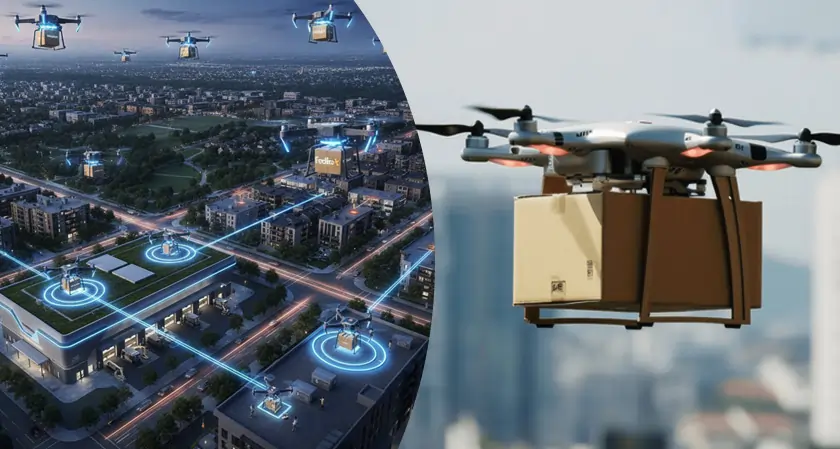
Packages are loaded onto drones, which calculate travel time from fulfillment centers to delivery points. Drop-offs occur at landing pads or nearby locations using tethered drops, secure releases, or handoffs. Advanced operations monitor real-time data like weather, air traffic, and ground obstacles to ensure timely, safe delivery.
In urban areas, hybrid systems combine drones and ground vehicles. Drones handle congested short routes, while trucks or vans cover longer, less busy roads, creating an efficient delivery system.
Challenges for Drone Delivery Providers
Despite their potential, drones face several obstacles. Regulations on airspace usage, flight limits, and operator permissions vary locally and nationally. Technological limits include battery life, range, and payload capacity. Weather conditions such as high winds, rain, or extreme temperatures can ground drones. Urban drones need precise obstacle detection to navigate safely.
Public concerns also slow adoption. Noise, privacy issues from cameras, and safety risks are major worries. Drone delivery also requires substantial infrastructure: landing zones, charging stations, secure package storage, and traffic management systems. Without these, operations remain inefficient or unsafe.
Support Services Required for Drone Delivery
Drone delivery relies on more than the drones themselves. Support services form the backbone of reliable operations. Air traffic management prevents collisions and coordinates multiple drones. Maintenance ensures drones remain functional and safe.
Logistics software integrates drones into supply chains, handling package tracking, automated scheduling, and real-time monitoring. Emergency response systems and backup vehicles address failures or weather disruptions. Regulatory compliance services help providers navigate airspace laws and secure permissions. These layers are critical to sustainable operations.
Advantages of Drone Delivery Services
The main advantage of drones is speed. They fly directly from origin to destination, avoiding traffic and reducing delivery times compared to ground transport.
Contactless delivery is increasingly important, especially for food and healthcare, reducing human interaction and minimizing pandemic or sensitive delivery risks.
Drones can also reduce costs. While initial investments are high, eliminating driver wages, fuel, and some maintenance lowers per-delivery costs over time. They extend service coverage, reaching rural or underserved areas efficiently. Drones are environmentally friendly, using electric power, reducing emissions, and alleviating urban congestion.
What’s Ahead for Drone Delivery in Retail and Logistics
The outlook for drones in logistics and retail is strong over the next decade. Advances will increase range, payload capacity, and reliability. Improved urban aerial traffic management will allow more and larger drones to operate safely together.
Autonomous technologies and AI will make fleets more efficient and safer. Hybrid delivery methods combining drones and ground vehicles will become common for last-mile logistics. Specialized drones will handle high-value, perishable, or sensitive items, integrated into smart city infrastructure for better urban delivery solutions.
Long-term, drones may become standard in global logistics networks, reshaping customer expectations for cost and delivery speed. As supporting infrastructure and technologies mature and regulations become clearer, drones will evolve from a novelty to a common delivery tool, transforming product and service distribution across communities, cities, and regions.


.webp)