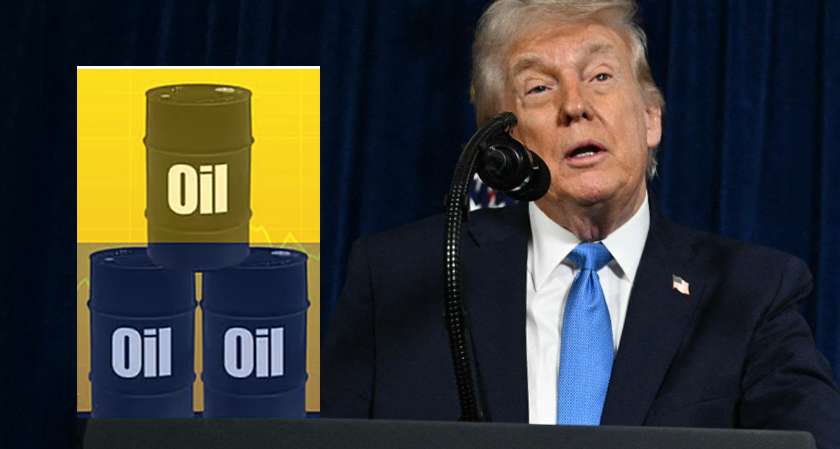
World politics and energy markets are instantly shaken when a US president, either past or present, makes a bold declaration about taking over another country's natural resources. Donald Trump recently gained news when he stated that the US will grab Venezuela's oil reserves, which are among the world's largest proven oil reserves.
Such a statement poses major legal, economic and geopolitical issues, regardless of whether it is rhetorical, strategic, or hypothetical. It discusses international law, energy security, independence and Venezuela's already precarious political situation. Venezuela's enormous petroleum resources are once again in the public eye due to the most recent oil and Trump news.
For a long time, Venezuela's oil has been essential to both its economic survival and national identity. In addition to being an economic matter, control over Venezuela's oil reserves is a sign of political strength, independence and defiance of outside interference. Tensions in the already complicated relationship between Washington and Caracas are significantly increased by any suggestion that the US seize Venezuelan oil.
This article explains the implications of Trump's statement, its context, its possible repercussions and the value of such rhetoric that extends well beyond US-Venezuela relations.
Oil, Sanctions, and Strongmen: The High-Stakes US–Venezuela Standoff
Even Saudi Arabia is not as vast as Venezuela's confirmed oil reserves. The foundation of Venezuela's budget for many years was the country's oil reserves, which provided cash for government operations, public services and subsidies. Still, oil growth has failed due to years of political unrest, sanctions, corruption and ineffective leadership.
There has long been conflict between the US and Venezuela, particularly since Hugo Chávez and Nicolás Maduro came to power. In answer to concerns of authoritarianism, violations of human rights and irregularities in elections, the US slapped sanctions on the Venezuelan administration. Because of these regulations, Venezuela's ability to export oil freely on international markets was severely restricted. Also raising questions about whether the US plan to control Venezuela's oil industry could ever turn into a reality.
Trump's statement fits within a larger narrative that he frequently uses, which connects national strength, energy power and foreign policy. The language used in Trump's statements about Venezuela's oil reserves indicates a strong position toward rich in resources countries perceived as enemies, even though no official policy or legal framework has been shown to back such action.
What “Seizing Oil Reserves” Actually Means
The idea of one country seizing another country’s oil reserves is extremely complex and controversial. Venezuela oil reserves are not just physical assets that can be taken overnight; they are embedded within national territory and protected by international law.
In practical terms, “seizing” could imply several different actions:
-
Taking control of oil production facilities through military intervention
-
Installing or supporting a regime that grants access to oil assets
-
Nationalizing foreign-held assets in reverse, by forcing ownership changes
-
Using sanctions and legal pressure to redirect oil revenues
Claims suggesting the US seize Venezuela oil often blur the line between economic pressure and outright resource control. Each of these approaches would carry enormous political, legal and humanitarian consequences and would almost certainly violate international norms.
Why Venezuela’s Oil Is So Strategically Important
Oil is a planned resource that affects the balance of power in the world, not just an financial commodity. Venezuela's oil reserves are especially attractive because:
-
They are vast and long-term in potential value
-
Control over them could shift regional energy balances
-
They could reduce reliance on Middle Eastern oil
-
They offer leverage in global energy markets
For the United States, energy security has always been a strategic priority. Although the US is now a top oil producer, discussions around US to run Venezuela oil industry highlight how foreign reserves still factor into long-term geopolitical thinking—especially when framed within Venezuela oil Trump news narratives.
Potential Consequences of Such a Move
Even the suggestion of seizing Venezuela oil reserves carries serious implications. If such a policy were ever pursued, the consequences could include:
-
Escalation of regional conflict, particularly in Latin America
-
Severe backlash from the international community, including the UN
-
Retaliation from Venezuela’s partners, such as Russia, China or Iran
-
Disruption of global oil markets, leading to price volatility
-
Humanitarian fallout, worsening situations for Venezuelan civilians
Latin American nations, many of which have a history of opposing foreign intervention, would likely view attempts where the US seize Venezuela oil as a return to interventionist policies of the past, damaging trust across the region.
Legal and International Law Challenges
Natural resources are the sovereign state's property under international law. The UN Charter's tenets would be violated by any attempt to take Venezuela's oil riches by force. In international courts, even economic coercion aimed at transferring ownership may be challenged.
Resource seizures have often been justified under the pretense of advancing security or democracy. However, actions related to Trump's rhetoric about Venezuela's oil riches would encounter strong legal opposition, making practical implementation far more challenging than political bluster suggests.
Why Political Rhetoric Still Matters
Words from powerful political individuals have weight, even if Trump's remarks never become law. Populations grow increasingly divided, governments reassess alliances and markets respond. Uncertainty in the world's energy markets increases with every wave of news related to Trump and Venezuela's oil.
Such rhetoric supports nationalist narratives and concerns about foreign exploitation in Venezuela. It causes supporters to question the US's adherence to international principles. It increases confusion in a geopolitical situation that is already precarious on a global scale.
Conclusion: High Stakes, Higher Risks
Trump's saying that the US will seize Venezuela's oil reserves shows the close relation between politics, power and energy. The dispute over US control of Venezuela's oil industry has major worldwide implications regardless of whether it is meant as political signaling, economic leverage or ideological discourse.
Aggressive discussion of natural resources simply raises the stakes in a globe already struggling with energy shifts and geopolitical unrest. More than just fuel, Venezuela's oil reserves represent world conflict, sovereignty and the perilous effects of using strategic assets as political weapons.


.webp)