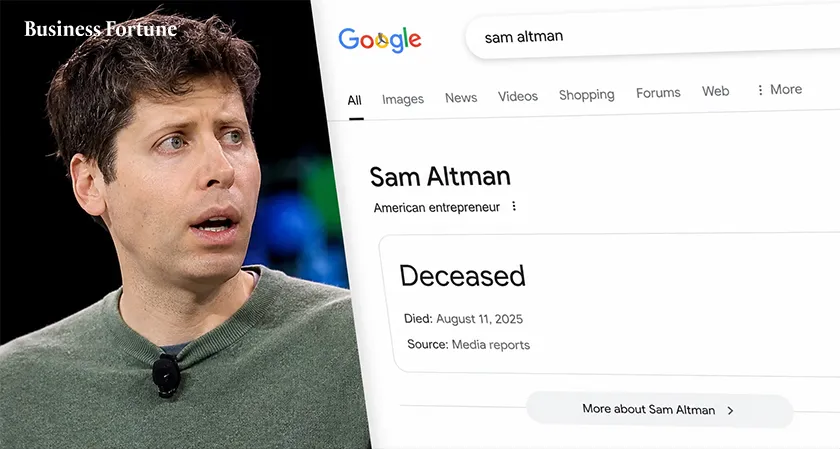
Google Discover's AI-generated headlines are confusing, misrepresenting stories, and upsetting journalists because they take away their editorial control.
In its Discover stream, Google is experimenting with AI-generated headlines in place of original news headlines. The Verge's top editor, Sean Hollister, observed this, pointing out that instead of newspaper headlines, brief and frequently deceptive AI-generated headlines have started to show up in his smartphone feed.
The Google Discover news stream on Samsung Galaxy and Google Pixel devices was used in the trial. Hollister pointed out that although the system makes an effort to condense a post's essence into a few words, the outcomes are frequently distorted. Posts about Baldur’s Gate 3 are generating headlines condemning players of child trafficking, while stories concerning the Qi2 standard are buried in claims of slowing down older Pixels.
A flashy title on graphics card sales at a German merchant gets condensed into a statement about AMD solutions allegedly "outperforming" Nvidia, while an Ars Technica story about Valve's planned console price turns into a claim that the price has already been disclosed.
Simply put, it appears with meaningless terms like "backups" and "AI labeling controversies," which sound like a mishmash of random syllables when taken out of the context of the story.
Journalists underline that the problem isn’t only about the quality of phrasing. Because logos and media names are still displayed next to clickbait headlines, viewers may believe that the editors themselves wrote them. Publications are losing control over how their material is displayed in the Google feed.
The lack of transparency is a particular cause of frustration: Google marks such listings with a warning highlighting the use of artificial intelligence and the likelihood of errors, but this notice is only apparent by expanding the “More details” section, not directly in the feed.
For certain Discover users, the business characterizes the modifications as a minor UI test. According to Google spokesperson Mallory DeLeon, the purpose of the improvements is to make information about a topic easier to assimilate before arriving on the site. However, the journalistic community sees this as a continuation of a trend in which the search engine and its connected services are increasingly keeping their audience within the Google ecosystem and providing less and less traffic to news sites.
Against this backdrop, editorial teams are pursuing new revenue streams, including subscription models, and warn that a further change in concentration toward AI-powered content processing could only accelerate the collapse of the internet.


.webp)