- Mahadharani Vijay
Most technology companies enter a new market the same way: sales team, pipeline, deals. What that produces is transactions. Rarely a business.
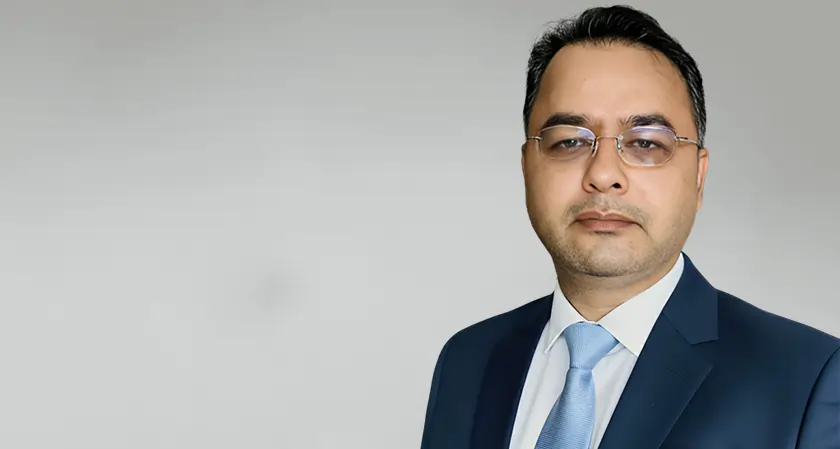
Rahul Chhibber has spent more than 25 years building the thing that comes after the transactions. "A deal closes once," he says. "Then the ecosystem keeps delivering. The question I've always asked is not how do I close this customer, but how do I build something that makes the next hundred customers easier to reach. And as well as that, I look at how they can be better served, and more likely to stay."
Recognized across the Asia Pacific as a highly sought-after expert in enterprise technology architecture and ecosystem development, Rahul has built a career by constructing the commercial and partner infrastructures that enable industrial technology platforms to move from early adoption to industry standards.
What gets built around the deals, partner networks, capability frameworks, governance structures, and Centers of Excellence determines whether a technology company has a business or just a revenue line. Building that infrastructure well is a discipline. Very few technology leaders have mastered it.
What an Ecosystem Actually Requires
Rahul says the word ecosystem gets thrown around a lot in enterprise technology circles and usually means very little. However, he has a specific definition for it, and it doesn't start with a signed agreement: "Most companies think they have a partner ecosystem," he reveals. "They don't. They have a partner list. A list is people you've signed agreements with.”
He goes on to explain: “This is an ecosystem of people who are investing in your technology, training their teams, building practices around it, and bringing you customers you would never have found on your own. Getting from the list to the ecosystem is where most of the real work happens, and it's work that most organizations underestimate."
Rahul says getting there means building performance-aligned incentives, governance structures that create real accountability, and also enablement programmes that go deeper than a certification: “Then the executive relationships give the whole thing commercial weight when a large deal requires alignment at the top.”
The Foundations: Sun Microsystems and NetApp
The principles that would define Rahul's approach to ecosystem building were laid during his seven years at Sun Microsystems India, where he served from 2001 to 2008 as General Manager and Regional Head of Sun Services.
The role gave him his first sustained experience building a services business from the ground up within a complex, partner-dependent commercial model. He achieved his targets for three consecutive years, was selected for the Sun Rise Top Achievers Club in 2008, and graduated from Sun's Leadership Development Programme, a selective programme for professionals identified as having the capacity to lead at a significantly higher level.
At NetApp India, where Rahul served as Partner Business Manager and Country Engagement Manager for Solutions and Services from 2008 to 2011, the ecosystem-building discipline sharpened considerably. NetApp's business model was deeply partner-dependent, and the role required Rahul to build a solution sales function that had not previously existed in any structured form. Revenue growth came in at 50% in 2009 and 40% in 2010, putting him in NetApp's Sales Club as one of its top performers globally.
Chiranjeev Singh was there for part of this. Now Vice President and Head of Customer Operations at Radisys, a Reliance Industries company, Singh has crossed paths with Rahul across multiple organizations over more than a decade and watched the NetApp chapter closely.
"His commercial results were strong," Singh says, "but what was more significant was the originality he brought to how enterprise storage solutions were positioned and delivered. He played a meaningful role in shaping early thinking about storage-as-a-service models, how they could be packaged, priced, and brought to market in ways that worked specifically for emerging markets.
“That kind of early commercial innovation, translating a technology capability into a market-ready proposition before there's an established playbook for doing so, is a pattern that has defined his contributions throughout his career."
"At NetApp, I learned something that sounds obvious but takes years to truly internalize," Rahul says.
"Partners don't work for you. They work with you when it's worth their while to do so. Your job is to make it genuinely worth their while, not just financially, but technically, strategically, in terms of what the relationship does for their reputation and their capability in the market. When you get that right, they bring you into deals you'd never have found on your own. When you get it wrong, the partnership exists on paper and delivers nothing."
Scaling from Zero: The Siemens Model
The most extensive application of Rahul's ecosystem-building approach prior to AspenTech came during his tenure at Siemens Digital Industry Software, where he served as Head of Sales for Cloud Business in Asia Pacific from 2019 to 2022. He joined a business that had essentially no established cloud customer base in the region and was tasked with building it, not just through direct sales but through a partner-led model that would allow the business to scale across geographies and industry verticals that Siemens could not cost-effectively serve directly.
The ecosystem he built had several distinct layers.
He outlines the framework: “Value Added Resellers brought industry expertise and last-mile relationships. Then, Global System Integrators, the large consultancies that implement complex enterprise solutions at scale, provide the delivery muscle for major deployments.
“Then I integrate hyperscalers, including AWS, MS, and Google, which can open doors to cloud-native customers. Then, Managed Service Providers handled the ongoing operational work that most direct sales teams can't sustain. Each one needs a different approach, different incentives, different conversations.”
Rahul adds: "When you're building from zero, the temptation is to take every partner who'll sign an agreement. What I learned is that the wrong partners cost more than no partners at all. A partner who signs up, doesn't invest in capability, and brings you into deals they can't actually support damages your reputation with the customer and makes the next sale harder.” He stands by quality over volume, always.
By financial year 2022, what had started as ten customer organizations. Targets were exceeded at 135% in both 2020 and 2021. Rahul also won The Best Portfolio Sales Performance Award for 2020 in Asia Pacific, less a personal accolade than a measure of what the ecosystem model itself had produced.
Rajiv Ghatikar served as Vice President and Head of Portfolio Development for Asia Pacific at Siemens Digital Industries Software, with direct responsibility for the cloud portfolio that Rahul was building.
Here is his account of what that build actually represented: "When Rahul came in, the Siemens cloud business in Asia Pacific was at an early stage with very limited traction.
“Over three years, he transformed it into a scaled commercial operation across the region. The partner ecosystem was central to it, but so was something less visible: a cloud sales enablement programme he built that changed how Siemens teams across the region thought about and sold cloud solutions. Not just better numbers, but a different mindset about what cloud business models could look like. That combination is what made his contribution stand apart."
The AspenTech Transformation
The most structurally significant ecosystem Rahul has built to date was at AspenTech, a division of Emerson Software focused on industrial AI software for asset optimization, supply chain, and grid management across energy, chemicals, manufacturing, and related sectors. He joined in 2023 as Head of Partner Sales and Alliances for Asia Pacific, implementing a regional partner structure.
The numbers told a familiar story. Partner-driven revenue was low. Partner-sourced deals, the ones partners had actually originated rather than just helped close, were low. Partners were transactional. The infrastructure needed to compete for large enterprise deals simply wasn't there.
What followed was a ground-up rebuild. Rahul suggested that incentive structures needed to be redesigned to reward genuine capability development as well as transaction volume. Executive-level governance forums were also established, creating accountability on both sides without adding layers of bureaucracy.
A partner skill certification architecture provided organizations with a clear development pathway and Rahul's team with real visibility into where capability existed and where investment was needed. Forecasting and pipeline management processes made the indirect channel as commercially rigorous as anything happening on the direct side. "I had to change the perception first," Rahul says. "Partners needed to see that AspenTech was actually invested in their success. You show that through action, not announcements."
An example of how his work has had an impact across his field is that central to the rebuild were two Centers of Excellence that Rahul established to anchor the ecosystem's technical depth.
The first, developed in partnership with a Global System Integrator (GSI), focused on Asset Performance Management. Rahul applied data and AI discipline to optimize the performance and reliability of industrial assets, such as turbines, compressors, and process equipment.
The second, developed with Big 4, focused on Supply Chain Management, addressing how industrial organizations plan, execute, and optimize the movement of materials and products. Both Centers of Excellence were designed not as marketing relationships but as genuine capability hubs, where joint teams developed reference architectures, built technical expertise, and created the delivery capacity required to implement AspenTech's Industrial AI platforms at enterprise scale.
"A Center of Excellence is only valuable if it's actually building something," Rahul says. "If it's a name on an agreement and a logo on a slide, it delivers nothing. But what we built with GSI and Big 4 were working practices. And the teams that understood AspenTech's technology deeply could walk into a customer's facility and implement it correctly.
“They also had the credibility to have the strategic conversations that large enterprise deals require. That's what makes an ecosystem real and usable."
Three years in, the numbers made the case: a 60% compound annual growth rate. Rahul received the Partner Region of the Year award for the financial year 2024 and was nominated for AspenTech's Leadership Development Programme.
What Rahul built in the Asia Pacific didn't stay just there. The governance frameworks, the enablement architecture, and the partner performance management approach he developed were picked up and applied across other global regions, feeding into AspenTech's broader international partner strategy. For a regional leader's work to travel that way, reshaping how an organization operates in markets he wasn't running, is rare.
Manish Chawla served as Chief Revenue Officer and Chief Customer Officer at AspenTech with global responsibility for revenue strategy, partner ecosystem performance, and customer lifecycle management.
He had direct executive oversight of Rahul's mandate throughout his tenure. Manish had previously served as Global General Manager of IBM's Industrial Sector and has evaluated senior revenue and partner leaders across multiple organizations and regions.
He recalls: "What Rahul constructed in Asia Pacific was not simply a regional improvement; it was a structural contribution to how AspenTech approached partner-led growth globally.”
He adds a detail that speaks directly to the commercial depth of what the ecosystem produced: “Under Rahul's leadership, partners began originating and winning business in markets where AspenTech had previously had no meaningful direct presence.
“We saw this as a tangible measure of growth and genuine reach. It is the kind that only a well-built partner ecosystem can generate.”
A Specific Significance: The Partner Enablement Standard
A specific significance of Rahul's contributions to the field lies in the enablement architecture he developed and refined across his career. The standard approach to partner enablement goes roughly like this: produce some training materials, launch a certification programme, put a toolkit somewhere partners can find it, and hope they engage. Most vendors never move past that.
What Rahul built works differently. "Enablement isn't a one-time thing," he says.
“But a partner you enabled eighteen months ago and haven't spoken to since isn't an enabled partner. They have moved on and hired new people. They have also shifted focus. They've moved on."
The model Rahul built treats enablement as an ongoing operational commitment: “You have to have regular engagement cadences, joint planning sessions, and skills assessments woven into the fabric of the relationship rather than bolted on.”
At AspenTech, his model was employed through monthly webinars for partner teams across the region, as well as roadshows that put AspenTech leadership directly in front of partners in their own markets.
Rahul goes on: “We also integrated a Train-the-Trainer approach that let organizations build internal capability without needing to call in AspenTech resources every time a new person joined. A Partner Skill Matrix meant both sides could see clearly where things were strong and where investment was still needed.”
He adds: "Staying enabled means staying connected, consistently. The cadence has to be built into the structure of the relationship, not left to goodwill."
Building the Ecosystem for Physical AI
At Botsync, where Rahul currently serves as Senior Vice President of Sales for Asia Pacific, the ecosystem-building discipline he has developed across more than two decades is being applied to what may be its most demanding context yet. Botsync operates at the frontier of Physical AI, a category that encompasses autonomous mobile robots and related systems designed to operate within and interact with the physical environment of industrial facilities.
Under Rahul's leadership, the territory represents the biggest revenue, and his mandate extends beyond sales performance.
It also included positioning the organization for subsequent funding. The ecosystem infrastructure required to commercialize autonomous robotics at enterprise scale across Asia Pacific is a larger, more complex version of the same challenge Rahul has been solving throughout his career.
"Every time I've come into a new technology category, the fundamental question has been the same," he says.
"Who are the partners who can extend my reach into the markets I can't serve directly? What do they need from me to invest in this seriously? How do I build governance and incentive structures that make the partnership genuinely valuable for both sides?”
Rahul says while physical AI is a new category, he has been building the discipline of the ecosystem for 25 years: “The technology changes. The architecture of what makes it scale does not."
The endpoint of this trajectory, the one Rahul sees the industry moving toward, is what practitioners are beginning to call ‘dark factories’: a fully automated industrial facility capable of operating continuously without human presence on the floor.
Dark factories, or 'lights-out' manufacturing, are fully automated facilities that operate 24/7 without any human labor.
Rahul explains: “By eliminating the need for human workers, they also remove the requirements for lighting, heating, and other human-centric infrastructure. These facilities rely on advanced AI, robotics, Industrial Internet of Things (IIoT) sensors, and digital twins to autonomously handle production, quality control, and maintenance — all with the primary goal of maximizing efficiency and significantly reducing costs."
He adds: “The robots navigate, the systems self-correct, the production runs. What makes that possible is not just the technology but the commercial and partner ecosystem built around it.”
It is the same discipline Rahul has been developing for 25 years. The ecosystems Rahul builds outlast the roles he holds. That is, ultimately, the measure of the work.
About The Author
Mahadharani Vijay is a writer specializing in digital marketing, electric and concept cars, gadgets, and Markets. She focuses on turning emerging trends and innovations into clear, engaging, and accessible stories for both professionals and wider audiences.
.webp)