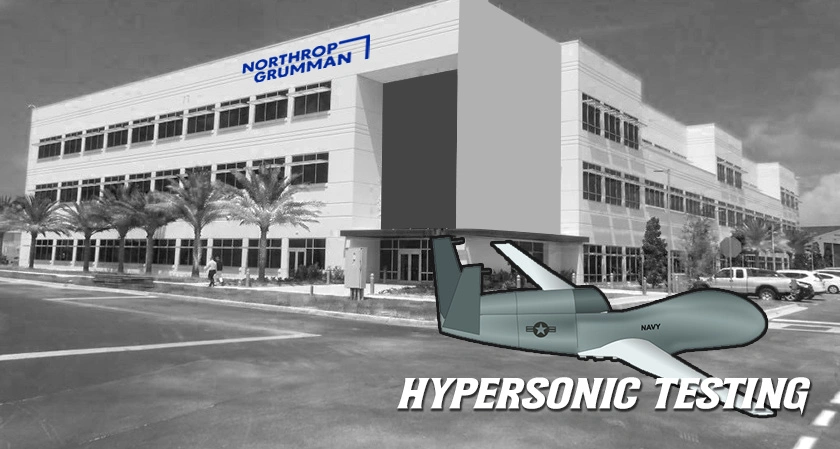
With plans to begin integration testing on the two later this summer, Northrop Grumman is currently converting the next two RQ-4 Global Hawk drones into aircraft capable of monitoring hypersonic system tests.
According to executive Doug Shaffer of Northrop Grumman, the company is on schedule to deliver those aircraft — refitted into Range Hawks — to the Defense Department's Test Resource Management Center by the beginning of 2025.
Out of the 24 Global Hawk drones that the Air Force retired recently, these two are the first to be modified and given to TRMC for a second life as mobile, aerial test data collectors.
The government has already gathered test launch data for hypersonic devices using sensors installed on ships. But getting those ships into the right places can be a time-consuming, very labor-intensive procedure that requires a large number of personnel.
Thus, in order to more easily gather this data, the Air Force, NASA, and TRMC have been developing a concept known as SkyRange to put sensors onboard Global Hawks. The first three modified RQ-4s in the program, which were Block 10 models from earlier models, have recently supported testing for NASA's Artemis Moon exploration program and hypersonic vehicles. They are based at the Californian Edwards Air Force Base's Armstrong Flight Research Center.
The Pentagon was able to carry out nearly back-to-back hypersonic flight tests in early 2023, ten days apart, over the Atlantic and Pacific oceans, thanks to the early Range Hawks, according to TRMC director George Rumford in an interview.
According to Northrop Grumman, TRMC is moving to extend the SkyRange program because the first three Range Hawks performed so effectively. The next few batches of Range Hawks will be modified from the two dozen Block 20 and 30 RQ-4s, which are more capable than the previous variant.


.webp)